Showing posts with label art. Show all posts

Friday, September 09, 2022

Wareham, Massachusetts

There’s a deeper malaise going on, physically and spiritually, in the air, maybe long covid or long lyme, microplastics. Point five percent of what we now eat is plastic, they say. An alarm I’ve been sounding for about twenty years: from the Bahamas, its protected beaches strewn with plastic. In Chicago, in the aughts, I have a distinct and virtuous memory of using a carbon calculator. At a yoga studio in Mattapoisett, more recently, where a shiny-legged woman wrinkled her face at the hand and foot stains on my long-used and not-replaced mat, to which boat paint still adhered.

The physical pain I think sometimes is the pain of giving up writing, as sometimes I fear I am doing. I go days without penning a word, not even in my journal. Maybe that is what is accumulating in my gut. Or maybe instead I am an overwrought effete dilettante and the pain comes from giving up the idea that something will rescue us, that if I string the right combination of syllables together the world will unfold like origami, and all will be saved. The pain is my body’s realization that it is too late to be saved.

I am grieving the world we have lost, a world that is dead. Half of earth’s creatures have died in my lifetime, as I have watched, as I have tromped in Chicago boots and exhaled in Cape Cod yoga.  It is ongoing. We accelerate over the cliff, blindfolded. In Crudo, Olivia Laing writes:

We all see it coming, we are all sick, me and everyone else, the first casualties of the oil wars.

So the physical pain and the spiritual trauma are one: the flayed flesh of fish perches on my fridge rack.  Bought with someone else’s money. Bought with this green fiction that shapes our ends while life goes on around us, life goes on around me. I watch the weeds grow in the garden, unable to pull them up. The wind builds. I watch the neighbor’s house rot.

In her exegesis of Joan Didion, Elisa Gabbert says writing finds grammar for the pictures that haunt our minds. As Didion says, "The arrangement of the words matters, and the arrangement you want can be found in the picture in your mind. The picture dictates the arrangement." Then, Delillo—"sentence by sentence into the breach." I align that hunting for the grammar of the idea with George Orwell's third reason for writing, the historical impulse. It is not enough merely to have the idea, the shimmer of an image or a story, but the story must be recorded, to the best of one's ability. The cave painters of Lascaux imprinting the record of their consciousness on the walls of caves. 

Gabbert continues:

"Writing isn’t hard the way physical labor, or recovery from surgery, is hard; it’s hard the way math or physics is hard, the way chess is hard. What’s hard about art is getting any good—and then getting better. What’s hard is solving problems with infinite solutions and your finite brain."

Does sharing the ideas itself help? Help purge the ideas? And if so is that a good thing, or is it just palliative? Allowing me to buy a new yoga mat, a new pair of boots.

trigger warning

In this episode of the Moth, a survivor retells the story of her assault and says that in telling it, it is the telling of it that is saving her, allowing her to continue to live with the thing that could have killed her, was intended to kill her. Maybe we don’t listen to rape survivors because they have so much to teach us. But we can’t listen to them, or we would need to impeach Brett Kavanaugh and Clarence Thomas, the rapey men currently deciding, again, for the insides of women’s bodies and also the constitution's future. (One thing I think gets lost in this discussion is that medicinal termination of pregnancy was the legal province of midwives and women until the enlightenment, one more thing noble men took upon themselves to colonize.)

Thursday, September 23, 2021

I'm okay with the girl next door

Tarot card: The Fool
0
The Fool

I'm thinking of taking up clowning. Inventing clown yoga. Desperate times call for desperate measures. The Fool, the Zero, self-consciously taking on the attire of the jester, of poking fun at those in power, and also of my own desire for prestige, for security, for stability. Falling down instead. The thing Trumpists and their ilk, nationalists, anti-science conspiracists, truly can't take is to be laughed at. Is to be mocked.

Instagram photo by @aaliyahjay
@aaliyahjay (Instagram)

I'd like to be a fashionable clown, a scary clown, an acrobatic clown, a mime. I'd like to paint my face half scary-clown, half sexy-clown. I'd like to terrify at the same time that I attempt to jest. I'd like to unsettle. I'd like to play the court jester, and fart in the direction of power.

When one posts only once every two years, every post becomes an apologia for blogging, and this one is no exception. Blogging itself—look at the name—is a kind of clowning, hamming for the omnicron camera of internet. Everyone who's anyone is writing newsletters (Brandon Taylor and Sarah Menkedick write my two favorites), but blogging is newsletters before they were cool, an epistolary forum wherein one is unsure that a sender even exists. Facebook with no friends, as my brother once devastatingly quipped. And still this website remains, a tribute to my ongoing foolishness and stubbornness.

Two other qualities elegantly abstracted by clowns.

My favorite clowns are the buffoons, the sad clowns, the weird clowns, the mimes, the silver people who dress up and stand still for hours in Central Park. I'm thinking of going to clown college, perhaps because it is the only discipline my subconscious could conjure more humiliating to my parents than novelist.

Wednesday, February 04, 2015

I'm on fire

Plymouth library--my new studio
I'm back now, and it feels like during the last month I slipped into an alternate dimension.  I used to have that same experience upon leaving from or returning to boarding school--this bewildering sense that one day a person can exist at one point on the planet, and, mysteriously, through an uncanny process called travel, can arrive at a completely different point 24 hours later, as if the other place never existed at all.  Of course it goes without saying that everything can change in a day.  Yet there is a real feeling of solipsism:  can this world have really existed unchanged while I was gone?  Can that other world really be existing without me?

You close your eyes and poof:  everything is transformed around you.  And yet nothing changes.  Here I am, back at the Plymouth library, my writing desk when I can get to it in Massachusetts--different and yet the same from my studio in Vermont.  Louder.  When did libraries abandon their prohibition against noise?

I listen to ambient drone to drown out the chatter:  but I did that in Vermont anyway.  I look out at snow instead of a snowy river.  I feel like my time away fed me in surfeit, a nourishing abundant meal of time, respect, creative energy, positivity.  The sheer numinous power of fifty artists independently working by following their least inner voice cannot be overstated.  Here I feel that lack.  The distraction of having to fend for myself when it comes to food and caffeine, the distraction of driving--the sensory overload in even having to walk past stacks and stacks of books in the library--all of these burdens were relieved from me in Johnson.  As Richard Wilbur said:  these things "Call to me now. And weaken me. And yet/ I would not walk a road without a scene."

The things I came back to again and again in my conversations with fellow residents are the two things I come back to again and again on these pages--my current ongoing obsessions:  climate change and Carl Jung.  I am afraid about climate change.  That inner voice of my subconscious, the voice that Carl Jung first named for me--that voice is a conscience that cannot be silenced.  It points me to ever more revolutionary, incendiary words.  The world must change or be destroyed.

And the only way for it to change is for artists to hold the mirror up to our exhausted consciousness, the tired materialist mind of our culture, and to say:  look.  This is what we are.  We are tired and we are depressed and we are sick.   We are beings made of both flesh and spirit, mind and soul, consciousness and unconsciousness.  Integration--health--for us as individuals and as a culture comes from facing that which we are most afraid of--our darkest demons, the other, the chaos of the uncontrollable unconscious, the failure of our civilization, the stark fact of carbon dioxide in the atmosphere--and absorbing this truth into ourselves.  And then awakening.  Becoming active.  Changing.

Thursday, January 08, 2015

Johnson, Vermont

My room at the Vermont Studio Center
It is my fourth day here.  Every step here has felt a sloughing off of skin. On Sunday, as I moved in this direction, passing through Massachusetts and into the mountains of Vermont, I felt like I was moving back in time, or deeper inside myself. Already I find myself hungering after my work, the work that I’ve postponed for so long.

I am typing these words in a studio named after William Matthews.  Every morning, when I don't oversleep, I go to the meditation room and sit, smelling incense, doing my best to think of nothing.  After, I come to this studio with a blessed expanse of hours--thirteen, if I was to use them all--just to write.  My studio is small with a view of the Gihon River.  The Gihon, which in the Bible flows from Eden, and which here flows from Eden, Vermont.

I watch a coalesced skim of surface ice float by.  Last night it was 23 degrees below zero, with a windchill of minus 40.  I relish this cold as if were a rare wine.  I have no excuse to be outside.  Frequently the internet goes down.  I have no excuse to be there either.

Meals are prepared for me, shopping is done, I am cleaned up after.  I pace my room.  I rest my head against the window and watch the ice.  I read.  I post chapters on a corkboard.  I comb my sentences for excess words, again and again.  My fellow artists sculpt wall-hangings made of patchwork salvaged wood, sew metal, experiment with traditional oil technique and sing on the side, and take full-semester classes on Old Testament literature with Marilynne Robinson.

This morning, in explaining to a fellow resident why I prefer yoga to Pilates, I said it was not for the exercise but for the self-forgiveness it cultivates.  Last night, in a lecture on creativity and meditation, Jon Gregg, a founder of the Vermont Studio Center, told a story about Pablo Picasso.  Picasso, when asked what the most important thing was in his life answered simply:  self-trust.

These two things:  self-forgiveness and self-trust.  They're what I'm here to learn.

A poem for you today, by William Matthews, in whose spirit I write:

On the way to the rink one fog- and sleep-thick
morning we got the word fuck spat at us,
my sister fluffed for figure skating and I in pads
for hockey.  The slash of casual violence in it
befuddled me, and when I asked my parents
I got a long, strained lecture on married love.

Have I remembered this right?  The past is lost
to memory.  Under the Zamboni’s slathering tongue
the ice is opaque and thick.  Family life is easy.
You just push off into heartbreak and go on your nerve.

Saturday, May 24, 2014

Beach Retreat Day 7

Women carrying bamboo
On my second day here, a woman and her two daughters approached me on my porch for water.  I gave them most of what I had, a full liter.  Then they asked for tobacco, or the betel-nut-tobacco combination that most people chew here, giving them mouths like blood.  I didn’t have any, of course, but at that moment the delivery man showed up with my lunch:  two boxes of food, a coke, and a cooler full of coconut water.  I felt so guilty, like I had done something wrong, just with my plenty.  He gave her a banana-leaf-wrapped chunk to chew, and they walked on, unable to communicate.

As the week has progressed, my solitude has begun to feel less so.  I am not alone.  This beach is for people who work, who fish, who carry water-logged bamboo logs cushioned on their heads, who gather shellfish and hermit crabs at low tide.  One day, as I lounged, watching the sunset, I saw a man hunting something along the water:  he would spy something and then tiptoe, high-legged, towards it, like a parody of someone hunting.  He dug into the hole he found with a stick, and if he found what he was hunting, he’d pull it out and throw it against the sand, hard, with surprising violence.  Then beat it to death with his stick, then coil it—a sea slug or sea snake?—with others in a plastic bottle.

Others walk among the garbage, collecting glass.

This culture is one of hunter-gatherers, people living on the verge.  Two dogs adopted me, primarily because I give them fish scraps.  I don’t think anyone else feeds them.  They have bony ribcages, lean frames.  They spend most of their day sniffing around for snacks amid the refuse.  When I don’t have bones to give them, at night they whine quietly in the sand.  I think they’re hungry.

Beach dogs
And here I am, amid this scrounging society, a writer.  My purpose begins to obscure.  What good am I, Bob Dylan asks, if I say foolish things?  Anything I sang, he says, you can say it just as good.

Today, my last afternoon, I found a bench along the ocean and lay alone with my iPod, listening to Ray Bradbury, an audiobook I brought along.  When I sat up I was surrounded by women in longyis, one of them the old woman from that first day.  I noticed now that she is also missing an eye.  Her socket sagged empty, the skin closed around it.  She asked for tobacco, I think.  I didn’t have any.  She asked, from what I understand, if I was alone—bringing her two fingers together and then separate.  I motioned to my heart, to my bungalow, saying:  just me.

I don’t feel the envy of my alleged wealth here, not nearly as much as in Laos, or even in Thailand.  Instead I feel pity from Burmese people.  I may be rich in material goods—but I suffer from a poverty of companionship.  The woman nudged my ridgerest, feeling its cushion, grazed my bag with her fingers, then went to work, knocking barnacles off the bamboo logs she had stacked nearby.  She seemed to be the forewoman, and hacked notches into the bamboo, so other women could drag them down to the surf, could carry them on their cushioned heads.  All of them had lean, hungry, chiseled muscles, supermodel physiques.  For what reason they carry the logs I don’t know.  It seemed arcane to me, mysterious.

I didn’t know what else to do, so I pulled out my sketchbook and drew.  I thought of ripping out my drawing and giving it to her, but what good would that do?  Would she even understand?  And besides, I was selfish of the pages in my sketchbook, the book I’ve carried for four months and only used for the first time today.  I was selfish of my own drawing.

Beach drawing
She could see what I was doing, but I can’t imagine what she thought.  Did she think:  stupid fat farang thinks that’s work?  Or did she think, as I did:  she’s doing her work, and I’m doing mine?

Some days I can think of it like that.  On good days, when I can think of what I do as a kind of calling, when I can face the truth inside that cheesy cliche.

Another book I read this week, an ebook, was Dodie Bellamy’s the buddhist.  A quote:  “The buddhist once asked me if writing was my religion, and I said no, writing is not my religion.  I don’t know what religion is for me. Writing is my calling.”

My kingdom for that kind of confidence.

I came here for solitude, for writing, and all week my solitude felt invaded, compromised, by well-meaning solicitous Burmese people.  My friend from Dawei showed up with three companions and took me out for coconut and crab.  Various people invited me for rides on their motorcycles, invited me to share meals with their families.  I refused them all,  attempting graciousness.  Other than garbage-pickers, I haven’t seen anyone else alone.

People here don’t seem to understand being alone—my loneliness confuses them.  Is it just that I’m American?  Have I fully absorbed rugged individualism as an ideal?  The one part of Asian culture I could never get behind is communalism.  While I applaud the idea in principle, I could never live the way Thai people do, multiple generations crowded beneath one roof, everyone up in everyone else’s business.  In Thailand, people have children just so they have a place to live when they get old.  They plan their children’s births based on astrology, so their golden years will be comfortably padded.  I don’t think I can live with my parents, or with any fictional children, long-term.  Even living with one person  I love gets to me, most days. Small-town gossip destroys me.  I love my anonymity, and my desire for travel rears its head as soon as I lose my status as a stranger.

As the lone representative of my culture here, what must they think?  That Americans are a lonely breed.

I’ve chosen this loneliness, and still my longing for companionship exists inside me like an ache.  Yet I know:  if any others were here with me I’d be turning towards them for validation, approval, comfort.  What does he think?  What does she want me to do?

I’ve written about artist dates before, the prescription given my Julia Cameron in Artist’s Way:  two hours, alone, each week, to do whatever the hell you want.  Truly alone.  No children, not even a dog.  Just yourself to please.

My favorite artist date in Chattanooga was the independent film series at the movie theater downtown.  I loved everything about it:  driving downtown along the curving highway in my Miata with the top down, parking in the garage, the adrenaline rush of walking down the concrete stairs alone, each time remembering that horrific rape scene in the Sopranos—and then sitting all by myself, in the darkened theater.  Even there I got strange looks, the occasional come-on.  Who’s that strange girl here all alone in the middle of the day?  But I adored it, the silence, the popcorn all for me, and the response to the movie utterly my own.  Even now, the movies I saw then are among my favorites.

Once I convinced my friend Ellen to come along.  I really wanted her to; I practically begged.  I thought it could only make it better.  And though I loved seeing the movie with her, sharing it with her, it changed the experience completely.  Instead of being fully enveloped in my own response, I was thinking about her.  Did she like that line?  Did she get that joke?  What did she think?

Being alone sharpens my attention to my own desire.  But it also makes me feel shame.  Spending a week alone at the beach, just like going to a movie alone, feels utterly profligate.  What good can it possibly do?

Another side of communalism:  the shame it engenders.  I hide in my room when I see Burmese people outside because I’m ashamed of my bathing costume.  I had to walk down the beach, out of view of prying eyes, to lay prone in the sun (something I was brave enough to do only twice).  My favorite part of watching the movie alone was that it was in the dark—no one could see my profligate selfishness.

I’m an alien in a strange land.  I still don’t know why I keep putting myself in these situations where I am completely alien.  I like to think it’s because I’m more comfortable inside when the alienness of my exterior matches the alienness of my interior.  I’m more comfortable when everyone else can see that I don’t belong.  In the States, when I do things wrong because I don’t belong, no one understands.  Here I have an excuse.  I am unique by definition.

Still, uniqueness breeds isolation.  Isolation breeds loneliness.  And I am lonely.  This is what I’ve wanted for so long.  Meals delivered me.  Complete freedom to make my own choices.  And yet…

The truth is that I still don’t know how to balance being alone with being around other people, how to balance others’ needs with my own.  I don’t know how to do that, and it makes me sad, because I need other people in my life, but as soon as I let them in they consume me.

Tonight, a giant cricket lands on my mosquito net.  Other crickets croon outside.  The surf rolls, unceasing, to my right.  I have leftovers in styrofoam boxes for dinner, leftovers I’m afraid to eat on my porch because I have to hide them from the dogs.  Tomorrow, back to civilization.

Sunday, July 07, 2013

Tweedle-dee Dee—he’s on his hands and his knees


My Papou does battle with the spirit of Robert Johnson (as I said once before)
Saying, “Throw me somethin’, Mister, please”
“What’s good for you is good for me”
Says Tweedle-dee Dum to Tweedle-dee Dee
So today maybe a coherent post. I've been working on a series about Bob Dylan and plagiarism, my ongoing thesis that Bob Dylan stole every line of “Love & Theft”--also his only album with the title in quotes on the cover, and itself a theft of another title, the academic book Love & Theft:Blackface Minstrelsy and the American Working Class. Last week, doing research, I learned from the definitive Bob Dylan trivia and fan forum, expectingrain.com (taken from “Desolation Row”--the place where “everybody is making love, or else expecting rain”) that my long-held thesis is commonplace. JohnnieRay says, “Just my contribution to the 'every line in “Love & Theft” is stolen from another source' myth.”

It's just a myth, and you can read my contributions here [Dylan], and last week Bob did battle with the spirit of Robert Johnson, as did my Papou in the above photograph. Robert Johnson stole from the devil at the crossroads—you know that old legend, surely: he went to the crossroads, the place where the devil visits, with only his guitar, and when he got there he traded his soul for the ability to play. And Bob stole from Robert Johnson, and the American working class stole from black culture it attempted to “control and repress” by using blackface minstrelsy.

Man hands on misery to man.
It deepens like a coastal shelf.
Get out as early as you can,
And don't have any kids yourself.
But maybe what we also hand on along with misery is art, and artifact.

A brilliant article by Robert Cohen in the Believer, an issue of which I haven't read cover to cover since my commuting days on the Chicago El, says it better than I ever could:

The Hebrews ripped off the Canaanites. Virgil ripped off Homer, Dante ripped off Virgil, Mathew and Luke ripped off Mark; Shakespeare ripped off Plutarch, Eliot ripped off Shakespeare, Dylan rips off everybody, and—my sweet lord—George Harrison ripped off the Chiffons. And so it goes.”

He ends: “...still impelled onward, I would argue, by the same old longings, the same old methods.”

Sunday, June 09, 2013

Aroostook County, Maine

Ann Armstrong, in the fabric studio

And just like that, it's gone. So fast the time passes, even if I was able to accomplish much of what I wanted at Haystack: even flax paper haiku. I wrote almost every day with Betsy Sholl, former Maine poet laureate, an absolute gift—she is an astonishing wordsmith—and now have friends dotted around the hemispheres: in Grand Rapids and Poland and Capetown and Austin and Providence. And the best thing about spending two weeks with a community of artists is the new beauty I find in the world.

These people see all material as a substance to be crafted, to be shaped according to the muse, to be made more beautiful at all costs. Maybe some people think that's unimportant. But those people are wrong.

I came home (you know with what effort I type that word) yesterday, limping in the Volvo, praying the whole way, and using Deepak Chopra-style visualization along with deep breathing and a light touch on the gas. Within in ten minutes of being here, K. had the engine cover off and discovered oil leaking into my spark-plug wells. Which means he had the problem fixed in another twenty, but it also means I could have lit my engine on fire during the twenty-minute drive home. Allegedly. Thank goodness for small mercies.

I even assisted: bringing a tool as requested without having to figure out what the word meant. And I cleaned some receptors with alcohol, q-tips, and paper towels. I'll be a mechanic yet.

The bridge off Deer Isle, though. The thing is a blue behemoth, with a 25-mile-per-hour speed limit, and all week I stalled every time I dropped down to a low speed and climbed a high hill. No shoulder—only ocean—on the bridge. All I could think was that I'd stall at the top, which panicked me, so I imagined instead the relief I'd feel on the other side. Or the relief I'd feel, pulling into the white trailer, with its dim traces of mold, and my Shadow, and the partridge nesting, and the jerusalem artichoke as high as an elephant's eye. Saying: I didn't stall once!

So: I didn't stall once. I left my haikumobile as ephemera, a minor tragedy, but only a minor one. And now the bell no longer tolls my hours and my meals—I am responsible for myself again. The respite is over.

Sunday, June 02, 2013

Haystack Mountain School of Crafts


Birchbark canoe at the Haystack Gallery, built according to ancient Penobscot tradition
One thing that has been a constant source of conversation around here—and maybe it's just because I keep bringing it up—is the intersection between art and commerce. Maybe I'm an idealist in believing that it's possible to make objects that appeal to a wide audience, in such a way that they can sustain (read: feed) the artist, and these things can also achieve critical success. These are not easy questions. I love the things being made here—they are exquisite, magical, beautiful—and gradually coming into being, made by my friends—but I worry that these things aren't accessible to a wide audience.

Some people simply say: no. They aren't. 99 percent of people will never understand art and aren't even worth trying to reach. But I vehemently disagree.

Yes, we have a major problem in education in this country. Many people don't understand art, or can't see its value, because they've never been taught to. But people can still consistently recognize beauty, and they could not fail to see the beauty in the work being created here. Maybe its purpose, they could question. Beauty for beauty's own sake.

A friend of mine back home, a beer-drinking Nascar-watching member of the hoi polloi, has recently fallen in love with Beethoven and Mozart. He sits in his backyard, listening, as arpeggios swell, and this to me is proof of the triumph of music. All of us have little beautiful things we treasure—maybe just for the memories they bring us, of a beautiful moment, a beautiful time. I'm still not sure what art is, if I can define it.

Although, to paraphrase Emily Dickinson, I know it when I feel like the top of my head has been blown off.

We had a lobster bake on the picnic rocks by the ocean last night. My first lobster bake, my first lobster eaten with my hands by the sea, and maybe my first Maine lobster ever, believe it or not. It was delectable, of course, ambrosia of the sea, no more so than when sucking the juice from the claws, distilled ocean nectar. But I have to say—and please don't shoot me—Cape Cod lobster gives them a run for their money.

In other news, my car broke down on Friday. Which leaves me with a mechanical problem to solve during my four last precious days of focus. I am trying not to play the martyr. But seriously. Could I have worse timing? Of all the gin joints in all the world where a Volvo could funk out.

Wednesday, May 29, 2013

Deer Isle, Maine

Town of Stonington

The idea behind an Open Studio Residency is that the studios of all different disciplines are open to artists of various disciplines, to visit, explore, ask questions, and perhaps experiment with others' materials. And almost all of the studios here are of disciplines I've never explored: wood, metal, jewelry, pottery, glass, paper. I am drawn most to the paper and book artists, which makes sense. So yesterday I made paper for the first time, from shared flax, small discs of paper on which I hope to type.

After that, I don't know. Maybe I will sew them in a circular binding. Maybe I'll frame them in leather and hang them as a haikumobile. Maybe I'll convince an assistant to teach me to weld. Maybe I'll have the 3D printer build me a three-dimensional story. Maybe I'll carve in clay so I can tile a bathroom with words.

Certainly, ideas are not lacking after spending even three days together with people such as these. The most freeing thing about this openness is the way it makes any idea viable. This place is nothing if not fertile loam for creative growth. Stu Kestenbaum, a poet and the director here for twenty years, talks about the creative process seriously, in a way that makes clear the decades of hands-on experience he's had making it happen, watching it happen. There's a depth behind his words that makes me as serious about it as he is. He's spent his life watching artists grow, cultivating them the way others would plants.

Always, my subconscious rewards creative play. It's almost as if we have to distract ourselves for image and imagination to germinate. The question I continue to return to is: how do I know what I want? How does that part of myself decide? The diversity of craft represented here is mind-blowing—artifacts that I could not have conceived. But still somehow all of these people have the same level of certainty about their craft, and not just about their craft but each specialization within it, materials within each specialization, each shape, each color, each microscopic decision.

Maybe choice is the central player in art, even when the number of choices is infinite. Maybe we like talking about that less—the numinous subconscious goop guiding all of these decisions—because whatever part of us choosing is a mystery. And still, somehow, a part of us knows.

Sunday, May 26, 2013

Like you and me


View from Deer Isle.  Also gives a sense for the weather we're getting.
It is an odd thing, coming together with other artists, especially because all I really need to work as a writer is a desk, silence, solitude, paper, and pen. Already, after dining, I have to sneak away to find some table I can appropriate as a desk, some quiet room where I can hide away. Which seems counterintuitive. Why would I need to come together with others if all I need then is to get away from them? Why should they waste space and electricity and reverse osmofied saline water on someone who's not going to use the welders or the Fab Lab?

Perhaps because I am most likely the only person already parsing this experience in language, already an anthropologist and journalist among all of these strangers. It's an odd assortment. There are the academics, who earn their living closest to their craft, but along with academia comes its fellowships and grants and college politics of tenure and which dean funds which piece of equipment. As much as I love academics, there's a sense that they are most calloused to what they do.

In conversation so far, it's those that are closest to art as creation who resist ascribing meaning to it most strongly. Those that make things into other things, who manipulate matter into a different form say these things have no intrinsic value, that they need not be ascribed monetary value.

But then what use does all of this serve? Even these words, as always I am meta-metafying. I'm a firm believer that art must hold its place inside capitalism, in commerce. We tell stories so they can be heard. Created objects are vessels that hold meaning.

It is all that makes us human. First we find food. Then we find caves. Then we paint the caves. This is what we do, what we have always done, for better or for worse. Homo Aestheticus, as a book in the library here claims. A quote: “art is a biologically evolved element in human nature.”

So why am I here? Already I contemplate engraving haiku on stone, paper, wood, cloth. Although I haven't written a poem in ages. Already I mull turning stories into objects, somehow, turning stories into poems, “covering” someone else's poem as a haiku. The shortest of short forms are fascinating me, for some reason, what I can excise from my work and have the work still stand alone—this as a result of already talking to sculptors and blacksmiths and metalworkers who talk about the division between work with subtracts and work which adds, speaking a foreign language, an unintelligible tongue that still somehow satisfies.
Stairs and corridors and cabins
at Haystack


Friday, May 24, 2013

En route from Aroostook County to Deer Isle, Maine


Here now.  My room.
 194 statute miles

Another traveling post. This site started as one devoted to travel, and so it remains, as long as my feet remain itchy with wanderlust. I resolved silently, a while back, not to mention my alternate career as a fiction writer for at least a year; I'm not sure I made it. So again, I'm coming out as a writer of fiction, something I hesitate to mention on these pages.

Nevertheless, I have been accepted to the Haystack Mountain of Crafts (donate!) Open Studio Residency for artists of all disciplines. I applied almost on a whim, the day I received my first rejection for the Iowa Writers' Workshop, not thinking I had a shot at the prestigious residency, hoping at least for a chance at a summer workshop. But I was accepted for both, which simultaneously daunted and thrilled me. Especially after I searched online for some of my fellow artists.

Here is some of their work (I think, if google can be trusted):

Megan Biddle

Nancy Koenigsberg (Sculpture made of coated copper wire and glass beads)

Jiyoung Chung (Made of paper!  I think.  Korean joomchi)

Rama Chorpash (Fiber art designed according to the topographic contours of Central Park.)

Melissa Craig
People are traveling from Hawaii, Texas, Oregon, Ireland. Many have had solo shows at New York City galleries. Others are professors of their craft—metalworkers, glassblowers, papermakers, enamelists. I am an anomaly as a novelist, at least so far as I know.  They are real artists--in museums, in permanent collections.  The only other writer I discovered is a former Maine poet laureate. More exalted company than I could have dreamed.

As I sit here writing on paper during my road trip lunch, I keep thinking they've made some kind of mistake, that I'll be turned aside at the door. But it is fear, of course, fear of the magnitude of the gift being given.  Let's just say I'm very pleased to be a participant with such fierce companions in arms.

Thursday, April 11, 2013

Tweedle-dee Dum said to Tweedle-dee Dee


-->

Full moon, not from now--because this week the moon was new

Your presence is obnoxious to me”
They’re like babies sittin’ on a woman’s knee
Tweedle-dee Dum and Tweedle-dee Dee

In my ongoing Bob Dylan series: it's not hard to imagine Bush and Gore in the above pair, and then we dive deeper into gemini, the astronomical twins. Of course all of us hate the thing closest to us, the thing we are most like—the vision of ourselves as obnoxious stranger, the shadow, opposite us, looking exactly like us, but wrong. The thing we hate the most is the thing most like us.


-->
On Nova last week, they went inside the ancient computer built by Archimedes, found in the Adriatic Sea. Its complex of knobs and toothed wheels predicted the color of eclipses, the movement of the stars, decades into the future. Carved legible Greek words—helios—carved in the bronze. How the wheeling of the stars has been important to thousands of years of human beings, and how long have we been here. Jung says the collective unconscious holds the collective store of our memory, and the thing we hate the most is our Shadow.

I have a Shadow. He follows me around, room to room. He whines at my door, scratching to be let in. He follows me to bed at night and looks at me with a face of love as I pat his warm belly. I fear his death.

So my dog is named after Jung's great other. And he reminds me of how humans have used science, astronomy, the whirring of the planets, to make sense of reality for thousands of years—and art, to tell each other stories. Alice in Wonderland names the pair—suspendered and roly-poly—and then we identify them as what they are, ourselves split, ourselves at war with ourselves—unable to grow up.

Saturday, January 12, 2013

One night back


Crooked Island, right now, courtesy of KO.  Wish I was there.
Well, they’re going to the country, they’re gonna retire
They’re taking a street car named Desire
Looking in the window at the pecan pie
Lot of things they’d like they would never buy
In my ongoing thesis about Bob Dylan's plagiarism, I have new evidence, this time from his new album that I have yet to buy or listen to. And from a new interview with Rolling Stone. After Mikal Gilmore, the interviewer, confronts him about the accusation, Dylan concurs:

In folk and jazz, quotation is a rich and enriching tradition. That certainly is true.”

Then Gilmore cites instances where Dylan stole from specific authors, Japanese novelist Junichi Saga and Civil War poet Henry Timrod. Junichi Saga's books were out of print when the plagiarism was discovered, and have since been reprinted, a point that has always seemed important. Dylan agrees with me:
And as far as Henry Timrod is concerned, have you even heard of him? Who's been reading him lately? And who's pushed him to the forefront? Who's been making you read him? And ask his descendants what they think of the hoopla. And if you think it's so easy to quote him and it can help your work, do it yourself and see how far you can get.

Wussies and pussies complain about that stuff. It's an old thing – it's part of the tradition. It goes way back. These are the same people that tried to pin the name Judas on me. Judas, the most hated name in human history! If you think you've been called a bad name, try to work your way out from under that. Yeah, and for what? For playing an electric guitar? As if that is in some kind of way equitable to betraying our Lord and delivering him up to be crucified. All those evil [an unprintable word for ‘people’] can rot in hell.
Dylan added:
I'm working within my art form. It's that simple. I work within the rules and limitations of it. There are authoritarian figures that can explain that kind of art form better to you than I can. It's called songwriting. It has to do with melody and rhythm, and then after that, anything goes. You make everything yours. We all do it.
Before I die, I'd like to write one book, just one, where I analyze the layers of quotation and reference in a Dylan album. “'Love &Theft'” is the one I've chosen, because of the elegance of its quoted title, because of the way that Dylan makes the theft overt, even in the album's name. Frankly, though, a single book may not be long enough for even one song.

Take “Tweedle Dee & Tweedle Dum.” If you're a regular reader, as I'm sure you are, you'll know that I've been quoting this song for a while now, the first of “'Love & Theft.'” The consensus among critics is that song is referring to Bush and Gore, at the time the song was written, in 1999, the two candidates for president. An apt parallel to the goofy twins of Carroll, for sure. So in the content of the song itself, we have an echo of contemporary politics. It's fun, too, to imagine Bush and Gore doing all of the things in the song, retiring together in the country, window-shopping for pecan pies.

But the title itself also echoes Alice in Wonderland, of course. And a simple internet search reveals that lines from the song also quote those of “Easy Rider,” perhaps only thematically:
Well, you boys don't look like you're from this part of the country.

That was a UFO, beamin' back at ya. They've been coming here ever since nineteen forty-six--when the scientists first started bouncin' radar beams off of the moon.

Oh, yeah, they're gonna talk to you, and talk to you, and talk to you about individual freedom. But they see a free individual, it's gonna scare 'em.

We're rich, man. We're retired in Florida, now, mister. Whew.
Maybe you can't see the subtle linkage there, even if google can. But is it any coincidence, that Easy Rider, too, is about two men on a quest, hunting after America? Is it difficult to imagine Dylan, late at night, watching Easy Rider on AMC, noting the connection between Billy & Wyatt, and Bush & Gore, and Tweedle Dee & Tweedle Dum?

Or are these merely archetypes, the links between them existing only because they exist in our deeper, inborn layer?

Because, of course, Billy & Wyatt echo Huck & Jim, who echo Don Quixote & Sancho Panza, who echo the knight & his companion from time immemorial. And now we're into the archetypal realm.

For the first time, after discovering a copy of Archetypes and the Collective Unconscious by Carl Jung, in a box in my parents' basement (perhaps some archetypal resonance, even there {and still more, in that Joyce called Freud and Jung Tweedle Dee and Tweedle Dum}), and after many years of obsession with him, I'm actually reading it. More on that—much more—in days to come.

A quick definition of the collective unconscious, by Jung himself:
A more or less superficial layer of the unconscious is undoubtedly personal. I call it the personal unconscious. But this personal unconscious rests upon a deeper layer, which does not derive from personal experience but is inborn. This deeper layer I call the collective unconscious. I have chosen the term “collective” because this part of the unconscious is not individual but universal. It is identical in all people and constitutes a common psychic substrate of a suprapersonal nature present in every one of us.
Easy Rider ends in New Orleans, where “A Streetcar Named Desire” begins. And that carries with it a whole new train of associations, like the first monkey pulled from a barrel.

Nothing new under the sun,” says Ecclesiastes. Bob Dylan stole everything, because all stories are old stories. All songs have been sung. All characters are tropes. All ideas have been used. So artists steal. They plagiarize from the collective unconscious, and the more they can unite their consciousness and their unconscious, the more creative fertility they find.

TS Eliot allegedly said: “Good artists borrow. Great artists steal.”  But the line may have been stolen.

Monday, December 17, 2012

Bridgewater, Maine


That's how we roll in Bridgewater, monsters.
 
I'm trying to convince friends and neighbors to go out with me and cut down ye ole Christmas tree. I live among a bunch of heathens, people that didn't grow up in the church. For me, Christmas is about the gift Christ gave the world. To them it's about cheap plastic crap and forced commercial saccharine travesty. I play Sufjan Stevens's Christmas album, wear my red scarf with the gold stars.

But no one will go cut down balsam with me, even though there's plenty of it out there to be cut. It's like a weed. I find myself relating to the heathen from my past, the Druid ancestors who invented advent traditions, of cutting down greenery to hold down the smell of their chickens in the house. Or goats. Whatever. My research into northeastern Europe's medieval livestock is fuzzy at best.

Why must all of you who didn't grow up in the church be such Christmas-poopsters? Such Scrooges? It's a good holiday. It's good ayurvedic practice to fill your nostrils with pine for one month a year.

Anyway. I'm going to find a way to sneak some pine into the house, if I have to buy it at Lowe's. It's a major local employer. At least I'll be contributing to the economy. Investing in evergreen farming.

Saturday, November 17, 2012

And plead and beg

A Creative Life, from Alt NYC
An infographic I've been meaning to post for a while, that I found courtesy of A Single Layer.  It really captures some things I've been thinking about lately--to start with, do what you live.  Like the whole jobs thing, unemployment as a crisis.  I truly believe that the forty-hour-a-week job with some big company and benefits is going away, along with traditional manufacturing jobs.  And what's rising in its place is cottage industry, small business--people making soap or jam or pickles or books or kayaks in their basement and selling them, mainly on the cyber-web.

Jobs can't be created ex nihilo, not by Democrats, not my alleged "job creators," not by anyone.  Just by ourselves.  We create our own jobs, we shape our own lives.  So just do what you love, whatever it is.

Is it that simple?  Not really.  Because there's all the rest of the stuff on the list, which mainly involves other people.  The community, the church, collaborative partners--whatever you want to call it.

My favorite example is Gaughin and Van Gogh, as much as they are over-used models for the creative genius.  But how great is that?  You go out and paint all day, earn barely enough rent to cover the upper room in your yellow house, and then you come home and get drunk and argue about the meaning of the horizontal and vertical line and cut off your ear and hang out with harlots.  Maybe that's what all of us need in life.

Friday, November 02, 2012

I hear the train a-coming

Isn't it funny sometimes where the internet takes you?  Sometimes I'm wandering down rabbit holes, and I find something like Filthy Creations. 

The Scanner No. 4

Udolpho Vol. 26

The art on the cover is by Gerald Gaubert: Jael & Sisera from The Song of Deborah, which I mention only because I played Jael in our middle-school production of Judges, driving a stave through the head of an imaginary man in a dome tent set up on the gym stage.

I don't know why it makes me so happy that people were publishing literary journals in Aurora and the Isle of Wight from 1988-1991, literary journals that specialized in horror and gothic fiction, and that people today are celebrating that there used to be these physical objects that had beauty, and we can still preserve them with the bits and bytes we use today--all these things makes me happy.  It makes me think that this little putting together of bits and bytes that we do on the internet--this act I perform now, typing on my keys--has value.

I was thinking the other day about art, how perhaps what I mean by art is an object that carries meaning.  I've been thinking that gas should probably cost $100 a gallon, if we're going to cease carbon emitting, but that means we would have to stop buying cheap plastic crap and start making things again.  Things like wardrobes.  Boats.  We'd have to grow trees and cut them down to harvest.


And then we'd make them into literary journals and make woodcuts from the cross-cut milled cedar dipped in paint we'd figured out how to use our minimal petroleum products into, and again we'd be creating objects that carry meaning, objects that have beauty.  Or maybe we wouldn't.  Maybe again I'm just subsumed with optimism, for whatever reason.  Or maybe I'm just reading too many books about sailing.  Three at the moment, including:

On the Water by Nathaniel Stone

Given the merest assistance the blades release themselves from the water.  Press down slightly on the handles of the oars while gently twisting the grips toward you a quarter turn. In an elegant instant the spooned blades abandon the stroke and feather into nearly horizontal forward flight toward the next catch.  Release leads to recovery; remember, reach for the toes and slide into a crouch on your way to the catch.


Monday, September 24, 2012

Can't see over to the other side

The Psychedelicates and their wine-soaked songs

Last night I went to see my friend Carol's show in Presque Isle, at Bou's, a club aptly named. It made me feel, as usual, on most days when I wander around Aroostook County, that I don't belong. Spending time with Carol, who belongs so thoroughly, who builds community as art practice, as much as I love her and love spending time with her and at her home in Castle Hill, makes the feeling especially acute. All of the county girls were out last night, in kitten heels and shorts, all of the twenty-somethings, one of which I once was.

Now I'm not. Now I'm watching my blown-out garden, praying I get tomatoes indoors, and maybe a pepper or two before frost, bolting cilantro and lettuce, basil I can't bear to cut back. I feel always like the odd man out, the one that doesn't know the score, the thin man in Bob Dylan's ballad. Here I am, the one thing that I want—belonging--the one thing I can't have.

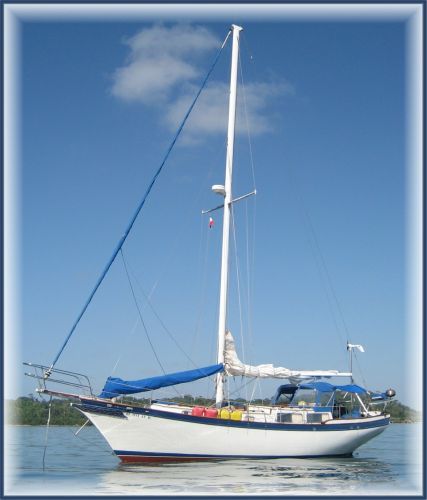
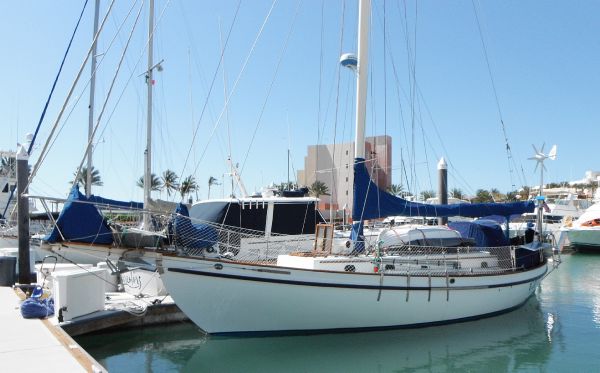
It makes a better story that way. K.'s been looking at boats and boat blogs again. Here are two:


Downeast Cutter
Ingrid 38
I'm not allowed to post links whereby you might go find these fine sailboats and buy them yourself.

And then, what follows soon after sailboat searches?  Adventurer blogs.  This guy, Grillabong Quixotic, flew to Mexico with nothing but a dream, to build an outrigger sailboat. Now he's in Panama.

These people raised a child on their engineless Ingrid. Who needs an engine?

As soon as I'm happy, comfortable, putting down roots, I begin to make plans to pull them up again. Kayak searches to Baja. Lonely Planet guides. Emotional separation from the dog that'll never survive Mexico.

Casting off, you say? Casting off indeed. Sometimes I believe that the best thing to do would be to stay put, that again I'm just running away from belonging, from stability, from home. Sometimes I don't want to run aymore.

I want to paint walls. I want to plant rosebushes. I want to put up bookshelves and brackets for hanging plants and window boxes. But what's the point of buying paint or bolts or lumber for someone else's house? Better save that money for epoxy and teak-and-holly ply and bosun's chairs.

Thursday, July 05, 2012

Independence Day

Sprinkler

My faith is situated some place between early-church mystic and holy-roller Pentacostalism on the chart, an odd place to be for an ex-Baptist who attends an Anglican church. Sometimes I flirt with Dostoevsky-style eastern orthodoxy or Cardinal Newman Catholicism, too. So what does it mean to be an early-church mystic? It means that the Spirit infuses all things, present in each moment, more present, immanent, than we can conceive. That God is present all around us, numinous, in the world.

It's funny how the Baptist evangelicalism I was raised with was so uncomfortable with the acts of the Spirit. Hysterical. We believed, yes, that He/It was one of the three parts of the triumvurate Trinity, the triune God, but were were much more comfortable with God the Father, the God of vengeance and the law, or blue-eyed Christ Jesus. The Holy Ghost made us think of the wild-eyed New Agers I was warned against in filmstrips. Really, the Spirit is the one that Christ leaves with us, the God that lives inside.

As I begin to find a place as a farmer, it feels like the Spirit is closer than ever. “The force that through the green fuse drives the flower,” as Dylan Thomas puts it, is not that the Spirit of God? That force which aligns coincidence and our archetypal subconscious, which speaks to us in dream, which uses signs and wonders to keep our attention—is not that the Spirit of God? “God's invisible qualities—his eternal power and divine nature” those that “since the creation of the world... have been clearly seen, being understood from what has been made, so that men are without excuse...” Are those invisible qualities not the Spirit of God? All we can see of God in the world—is not that his Spirit?

Maybe it's just the wildflowers springing out after the rain reminding me of the lilies of the field. Buttercups, daisies, pale purple clover, little off-white bells that remind me of purses. “They do not labor or spin. Yet I tell you that not even Solomon in all his splendor was dressed like one of these. If that is how God clothes the grass of the field, which is here today and tomorrow is throw into the fire, will he not much more clothe you, O you of little faith?”

That's me. She of little faith. A friend of mine suggests trusting that the force that drives the green fuse through the flower will drive it through me, too. But he's braver than I am.

And the skunk, our brave miniature skunk, came back too. We're going to try to convince him to become our pet. I may be taking baths in milk and tomato juice any day now.

Sunday, June 24, 2012

Check one, check two

All the seedlings should be in the garden already.  They're not.  The flowering plant, however, was brought back from beyond the grave. 
What I really want to be writing about, most of the time, is food. How since food is the only thing I need in life, other than art, it behooves me to learn how to grow it. Or maybe it's just Grandpa Jenks in my DNA, speaking down through the century. Those dairy and potato farms understood the value of pulling things up out of the earth.

Maybe it's why I've chosen farming as my avocation, although calling what we do here, on a plot barely bigger than a garden, is by no means farming. Maybe I just want to reclaim that word, and the idea that one can be a farmer simply by stating that intention, to create something of value for my own body by cultivating the soil and the things that grow from that soil. Recently I asked our cooperative extension representative at what point a garden stops being a garden and starts becoming a farm and even she didn't have an answer.

Why have all of us suddenly returned to a goal of being able to provide our own food for ourselves? It seems a good sign. Today was documentary Sunday on Maine public television, maybe my favorite television day of the week, and the best one was about Bhutan, whose benevolent philosopher-king has instituted a policy of “gross domestic happiness.” GDH is founded on environmental responsibility, economic development, good governance, and a strong connection to a unique culture.

Watching the interviews of families of sustenance farmers in the countryside, families collected together in hot springs, laughing together in the steam, or cultivating their rice fields in the mountains—it seemed the idyllic version of reality I so often envision. Government officials emphasizing the importance of leisure time for the families, and chances to pursue individual spiritual practice. Everyone seemed engaged in art as well as farming—people played native guitars, or sang, or danced, or designed elaborate costumes or masks, or practiced archery. Most of the country folk hadn't even heard of the national policy on happiness. But the happiness itself glowed from their faces and was present in their words. They spoke of the debilitating effects of advertising, now that electricity and television are reaching the farthest flung areas. Advertising creates desire, and desire creates suffering. No wonder so many Americans are so miserable.

“Money?” they ask, almost to a person. “What good is money? If I had money I'd just be afraid of losing it. Happiness comes from inside, and no one can take that away.”

They say it better. Perhaps because they know it better than I ever will.