Showing posts with label boldness. Show all posts

Friday, September 09, 2022

Wareham, Massachusetts

There’s a deeper malaise going on, physically and spiritually, in the air, maybe long covid or long lyme, microplastics. Point five percent of what we now eat is plastic, they say. An alarm I’ve been sounding for about twenty years: from the Bahamas, its protected beaches strewn with plastic. In Chicago, in the aughts, I have a distinct and virtuous memory of using a carbon calculator. At a yoga studio in Mattapoisett, more recently, where a shiny-legged woman wrinkled her face at the hand and foot stains on my long-used and not-replaced mat, to which boat paint still adhered.

The physical pain I think sometimes is the pain of giving up writing, as sometimes I fear I am doing. I go days without penning a word, not even in my journal. Maybe that is what is accumulating in my gut. Or maybe instead I am an overwrought effete dilettante and the pain comes from giving up the idea that something will rescue us, that if I string the right combination of syllables together the world will unfold like origami, and all will be saved. The pain is my body’s realization that it is too late to be saved.

I am grieving the world we have lost, a world that is dead. Half of earth’s creatures have died in my lifetime, as I have watched, as I have tromped in Chicago boots and exhaled in Cape Cod yoga.  It is ongoing. We accelerate over the cliff, blindfolded. In Crudo, Olivia Laing writes:

We all see it coming, we are all sick, me and everyone else, the first casualties of the oil wars.

So the physical pain and the spiritual trauma are one: the flayed flesh of fish perches on my fridge rack.  Bought with someone else’s money. Bought with this green fiction that shapes our ends while life goes on around us, life goes on around me. I watch the weeds grow in the garden, unable to pull them up. The wind builds. I watch the neighbor’s house rot.

In her exegesis of Joan Didion, Elisa Gabbert says writing finds grammar for the pictures that haunt our minds. As Didion says, "The arrangement of the words matters, and the arrangement you want can be found in the picture in your mind. The picture dictates the arrangement." Then, Delillo—"sentence by sentence into the breach." I align that hunting for the grammar of the idea with George Orwell's third reason for writing, the historical impulse. It is not enough merely to have the idea, the shimmer of an image or a story, but the story must be recorded, to the best of one's ability. The cave painters of Lascaux imprinting the record of their consciousness on the walls of caves. 

Gabbert continues:

"Writing isn’t hard the way physical labor, or recovery from surgery, is hard; it’s hard the way math or physics is hard, the way chess is hard. What’s hard about art is getting any good—and then getting better. What’s hard is solving problems with infinite solutions and your finite brain."

Does sharing the ideas itself help? Help purge the ideas? And if so is that a good thing, or is it just palliative? Allowing me to buy a new yoga mat, a new pair of boots.

trigger warning

In this episode of the Moth, a survivor retells the story of her assault and says that in telling it, it is the telling of it that is saving her, allowing her to continue to live with the thing that could have killed her, was intended to kill her. Maybe we don’t listen to rape survivors because they have so much to teach us. But we can’t listen to them, or we would need to impeach Brett Kavanaugh and Clarence Thomas, the rapey men currently deciding, again, for the insides of women’s bodies and also the constitution's future. (One thing I think gets lost in this discussion is that medicinal termination of pregnancy was the legal province of midwives and women until the enlightenment, one more thing noble men took upon themselves to colonize.)

Thursday, September 23, 2021

I'm okay with the girl next door

Tarot card: The Fool
0
The Fool

I'm thinking of taking up clowning. Inventing clown yoga. Desperate times call for desperate measures. The Fool, the Zero, self-consciously taking on the attire of the jester, of poking fun at those in power, and also of my own desire for prestige, for security, for stability. Falling down instead. The thing Trumpists and their ilk, nationalists, anti-science conspiracists, truly can't take is to be laughed at. Is to be mocked.

Instagram photo by @aaliyahjay
@aaliyahjay (Instagram)

I'd like to be a fashionable clown, a scary clown, an acrobatic clown, a mime. I'd like to paint my face half scary-clown, half sexy-clown. I'd like to terrify at the same time that I attempt to jest. I'd like to unsettle. I'd like to play the court jester, and fart in the direction of power.

When one posts only once every two years, every post becomes an apologia for blogging, and this one is no exception. Blogging itself—look at the name—is a kind of clowning, hamming for the omnicron camera of internet. Everyone who's anyone is writing newsletters (Brandon Taylor and Sarah Menkedick write my two favorites), but blogging is newsletters before they were cool, an epistolary forum wherein one is unsure that a sender even exists. Facebook with no friends, as my brother once devastatingly quipped. And still this website remains, a tribute to my ongoing foolishness and stubbornness.

Two other qualities elegantly abstracted by clowns.

My favorite clowns are the buffoons, the sad clowns, the weird clowns, the mimes, the silver people who dress up and stand still for hours in Central Park. I'm thinking of going to clown college, perhaps because it is the only discipline my subconscious could conjure more humiliating to my parents than novelist.

Friday, October 12, 2018

Two three break

A perfect example
What I want for my daughter, from friends and family, for her second birthday (or for Christmas, or any subsequent gift-giving occasions):

-Above all, clean air, water, and earth:  to remember that what we want most for our daughter is a future unpolluted by plastic waste, uncorrupted by vast consumer monopolies, and that our most ardent wish is that money not be spent in her name on things that are destroying her future.
-tools.  Actual tools, sized for a child’s hands, tools that actually work and do things, not sets from Amazon or Target or Walmart.
-sports equipment
-an actual basketball or football or soccer ball
-a baseball bat or baseball glove
-a tennis racket
-a ukulele
a small-sized lacrosse stick (preferably used)
-real, small-sized things, made of cloth or metal or wood, not plastic.  Homemade things, things made by artisans, or craftspeople, paid a living wage.
-framed art
-real rain gear.  Not something cute from a box store, but something that will keep her dry and warm if we decide to go and play in the rain.
-Brownell binoculars
-a sturdy wooden steps tool with two steps
-a crinkle cutter
-child-sized baking and cooking implements (not sets; not toys)
-a Waldorf hand kite
-a Waldorf art book
-anything from these sites:  michaelolaf.com, How We Montessori, amightygirl.com
-anything from etsy.com
-anything from a B corporation
-solar panels for our house
-an electric car [Karl learned to drive when he was 3.  Just saying.]
-a spaceship
-rock-climbing holds
-a child-sized guitar
-a go-cart
-a magnetic chess set
-art or music or gymnastics or children’s yoga classes, which we find it difficult to afford
-two days a week at Montessori school
-peace on earth
-that you match whatever you spend on gifts for hers dollar for dollar with investments in her college fund, or in divested mutual funds
-To remember that we are raising our daughter as an anti-consumerist.  To remember that you are not just buying her gifts but you are spending your dollars on a future for her—either one with an ocean emptied of fish and flooded with plastic soup, or one with a functional, joyful civilization not riven by climate chaos.  To remember that *you* are the one supporting that future for her in how you spend your dollars.  In fact, how you spend your dollars is the only real way you are building a future for her—one way or another.

Sunday, September 23, 2018

Upon the bitter green she walks

Why feminism is worth fighting for
My second post of 2018, and my first since June.  I am writing less briskly but I am still writing. That’s important.  Last year we moved to Wareham, Massachusetts.

I spent last summer driving back and forth to Maine for Sagan’s immunizations, and working on the new house.  The move was in September--a whole year ago now--and the walls and windows remain unfinished and the house itself is a work in progress.  Also, and we may be the only family in New England to have consciously made this decision, we are living without internet.  The discussion continues to be whether or not there is a way to get internet (including smart phones) that would not involve having life taken over by it—and I can’t think of a way.

So I am living without it, like the Amish.  It makes it difficult to maintain a blog, although I’ve been intending to since Sagan’s birth.  In order to put these words on paper, and then onscreen, I must close myself in a room with earplugs, and harden my heart to the banging on the door, and somehow find a way toward a creative self.

My last adventure was attending all three days of the “International Fiction Now” conference at Brown University, a 50-minute drive from Wareham, just for the gorgeous pleasure of hearing sentences strung together.  It was a celebration of the work of Robert Coover, to whom I can’t help but refer now as “Bob.”  It was a stunning assortment of writers.  And also rather misogynist.

One of the things that happened in my two-year hiatus, in addition to me birthing a daughter, was the #metoo movement, to which I listened, enrapt.  (When one does not have internet, one listens to the radio during all waking hours.  As if one lived in 1944.)  Having a child makes you realize the inequities between men and women like nothing else.  I was struck by Robert Coover’s story the final night.  Yes, it was absurdist.  Yes, experimental.  It’s more or less a story as a joke, a story as a concept—but like so many of his stories there’s much more going on, and underneath the surface is a wife cooking and cleaning and raising children for a man, a man she has sex with in the moonlight, a man for whom she toils.  And I kept finding these women at the edges of the conference.  The wife at the end of Jonathan Baumbach’s story “Baby,” who announces to the author of the story—busy writing his collection of short stories with a one-year-old baby as main character—that lunch is ready.  Were I so lucky as to have someone announce that lunch were ready for me.  Dorcas Palmer in Marlon James’s reading from “A Brief History of Seven Killings.”  Even the beautiful younger women, in their sixties, or seventies, accompanying the decrepit male writers who read at the conference, in their eighties and nineties.  These women, most second or third wives, were the ones doing the child-rearing, the dishes, the laundry while their male partners wrote.  I thought this, as I thought of my own daughter at home.

In absolute numbers the percentage of women writers reading at the conference, in the sessions I attended, was 38 percent—11 men to seven women.  It reminded me of this interview I heard on NPR: “If there's 17 percent women, the men in the group think it's 50-50.  And if there's 33 percent women, the men perceive that as there being more women in the room than men.” —Our Feminized Society
[the quote is from Geena Davis, and her Institute on Gender in Media--lots of great stuff in her interview, and at the Institute's Research page]

Even that doesn’t represent the truth of it, because 100 percent of the late-night sessions—the key evening speakers, the elder statesmen of the conference—were men:  Ben Marcus, TC Boyle, Bill Kennedy, Don DeLillo, Paul Auster, and of course, Bob Coover.  The women, even such impressive names as Edwidge Dandicat and Siri Hustvedt, were relegated to the afternoons.  And the highest percentage of women was in the first-night session, with six readers—four women, two men. Six readers crammed into one session that went late into the night, at a smaller venue, with each reader given less time.

As the New Yorker so succinctly puts it:

But the balance is so hard.  Especially now that I understand the visceral tug of motherhood.  I mean that literally:  I feel it in my viscera.

Most of it is the sheer pleasure of mothering.  It’s pleasurable.  The oxytocins bursts after childbirth and during nursing—the largest injection of the love and happiness hormone that human beings ever experience.  I understand why women keep doing it.

“Joy has been the great surprise of motherhood.”  —Karen Russell, "Orange World," @NewYorker [again] #karenrussell #orangeworld

From the novel “Motherhood” by Sheila Heti:
“On the one hand, the joy of children.  On the other hand, the misery of them.  On the one hand, the freedom of not having children.  On the other hand, the loss of never having had them—but what is there to lose?  The love, the child, and all those motherly feelings that the mothers speak about in such an enticing way, as though a child is something to have, not something to do.  The doing is what seems hard.  The having seems marvelous.”
Spoiler alert:  she decides not to have kids.  Spoiler alert:  and still has time to write a novel.

My main feeling after hearing “Orange World” by Karen Russell was jealousy.  She, too, had a “geriatric pregnancy.” Her discussion of breastfeeding and the joy of having a child into your late thirties can only be autobiographical.  So I assume, without having the time or inclination to google. But she took that time and wrote it, used it to make this exquisite, violent, crepuscular story.

I’ve been doing some spectacular reading though.  During the course of Sagan’s incubation and infancy, I read all seven volumes of Proust.  If we named her after the Princesse de Sagan, then I knew I must read the entirety of “In Search of Lost Time."  That is the gift Sagan gave me by being born, the gift that K. gave me by originally suggesting we name her after the astrophysicist—that now I have become acquainted with these other Sagans, too.  The ultimate aristocrats for Marcel Proust, and the nom de plume of Francoise Sagan.

My favorite Frenchism within "In Search of Lost Time"—he spends a lot of pages describing aspects and vernacular of the French language, some of the funniest parts, if you're acquainted with French—was how Francoise, the housekeeper and a much more important character than you’d expect—called the Princesse de Sagan “la Sagante.”

La Sagante.  That’s my daughter all over.

Francoise—another woman who hangs around doing the cooking and cleaning for a man that writes. Or doesn’t write, but sits and broods about writing.  (Not dissimilarly to Coover’s main character.) She dusts his pages.  And rearranges them.

As does Francoise Sagan—her book Bonjour Tristesse stunned me.  Somehow also she rearranges Proust’s story and retells it, all those hundreds of thousands of words in 100 slim pages.  How is it that more people don’t read this book, or talk about it?  Or know about it?  Because it was written by a nineteen-year-old girl?  It strikes me that there are so many teenaged girl heroines because it’s not until later in life that women get beaten down by being told what they are not to do.  Joan of Arc, Francoise Sagan.  Albertine.

I am writing about misogyny in a blog post I will never publish because I am afraid of a misogynist backlash.  What will Bob Coover think?  What will Rick Moody think?  What will William Kennedy think?  Will any of them ever read my novel in which a nineteen-year-old girl is beaten by her boyfriend?  Is it misogynist that I have written this scene?  Or is it misogynist that we don’t have more novels in which this ubiquitous violence is explored, discussed?  Two women die every week at the hands of their domestic partners.  Not in the US, in Britain.  In the US it’s four a day.  And it isn’t even news.  When was the last time you heard a story about domestic violence on TV?  Or are you too busy watching puppy videos?

My daughter makes me want to be a better feminist.  I want this violence not to touch her.  I want discrimination and self-doubt not to hamstring her as it has hamstrung me.  Most men, and many women, still claim such discrimination doesn’t exist.  Yet I see how already it affects her.  How all of the characters in Winnie the Pooh (save Kanga, the mother--natch) and Sesame Street are male.  How people respond strangely when she collects spiders, or spends half an hour staring at a bulldozer—and respond gushingly when she kisses a stuffed animal.  I see how my friends with boy children are embarrassed when their sons clutch at baby dolls.  Children aren’t stupid.  Millennia of evolution have caused them to be exquisitely sensitive to our every nonverbal, subconscious response.

Girl children know.  I know.  You know.  They know.

Saturday, December 31, 2016

I wish I lived in the power and the light

Mother nature's daughter
I miss the days when everyone poured out their heart on epistolary MySpace blogs.  I also miss the Reagan administration, for different reasons, so that should come as no surprise.

Now we live in a world of instant Instagram selfies, and I am nostalgic for the web log of yesteryear, the Livepad courier-font blogs, where we were allotted more than 140 characters to explicate the intricacies of our lives.

So I am announcing the birth of Sagan Tomasik-Jenks, born in October, via the interwebs.  This is a photograph of her from Thanksgiving in Tennessee, in her cast-off boys' and girls' clothes.  Isn't she the most gorgeous thing you have ever seen?

I have posted twice on this blog this year and I make no apology.   The best thing about real friends is how you can pick up where you left off as if no time has passed.  I have eight minutes before midnight in 2016 and that long to catch you up on my life.  Sagan, her father, and I still live in Maine, although we were in Tennessee when we took that picture, and we are in Massachusetts for the New Year now.  Spirit, our boat, still sits in the driveway, and we plan to live aboard her.  Eventually.  Or start a micro-papermill in Bridgewater.  Or farm sheep.

But I see having a baby as no reason to stop sailing.  For reference:

http://www.bumfuzzle.com/
http://saltykisses.net/
http://zachaboard.blogspot.com/

And especially:
http://www.windtraveler.net/2013/07/on-boating-with-baby-and-being.html

It has been a year for grief and withdrawal.  K's stepfather, and also his great-aunt, more like a grandmother to him, died this year.  Also pregnancy, an experience of becoming another being's vessel.  I had thoughts about hollowness, emptiness--and the beauty of feeling a person come alive inside me.  It's hard to put all this into words.  I understand more thoroughly why there are so few mother artists, at least of the canonical variety.  This different kind of more silent art, breeding life.

It makes me think of platitudes and I feel positive loathing towards platitudes.  But of birth and death, seasons beginning and ending.  I am more conscious of the passage of time than I ever have been.  I measure weeks in the inches that Sagan grows.  Already she has outgrown the elephant onesie in the photograph.  She wore another elephant outfit today, and she may fit into it one more time.  I grieve the passage of time for which I am utterly grateful.

And my sister's second son was born yesterday.  For him I am utterly grateful, and for the gifts of God.

Thursday, March 10, 2016

I’ve been drifting along in the same stale shoes

Today I continue to struggle with the inadequacy of everything I have to say. On the other hand I continue to SAY it. It’s the human impulse, to spurt out our innermost selves, to have them validated by the other, even a fictional other that may or may not exist. You, dear reader.

Paul Simon sang: “Sometimes even music cannot substitute for tears.”

Bob Dylan sang, angry:
“Who killed Davey Moore? Why and what’s the reason for?
It was destiny, it was fate, it was God’s will.”

Isaiah said: “Sing, barren woman, you who never bore a child; burst into song, shout for joy, you who were never in labor.”

And Jesus said: “Woe is the child-bearing woman, the woman with a baby at her breast.” (Matthew 24:19)

Why? Because in loving others we always open ourselves up to disappointment, death, grief?

“Where, O death, is your victory? Where, O death, is your sting?” (1 Corinthians 15:55)

Here, here. In my heart.

I find it easier and more comforting sometimes to believe that we are all just animals, and animals live and die by chance, by fate, by the exigencies of mutant DNA. Like I am driven forward inexorably not by my own force of will but by biology. Involuntarily, without a choice. Only characters in fiction can say no their biology. Us living creatures, as neurobiology increasingly suggests, are driven forward by the cortical response in our amygdala, forcing us to eat, to sleep, to mourn, to procreate despite the woes of procreation.

I feel this cloying need for other people’s approval and validation and love, but only people I deem worthy, and when I receive it I no longer deem them worthy, like Woody Allen not wanting to be a member of any club that’d let him join. This endless neediness makes human relationships so hard, and my neediness itself seems another trick of my maladaptive evolutionary brain, an evolutionary need for a troglodytic tribe, a community, oxytocin. It’s easiest to think of it that way, that I am a slightly more complex monkey, 99 percent the same as a chimpanzee, pounding away on my cosmic keyboard. My overdeveloped consciousness yet another trick of mother evolution.

Betsy Scholl, Maine poet laureate and my friend, says in her poem “Bass Flute”:
“No talk here of Meaning,
it’s all ing,
raw urge that nudges the wall between
music and noise.”

It is so, so much easier and more comforting to believe that nothing means anything. I used to question how pure materialists survived, because if I stopped believing in God and Holy Spirit and the noumenal I’d immediately off myself, because then what reason is there not to? But there is a reason, naturally, again—sheer biology. The force that through the green fuse drives the flower also drives me away from death, towards survival, all my ancestors, the force of their genetics driving me to live, live, breed, live, breathe my last breath far, far away from here.

It is so comforting that I cannot believe it. It’s too easy. Another trick of the devil, convincing me he doesn’t exist, that he doesn’t live inside of us, inside of me, in my brain, in my head, in my endless rounds of self-recrimination, self-doubt, self-consciousness.

“For the Lord has not given us a spirit of fear; but of love, and of power, and of a sound mind.”

God is here, in the love Karl and I have for each other. In the love I have for my sister, distant in grief and space and time. In the love I have for those who have died.

Today also I make bread, as I do often in winter. Mixed dry ingredients sit atop my fridge awaiting water, kneading, my careful hands. Also awaiting gluten, a needed ingredient for a primarily whole-wheat recipe I’m trying, which requires additional gluten to obtain a light, airy crumb, as opposed to the dense, doughy breads enriched with oatmeal and eggs and milk I tend to bake. It’s funny to me with all the hype about gluten-free that I’m waiting to make bread till I can find a place to buy extra gluten, which is, after all, just the protein in wheat. My mom used to always add an extra tablespoonful to her bread-machine recipes. Sonia and I used to joke around, when we went to the vegan cafe near her house, that we’d order our squash mac-and-cheese “with extra gluten,” but here I am, waiting around for extra gluten.

The gluten is the protein that forms the architecture of the bread, inside which the yeast bubbles are able to solidify, grow, lift. The gluten is in the flour, milled from grain, grown from seed that each summer again sprouts. Winter turns to summer, snow melts to rain, the green fuse drives the germ to awake, to send forth its budding head. Jesus, of course, is our bread, the bread of life, and perhaps the Spirit is his gluten, allowing the God who lives within to bubble and grow.

Each day layers on the next. Again I grieve. Again I surrender. Again I pray: give me today my daily bread.

Thursday, June 04, 2015

Marching forth again

I am going hiking.  I have this sneaking-out-the-door feeling, as I did when I left on March 4, 2004, and I posted my first trail journal entry, nervous and self-flagellating.  To announce one's plans too early is to jinx them, to let them out of the protective circle of one's own intention, and that means that people can crap all over your parade.  So I keep things quiet, hold them inside, stoking my own inner fire.

I may go camping and hiking for much of the summer.  I've been needing it, a vacation for the soul, hermitage, solitude, trees.  So the Appalachian Trail calls me again, for all of these reasons, and I want to go.  I want to walk.  Unlike last time, though, when I was a 26-year-old marathoner, my body feels weak and feeble, my joints aching.

I am not sure this is a good idea at all.  But I know the only way to know if one can do something is by doing it, and I am doing it.  I don't know for how long--for as long as my body lasts.  I'm bringing enough food to feed an army, and that way I can take my time, do four-mile days, spend sunny afternoons at vistas, hike shelter to shelter.

In related news, we are thinking of putting the boat in the water next season and going back to Maine in the interim, once I'm back, if I come back.  This is a difficult thing for me to admit, or even contemplate.  I want to finish things, follow through, and I find this difficult process of waiting, of living day-to-day with things uncertain, unresolved--almost impossible.  Maybe that's why I'm leaving, to walk, to follow blazes, where the course is predetermined, the route already set.

Monday, December 29, 2014

And the gun that’s hanging on the kitchen wall, dear

New England Christmas -- fourteen pounds!
On the beach, during my childhood in Thailand, we celebrated Christmas.  We went and ate shish kabobs and sunned ourselves.  We played ping-pong with other missionary kids from other Christian schools scattered around southeast Asia.  I read Agatha Christie novels and built sand castles.

We did not feel guilty.  Yet it was other people’s sacrifice funding our tropical vacation.  At some point during my childhood, maybe when someone else pointed it out, I realized that all of our income came at the mercy of strangers.  We went “home” to the States, on furlough, to raise money from churches.  These churches, and their elderly members, or families much like ours, working-class families, or wealthy families, or friends—all of them “supported” us.  They gave us money because they believed in what we were doing, evangelizing Buddhist Thailand, and their hard-earned savings funded our barbecue crab dinners and beachfront bungalow.

It sounds sordid, maybe—but only if you don’t believe in what we were doing.  And we did believe.  We believed with all our hearts.  My parents continue the same work, now living in Islamic Indonesia, where people keep framed photographs of Osama bin Laden enshrined on their walls.  There they run a Bible school, in a country which has a regular history of mass slaughter of its Christian minority.

Now I’m doing the same thing.  Asking for “support” from people who believe in what I’m doing, merely to fund my life, merely to fund what I believe in.  And I’m getting it.  I am absolutely blown away that today, with 6 days left of my Kickstarter campaign, I am at 68 percent support.  It feels great, and it also feels terrifying.  Because if people believe in me, then that means I actually have to do the work.  Do my work.

Books about creativity frequently talk about fear, not just fear of failure, but fear of success.  Because being successful means inviting people in, to see the work.  Being successful means that the bar is raised.  Being successful invites rejection and critique.  It means accountability.

Accountability, or the lack of it, is the hardest part of being an artist alone in the world.  I’ve never missed a day of scheduled work—and by that I mean any one of many menial office jobs, or bar-tending, or waitressing, or my numerous other minimum-wage jobs—any job where I had to clock in and report to a boss and had FICA taken out of a paycheck.  Maybe I occasionally showed up late, I took personal days—but I met my obligations.  I called in.  I knew I had to be there so I was there.  But working for myself is a different story entirely.  Why is it so much harder to meet an obligation to myself?

Also, I feel guilt.  If other people are funding my life by their sacrifice, what right do I have to sit in front of the television?  To take days off?  To eat shish kabobs or play ping-pong?  I do not share my parents’ certainty of belief.

Instead, I find myself returning an old prayer, again and again:  Lord, I believe.  Help Thou my unbelief.

After having prayed I believe for a little while longer.  This whole experiment, discovering a community of friends, friends of friends, family, blessed strangers—maybe can make me believe in myself.  One friend, an old friend, my first donor, wrote a beautiful email that said:  the patrons of your art demand such boldness.  And they do.  You do.

[Give here:  https://www.kickstarter.com/projects/casting-off/artist-residency-at-the-vermont-studio-center-1]

Friday, December 19, 2014

Don’t be afraid


Were Keats’ final words.  More light, more light—the dying words of Goethe.  Fear not, was what the angel Gabriel said when he appeared to Mary, and the command most often repeated in the Bible.  How many times do I have to hear it?

And still I am afraid.  Occasionally I have moments of boldness.  As today, posting a Kickstarter campaign, supporting the fiction residency to which I was accepted this month.  I’ve been at this business, trying to build a career, trying to publish, for ten years now, but this is the first time I’ve actually come out and ask anyone for money—what if all of you say no?

The Vermont Studio Center has granted me $2100 to attend their residency program for a full month:  including room, board, and most precious of all, my own personal writing studio, with desk, chair, privacy, quiet, silence, and space.  But an equivalent amount is mine to match, mine to find somewhere in the dwindling free digital economy.

In my video (watch, to hear me read you a story), I say:  "I know, from personal experience, the ways in which writers are finding it harder than ever to make a living.  Traditional publishing has been upended, and publishing companies are finding their budgets and staff cut yearly.  Yet the demand for content—satisfying, beautiful, well-made content—is at an all-time high."

I can say that I am alive, working as a writer, but am I making a living?  I am alive by the grace of God, by the grace of my dead grandmother, by the kindness of family members and strangers.  Making a living means people actually buying my work.  Choosing to spend their money on it rather than on a coffee or a donut or a mortgage payment.

Writing as a career is a diaphanous veil over an abyss.  Since I was a child, I’ve been told to give up, that I’ll never be successful financially as a writer.  My grandfather started his own publishing company to put his exegetical theology in print, a publishing company that’s slowly going out of business even now.

The things I create do not exist in any space except in your own mind.  Jonathan Safran Foer said, in an interview I attended, that writers are artists that paint on the canvas of other people’s subconscious minds.  The terror of the internet age, as Gillian Welch tells us, is that everything is free.  If everything is free, then how shall any of us eat?  But the terror of the internet comes with corresponding beauty: it puts the power into the hands of the masses.  Into your hands.  What we want is ours to ask for, ours to ask the whole universe for.

J.K. Rowling wrote Harry Potter while on welfare.  She trusted in her work enough to demand that the British taxpayer to pay for it.  I’m just asking you.

So go check it out.  The worst that can happen?  Utter humiliation and a big fat goose egg.  Nothing to be afraid of.

[Edit to add a link to the campaign--realizing I forgot to include it last night.  Clearly I'm a beginner at this:  https://www.kickstarter.com/projects/casting-off/artist-residency-at-the-vermont-studio-center-1]

Tuesday, October 28, 2014

Might as well keep going now

Courtesy of s/v Estrellita 5.10b
Okay, so I’m going to move on to what I’m supposed to be working on and writing about:  the boat.

Spirit, not at sea
A boat under progress is not very photogenic.  Note the pine needles, the antifreeze bottles full of tap water  used as weights, the carelessly hung rags and ratchet straps and cleaning accoutrements.  Doing boat work in the middle of a pine forest is likewise not very easy.  Every day starts with clearing the pine needles from whatever needs to be worked on.

I am resentful and angry about boat work.  I didn’t want to buy a boat.  I was happy with my little farmstead and office in Maine, and I was burned so badly by the last boat that I didn’t think I could ever trust a new boat.  I remember how my heart broke last time.

I remember that the day-to-day reality of boat life involves mammoth amounts of brute physical labor.  Cleaning.  Plumbing maintenance.  Cooking with limited ingredients and space.

And still I want to sail, not because I actually want to sail, but because I am still hungry for adventure, for travel, because my peripatetic urge is never satisfied.  I want to cross an ocean.  I want to drop luffing sails in the harbor of the Azores.  I want to traverse the Suez and Panama Canals, cruise the Mediterranean, round the great Capes, cross from Newfoundland to Ireland.  These are things I hunger after.

In Stephen King’s “On Writing” he says, of his wife:
In the end it was Tabby who cast the deciding vote, as she so often has at crucial moments in my life. I'd like to think I've done the same for her from time to time, because it seems to me that one of the things marriage is about is casting the tie-breaking vote when you just can't decide what you should do next.
As with a writing life, what really matters in cruising is who you choose to do it with.  I know, from meeting many grounded sailors, that what most often gets in the way of achieving a sailing dream is not hurricanes, or pirates, or broaching whales—but unwilling partners.  Your feet get tied up to the ground, not by roots, but by people.

And now I am one of those people.

I believe that the thing that entranced so many [elderly, male, ex-] sailors about the voyage of sailing vessel Secret is that I—the nubile female blog heroine—wanted so desperately to keep sailing and my partner did not.

This indecision has been a problem for a long time between us.

A Wharram catamaran sings her siren song for me, at her port in Phuket.  So does the idea of a beach camping cruise along the Mexican coast.  The Continental Divide Trail.  Cyprus, where my grandfather is from.  Bangkok, always.  Not to mention the best gift K. ever gave me, a writing room.  Again, King:  “Like your bedroom, your writing room should be private, a place where you go to dream.”

Also, famously, he said:  “Write with the door closed.”

Virginia Woolf, much more famously, said:  “All I could do was to offer you an opinion upon one minor point — a woman must have money and a room of her own if she is to write fiction; and that, as you will see, leaves the great problem of the true nature of woman and the true nature of fiction unsolved.”

Worst of all, I remember that a boat has no door that closes.

[Well, there’s a head, smelling of holding tank, but certainly not a private writing room, not a place where you go to dream.]

I’ve been reading boat blogs, trying to get a handle again on this life that I’m not sure I’ve quite chosen again, and all of the sunniest cruising and travel blogs open with whimsical romantic stories of carpenters meeting bookworms, or spur-of-the-moment decisions over beer and pizza, or one partner convincing the other that what they really needed was a sailboat:

“I have long had a dream of going cruising in a sailboat and have gradually lured Mark into this dream.  His response has ranged from all smiles to the rare bout of kicking and screaming, but he finally agreed to purchase a boat a year ago.”  —s/v Groovy

“In May 2011 Tammara and I made the decision to purchase a sailboat to sail and live on and eventually take her down the west coast…  It is our dream to one day voyage across oceans to distant and foreign lands.  We hope to achieve this with our new boat.”  —s/v Lynn-Marie

“Have you ever dreamt of running away to live on a tropical island, spending your days basking in the warm sunshine while sipping piña coladas? We have. In fact, our dream included running away to live on a sailboat in the tropics, even though when we started we had never even sailed before!  Zero to Cruising is the story of how we took that dream and made it a reality. Follow along... you can do it too!”  --s/v Zero to Cruising

“Our goal is to share meaningful thoughts on simple living, to help sailors with life aboard, and to inspire others to chase their own creative dream through honest and uplifting writing.”  —s/v Sailing Simplicity

I find that so much of actual life aboard—which is constant interpersonal decision-making—gets left out of these blogs.

Then there’s the much more honest s/v More Joy Everywhere, posting shortly before deciding to sell:

“These blogs are all written by people who are younger and prettier and smarter and more creative than we are.  They fix engines, install solar panels, sew cushions, grow sprouts, revarnish their teak, and understand how their systems work.  In their spare time, they sketch, make jewelry, write poetry, play the banjo, kayak, scuba dive, take fabulous underwater pictures, and never watch television.”

It’s easy to paint a romantic vision of life aboard—all sunsets and dolphins and glowing teak and tranquil anchorages.  It’s easy, when one is parsing a life a post or two at a time, to focus only on the beautiful things.  It’s why everyone, in our age of social networks, has a chronic diagnosis of FOMO.  We see everyone else’s gorgeous handmade children’s crafts, or snapshots of family vacations—we don’t see the dirty dishes, the arguments, the days spent in front of the television, the exhaustion, the chaos.


Some of the most inspirational and optimistic blogs drift slowly off into the ether with no explanation as to what exactly happened to the pina colada dream.  Some others, as with the second example above, have posts stop soon before the Sailboat Listing appears.  [Click here for a great collection of blog posts about cruisers who decide to quit.]

You’ll know, if you’ve read for a long time, that I love to write about being covered in poison oak, or boat poop explosions, or frigid Maine winters.  It’s the part of life that’s interesting to me.  What interests me about life—what interests me about travel—what interests me in literature and film and art—are the things that are difficult, the things that are hard, the challenges remaining to be overcome.

I know that I want to write, as I’ve always known, but as I said to Karl, when we first met:  I can do that anywhere.

He asked me what I did for a living, what I was, and I said:  a bum.

He asked me to live aboard a boat with him, on our first date, and I said, with no hesitation:  yes.


Sailing is a full-time job.  Boat work is a full-time job.  Writing, too, is a full-time job.  So what then?  I wrestle what time I can from the ether, and I use it to put words on paper, or onto a screen, or I stare into space and avoid putting words on paper or onscreen.  I miss my grandmother’s typewriter.  I miss my office and my desk and my view of the drained beaver pond.  I miss my literary dog and cat.

Can I really do it anywhere?  I guess we’ll find out.

And I guess, dear reader, you can always trust me, yours truly, to delve my hands deep down into the dirty painful nitty gritty of life, can you not?  I commit to you that I’ll continue to explore the dark side of life afoot or a-sail—at least a sunny post or two a month at a time.

Sunday, October 05, 2014

One too many mornings


A big part of me doesn’t believe, still, that “depression” exists.  According to the New Yorker:
There is little agreement about what causes depression and no consensus about what cures it…  There is suspicion that the pharmaceutical industry is cooking the studies that prove that antidepressant drugs are safe and effective, and that the industry’s direct-to-consumer advertising is encouraging people to demand pills to cure conditions that are not diseases (like shyness) or to get through ordinary life problems (like being laid off).
Louis Menand’s article, a review of Gary Greenberg’s book, “Manufacturing Depression,” continues:
Greenberg basically regards the pathologizing of melancholy and despair, and the invention of pills designed to relieve people of those feelings, as a vast capitalist conspiracy to paste a big smiley face over a world that we have good reason to feel sick about. The aim of the conspiracy is to convince us that it’s all in our heads, or, specifically, in our brains—that our unhappiness is a chemical problem, not an existential one. Greenberg is critical of psychopharmacology, but he is even more critical of cognitive-behavioral therapy, or C.B.T., a form of talk therapy that helps patients build coping strategies, and does not rely on medication. He calls C.B.T. “a method of indoctrination into the pieties of American optimism, an ideology as much as a medical treatment."
In other words, “depression is not a mental illness. It’s a sane response to a crazy world.”

According to Wikipedia:
The term "depression" is used in a number of different ways. It is often used to mean major depressive disorder but may refer to other mood disorders or simply to a low mood…  The diagnosis of major depressive disorder is based on the patient's self-reported experiences, behavior reported by relatives or friends, and a mental status examination. There is no laboratory test for major depression.
Essentially, it doesn’t exist, right?  But then there are days I wake up when I am unable to move.  Not literally, of course—I can roll over in bed, wiggle my fingers—but I don’t.  I lie there and I don’t move.  I think of all of the reasons I should move, or the things I could do that’d make me feel better, but I don’t do them.  I can’t bring myself to.  I rehearse a list of things I know to do, things I know help—heat, light, reading, baking, sitting in the sun, yoga, taking a long hot bath or a shower, going to a cafe or a library—but all of them, even the thought of them, even the first step towards them, feels like dust in my mouth.  I can’t move.  I don’t even pee when I need to pee because it requires too much energy to move to the bathroom.

In an earlier New Yorker article, “The Anatomy of Melancholy,” Andrew Solomon writes about his experience with his depression:  “My vision began to close.  It was like trying to watch TV through terrible static, where you can’t distinguish faces, where nothing has edges.  The air, too, seemed thick and resistant, as though it were full of mushed-up bread.”

I know that feeling.  For me the air feels resistant like mud, or like trying to swim against a current.  Motivation is a central problem.  I can think of a lot of things that make me feel better (writing, sunlight, a walk) but it is impossible to motivate myself to do them.  Or it’s possible but I can never do it.  Or I can do it sometimes, just not when I’m in the darkness.  In the hole, the bottomless pit, that Townes Van Zandt sings about above, so effortlessly.  The old lady catches me.

“Why, my soul, are you downcast? Why so disturbed within me?” asks the Psalmist.

When I’m in the pit, pulling myself out is like trying to find pull myself from quicksand, use my own body as leverage.  It’s impossible to find any purchase.

Of course I can get out of bed.  It is possible.  It is not impossible.  And yet I don’t.  I lie in bed for hours—literally—not moving, thinking about doing something and not doing it.  Some days I can.  Some days I get up and take arms against the sea of troubles, even when it feels like moving through molasses.  Like swimming while drowning in a sea of mud.  Other days it is impossible.

In the wake of Robin Williams’s death, everyone is talking about depression, but not many people are saying anything useful.  Several times I’ve heard commentators say:  “just so we’re clear, ‘depression’ is a mental illness, not ordinary sadness or ‘feeling blue.’”  And I think:  oh, so what I have is just ordinary sadness.  Even when I’m not feeling sad at all.  Even when I’m feeling nothing inside but darkness, and heat and pain inside my head without actually experiencing heat or pain.

I’m sure Robin Williams and David Foster Wallace and everyone all thought they had ordinary sadness right up till the end.  How can we tell the difference when we’re in the middle of it?

Even Solomon writes, as he recovers, with the help of a vast pharmacopeia:  “I have felt blue sometimes, and on some days I have chosen not to work on this difficult subject…”  But how does he tell the difference?

I find it challenging to talk about, not because I feel guilty or ashamed, but because I don’t believe it exists.  I do feel guilty about my coping mechanisms—computer games and television and food—all things that other people assist me in feeling guilty about.  I feel guilty about my presence on the planet, about myself as a waste of space.  I feel “all the typical symptoms—hatred, anguish, guilt, self-loathing.”  But I don’t feel ashamed of the presence of the miasma itself because I don’t believe in it.

It’s also difficult to talk about because there’s nothing anyone can do to help.  Antidepressants don’t work.  Talking to other people just spreads the disease, if it exists.  Depression is contagious.  Why should I drag anyone down inside the pit with me?  I hate reaching out for help because then I have to admit that the only thing inside is an echo because all that exists in there is a big black hole and I can’t tell anyone without dragging them down too.

I’ve been feeling this way for twenty years, if not longer.  I wept the night before I turned ten because I realized my childhood was over.  Oh, wait—I was just feeling blue, right?  Even as a child, I felt something like nostalgia, a deep eternal grief at the passage of time.  I remember learning the word “melancholy,” and the idea that someone could be a “melancholic.”  I remember thinking, oh, so that’s what I am.  I developed obsessions that I treasured close to my chest, and when I shared them, carefully, and was rejected, I plunged into despair.  I lay in bed crying, before the age of eleven, telling my mother and sister that I had people who loved me, but no one who liked me.  How could they?  I remember listening to Puff the Magic Dragon and weeping:  Jackie Paper came no more!  Therein lay the essence of life’s tragedy!

Some days I wake up okay.  Other days I wake up unable to move.  Everyone blames negative thoughts, as proponents of CBT, and the power of positive thinking, believers in the pieties of American optimism, do:  change your thinking, change your life.

Andrew Solomon writes:
Once upon a time, depression was generally seen as a purely psychological disturbance;  these days, people are likely to think of it as a tidy biological syndrome.  In fact, it’s hard to make sense of the distinction.  Most depressive disorders are now thought to involve a mixture of reactive and internal factors;  depression is seldom a simple genetic disease or a simple response to external troubles.  Resolving the biological and psychological understanding of depression is as difficult as reconciling predestination and free will.  If you remember the beginning of this paragraph well enough to make sense of the end of it, that is a chemical process;  love, faith, and despair all have chemical manifestations, and chemistry can make you feel things.  Treatments have to accommodate this binary structure—the interplay between vulnerability and external events.

Vulnerability need not be genetic.  Ellen Frank says, "Experiences in childhood can scar the brain and leave on vulnerable to depression."  As with asthma, predisposition and environment conspire.  Syndrome and symptom cause each other:  loneliness is depressing, but depression causes loneliness.
For me, negative thinking is merely a symptom.  If I feel like things are hopeless I find a reason for why things are hopeless and I can find plenty.  But the hopeless feeling comes before the negative thoughts.  Sometimes the negative thinking catches me in a cycle and drags me deeper into the hole, but it’s almost worse when I feel nothing but emptiness and just like there’s nothing inside, not even negative thoughts.  And I can’t convince myself to do anything.

Since I was a child I’ve felt like suicide is a brave move, a way of using actual physical weapons against the sea of troubles, as Hamlet is the first to suggest.  “The ultimate hallmark of depression,” an “obsession with suicide.”  I think of those who have—Kurt Cobain, Elliott Smith, David Foster Wallace, Aaron Swartz, Vincent Van Gogh, Sylvia Plath, Virginia Woolf—as secret brothers and sisters.  On bad days I pore over their Wikipedia pages.  Those who had the courage to tell the truth to an empty, hopeless world.

Solomon:
…the particular kind of depression I had undergone has a higher morbidity rate than heart disease or any cancer.  According to a recent study by researchers at Harvard and the World Health Organization, only respiratory infections, diarrhea, and newborn infections cost more years of useful life than major depression.  It is projected that by the year 2020 depression could claim more years than war and AIDS put together.  Ant its incidence is rising fast.  Between six and ten per cent of all Americans now living are battling some form of this illness;  one study indicates that nearly fifty per cent have experienced at least one psychiatric disorder in their lifetime.  Treatments are proliferating, but only twenty-eight per cent of all people who have a major depression seek help from a specialist;  fifteen per cent of hospitalized patients succeed in killing themselves.
Watching Robin Williams movies helps.  It’s odd to me how many of them deal intimately and sensitively with depression and suicide. My favorite movie as a teenager, and maybe still, is "Dead Poets Society," and I was powerfully affected by two of his other movies, not as well known:  "What Dreams May Come" and "World’s Greatest Dad."

In “World’s Greatest Dad” Robin’s character writes a suicide note and then gets to see what happens afterward—in some ways, it’s a suicide’s watching of his own funeral, a fantasy wish fulfillment.  He says, presciently and half-sarcastic:  “Suicide is a permanent solution to a temporary problem.”  But what if the problem’s not so temporary? 

In “What Dreams May Come” we get to see what happens after a suicide, too.  But this time from the other perspective.  From below the ground.

“What Dreams May Come” was horribly reviewed when it came out and still has a 44% rating on Metacritic.  I beg to differ with the reviewers.  Many parts of it terrified and entranced me when I originally saw it—joyful jumps through big messy wet swaths of color in heaven, walking on the disembodied faces of those in purgatory who don’t realize they’re there.  Since Robin’s suicide, I can’t stop thinking about the part when he dives down from heaven into hell, through an increasingly creepy and macabre dreamscape, where finally, at its very bottom, he finds his wife, who committed suicide.  She’s been sent to hell not because of her suicide but because of her own tendency to create “nightmare” worlds, the same tendency that led her to suicide to begin with.  She’s all alone, in darkness, living in a twisted version of their house, visibly tortured by her surroundings.

That part stays with me.  Because it’s what depression is.  When I’m there, I’m all alone, and nothing anyone could say could help or change anything.  Suicide and depression are really the same thing, because depression is already hell.

Jane Kenyon, a depressive and a poet, writes:  “Unholy ghost, you are certain to come again… and turn me into someone who can’t take the trouble to speak;  someone who can’t sleep, or who does nothing but sleep;  can’t read, or call for an appointment for help.  There is nothing I can do against your coming.”

In “Brothers Karamazov” Dostoevsky posits that heaven and hell are now, determined only by our frame of reference.  We are not condemned to hell in some future time;  if we are condemned to hell, we live there now.  The same with heaven.  Christ Jesus said:  “The kingdom of heaven is at hand.”  Here, now.

Dostoevsky:
“That life is heaven,” he said to me suddenly, “that I have long been thinking about;” and all at once he added, “I think of nothing else indeed…  Heaven,” he went on, “lies hidden within all of us—here it lies hidden in me now… we are all responsible to all for all, apart from our own sins, you were quite right in thinking that, and it is wonderful how you could comprehend it in all its significance at once. And in very truth, so soon as men understand that, the Kingdom of Heaven will be for them not a dream, but a living reality.”
Spoken by a character who committed murder, a murder he’s been hiding:  “I know it will be heaven for me, heaven, the moment I confess. Fourteen years I've been in hell.”

And here are words spoken by Father Zosima a prophet, a poet, a priest—someone who echoes both Christ and Buddha for me:
My brother asked the birds to forgive him; that sounds senseless, but it is right; for all is like an ocean, all is flowing and blending…  I ponder, “What is hell?” I maintain that it is the suffering of being unable to love...  there are some fearful ones who have given themselves over to Satan and his proud spirit entirely. For such, hell is voluntary and ever consuming; they are tortured by their own choice. For they have cursed themselves, cursing God and life.
Those "fearful ones" stay with me. “For God has not given us a spirit of fear, but a Spirit of love, of power, and of a strong mind.”  2 Timothy 1:7

I love that trinity.  Love, power, and a strong mind.  If I can have love and power and a strong mind, then I live already in the kingdom of heaven.  If I fear, then I live in an ever-consuming and voluntary hell.

But I fear so much, all of the time.  As Solomon writes:  "It’s possible to distinguish between anxiety and depression, but according to... a leading expert on anxiety, 'they’re fraternal twins.'"
A quote from Tina Berger:
I often explain it this way. If you go and visit a Western-trained psychologist for seemingly inexplicable anxiety, he or she will most likely ask you about your life and your job and your family of origin. You may receive a diagnosis and plan of treatment. The treatment will likely involve relaxation and stress reduction, perhaps some additional talk therapy to address past emotional wounding, and you may be referred to a psychiatrist for medical treatment with anti-anxiety medication. You may or may not find the source of your anxiety. Whatever the recommended course of treatment, unexplained anxiety is generally seen as a pathology here in the West. If you have anxiety and you can’t source it to an immediate and direct problem in your life, the general assumption is: something is wrong with you.

An ecopsychology-based perspective takes a much bigger picture view of anxiety, considering questions like, “How sane is it, to have no anxiety as such beautiful species of plants and animals disappear from the planet one by one?” “How sane is it to have no anxiety when we know children are dying unnecessarily from starvation in many parts of the world?” “How sane is it that we work such long hours to continue acquiring so many things that we will throw away in less than a year?”
How sane am I?  Not very.

One last Solomon quote:
At a cocktail party in London, I saw an acquaintance and mentioned to her that I was writing this article. 
"I had terrible depression,’ she said. 
I asked her what she had done about it.  
"I didn’t like the idea of medication,’ she said.  "My problem was stress-related.  So I decided to eliminate all the stresses in my life."  She counted off on her fingers.  "I quit my job," she said.  "I broke up with my boyfriend and never really looked for another one.  I gave up my roommate and moved to a smaller place.  I stopped going to parties that run late.  I dropped most of my friends.  I gave up, pretty much, on makeup and clothes."  I was looking at her in bewilderment.  "It may sound bad, but I’m much less afraid than before," she went on, and she looked proud.  "I’m in perfect health, really, and I did it without pills."
Someone who was standing in our group grabbed her by the arm. 
"That’s completely crazy.  That’s the craziest thing I’ve ever heard.  You must be crazy to be doing that to your life," he said. 
Is it crazy to avoid the behaviors that make you crazy?
Jane Kenyon writes, of emerging from a devastating depression:  “With the wonder and bitterness of someone pardoned for a crime she did not commit I come back to marriage and friends…  to my desk, books, and chair.”  She writes, of ordinary contentment:  “What hurt me so terribly all my life until this moment?  How I love the small, swiftly beating heart of the bird singing in the great maples;  its bright, unequivocal eye.”

So I make plans for a half-suicidal foray across the Atlantic.  Or I make sense of the world through art, as Townes van Zandt, the patron singer of depressives, did.  He also drank himself to death aged 53. Ernest Hemingway, with his shotgun, beat him by nine years.  Robin Williams beat him by ten.

Friday, June 06, 2014

Pa-Auk-Taw-Ya, Burma (Myanmar)

The nun in front of me -- blurred because I probably shouldn't have taken this photograph
My journey has led me to a meditation center, one of the largest in Burma, where I intended to stay six days but am being tempted to stay longer, despite the relative torture of vipassana meditation.  I thought my background in yoga would better prepare me for this excruciating practice, but it turns out they are almost diametrically opposed.  Yoga taught me to listen to my body by using my breath, to focus on my breath and that use that to attune to and move my body.  Vipassana is a different sort of meditation practice completely, a way of focusing exclusively on the breath in order to forget about the body completely.

I am studying here as a Christian, understanding the benefits of learning meditation.  As “Vipassana Meditation:  An Introduction” explains:

“Although Vipassana has been preserved in the Buddhist tradition, it contains nothing of a sectarian nature, and can be accepted and applied by people of any background.  Vipassana courses are open to anyone sincerely wishing to learn the technique, irrespective of race, caste, faith, or nationality.  Hindus, Jains, Muslims, Sikhs, Buddhists, Christians, Jews, as well as members of other religions have all successfully practiced Vipassana.”

The Psalmist speaks about meditation a lot, but it seems something Christians have completely abandoned.  It's unfortunate that Christians must come to Buddhists to learn meditation instead of the other way around, but I find many things about the way both faiths are practiced unfortunate. 

Also I am here to learn more about Buddhism.  But the more I learn the more I understand how thoroughly a Christian I am.  Both Christians and Buddhists can accurately call themselves Dhammists.  Dhamma is the essence of what Buddha taught, the “Way” or the “Path.”  Christians were originally called “Followers of the Way,” and Buddhists were originally called Dhammists, as Buddha preferred.

He was also an atheist who forbade his disciples to make graven images of him, or any representations of the Dhamma wheel.  Of course, they immediately begin making statues of him upon his death, and now Dhamma wheels in concrete line the walls of every Buddhist temple.  In that, and in many other ways, the followers failed to listen to the teacher.

Some modern theorists believe Buddha isn't a religious figure at all, but a psychologist, an anachronistic proponent of cognitive-behavioral techniques. Desire causes suffering, because we cling to the object of desire.  Detachment brings peace by preventing us from feeling the strong dug of desire.  Detachment can be taught, using meditation techniques.

These ideas I agree with, but I do not agree with those modern theorists.  There's a tendency in the west to idealize and water down eastern religion, to think of it as somehow more sacred and pure than our western Christianity, sullied by sex scandal and televangelists, but those who expound these beliefs as some kind of wishy-washy spirituality don't understand them.

So, as a corrective--Buddha's First Noble Truth of Suffering:
There are three kinds of suffering.
1.  The suffering of physical and mental pain.  Suffering that arises with birth, aging, and death, with sorrow, lamentation, pain, grief, and despair.
2.  The suffering connected with change—due to clinging, even pleasant mental and physical feelings become a cause for suffering when they cease;  “separation from the pleasant is suffering.”
3.  The suffering within the aggregates of materiality and mentality—each aggregate is constantly arising and passing away, never the same from one moment to the next.  From the smallest particle and most rudimentary form of consciousness to vast universes and entire realms of existence, all mental and physical phenomena are subject to the inexorable law of impermanence.  This suffering is going on and around us all of the time.

In conclusion:  pain is suffering.  Change is suffering.  Impermanence is suffering.  Even happiness, or joy, are defilements, causes of suffering, because they are impermanent;  they change, cease, and fade, thus causing suffering. Everything is suffering.

It turns out Buddhist nuns are just as judgmental as Catholic ones.  That Buddhists are as unwilling to listen to their spiritual leader as Christians are.  They sully their temples with money and earn merit by doing good deeds, intended to prevent them from going to hell (the lowest level of reincarnated life) and provide them access to a better after-life (perhaps, if they have very good kamma, the realm of devas).  Buddhist nuns eye me askance as I walk to meditation.  Heaven forbid that I wear mid-calf-length yoga pants to meditation, which might actually allow me to better meditate.  No.  I must wear an ankle-length longyi, no bright colors, forbidding my long shanks from opening wide, causing my knees and hips to cramp in pain.

As in most practiced Christianity, appearance is far more important than truth. 

But Jesus' followers don't listen to Him much, either.  “Sell all you have and give to the poor.”  “Give to everyone who asks.”  “Love the Lord your God with all your heart, and soul, and mind, and love your neighbor as yourself.”  “The Son of Man has come eating and drinking... a friend of sinners.”  “Do not let anyone judge you by what you eat or drink.”

Because Christ came to overturn the law.  The Ten Commandments are not the essence of Christianity.  They're the essence of Jewish law, the law that Christ overturned, in favor of grace.  “Everything is permissible, but not everything is beneficial.”

I am an ecumenalist in that I believe that Christians have a lot to learn from Buddhists and Buddhists to Christians, but I don't think anyone can learn anything if the spiritual truth at the heart of faith is converted into a list of rules.  Don't dance, drink, or chew, as the Baptists used to say, or go with girls that do.  Buddhist monks and nuns have a full list of 227 rules they have to follow, a list that seems to be expanding, from five precepts to nine, Eightfold Path and Threefold Training, each subdivided into additional stages including additional rules and imperfections.  These include prohibitions against things like alcohol, drugs, and sex, of course, but also against eating any kind of meat, dancing, singing, music, all forms of entertainment, adornment, cosmetics, and "high and large (luxurious) beds."

It’s interesting that Jesus’ first miracle was changing water into wine, and for no especially important reason other than someone’s wedding.  Other than a communal celebration, which involved food and alcohol consumption as part of a celebratory ritual.  Or perhaps for no more important reason than for us to wonder why he chose this transformation as his first miracle.   It’s an anti-gnostic miracle, one that celebrates and includes the fleshly material world and its desires, rather than shunning it.

Also interesting that he build an entire sacrament around the sharing of food and wine, flesh and blood, also—the living proof of a violent sacrifice.  Thus negating three of the five Buddhist doctrines:  the consumption of meat, the consumption of alcohol, violence.

Not that I accept all of these parts of Christianity without equivocation, either.  But what I react against so strongly in both Christianity and Buddhism is judgment, especially towards things of the world.  People don’t understand gnosticism that much, but what I love about the church is how it’s established gnosticism as a heresy—saying that Christ embraces both the physical and the spiritual world.   It's as if Jesus is speaking to and rejecting the asceticism of the Jewish Sabbath--because he is coming to build not just a new heaven but a new earth.

"What Buddha teaches is dukka (suffering), and the escape from dukka."  And maybe this is where I wonder if the ways are going the same direction.  Because I believe what Jesus taught is grace, grace at the center of all things.  I believe meditation can allow us access to that grace, the light at the center of all things.

Probably Christians and Buddhists will both be angry at me at my twisting of their doctrine.  But I can't help it.  Isn't that the job of each of us:   working out our salvation, wrestling with our angel?

Saturday, March 01, 2014

Bangkok, Thailand


The Bangkok demonstration site.  Yes, we were told to stay away.  And no, we did not.
19 February – 1 March

You think of travelers as bold, but our guilty secret is that travel is one of the laziest ways on earth of passing the time. Travel is not merely the business of being bone-idle, but also an elaborate bumming evasion, allowing us to call attention to ourselves with our conspicuous absence while we intrude upon other people's privacy--being actively offensive as fugitive freeloaders. The traveler is the greediest kind of romantic voyeur, and in some well-hidden part of the traveler's personality is an unpickable knot of vanity, presumption, and mythomania bordering on the pathological.  
--Paul Theroux, Ghost Train to the Eastern Star
This is exactly how I'm feeling lately. Not that I don't still love the grit and chaos of travel, but more I feel its aimlessness, as if I don't know exactly what direction I'm supposed to be moving. We rested in Bangkok for more than a week because, well, Bangkok feels like home. Especially Siyan, our adopted neighborhood, home of Bluefin Guesthouse—which I'm sure doesn't need any more business, or I don't know if I want it to have any more business because it'll lose that magical quality it still possesses.

Three bowls of beef guaytaeou in Siyan

Siyan is an intersection of two roads, Nakhon Chai Si and Samsen, and the site of a vigorous and thriving day and night market, unpopulated by farangs. (Except for us.) When we arrived in Bangkok the first time, I asked in broken Thai: where's the market? I was expecting something grander, maybe, a tented pavilion with arches. Instead the market's laid out on the street, with almost anything one could want. Plastic utensils, smartphones, Thai flags, clothing, noodles in any incarnation. We spent most of the week hopping from one noodle cart to the next. One that just did beef—thin slices of rare meat just immersed in broth. Another with chicken—floating whole chicken legs and sliced breast.

Thailand is beginning to lose its strangeness. I begin to callous to its beauty, the way I do to a photograph hung on the wall. This afternoon I even went through my photographs of Maine, posted some I'd never bothered to before. It's a place that looks so alien and cold, so unfamiliar now. I'm not as stunned and grateful to be here anymore, and instead I just want to settle in, find a place where I can make friends, talk to the same people every day. Instead we push ourselves forward, out of the nest again, onto the next destination, at least for a little while more.

I loved Bangkok. I hated to leave. It'd take me a full year to eat myself up one side of that street and down the other, and in the meantime I'd get educations in Thai, food writing, cuisine, and how to take market photographs (a skill I have barely begun to attempt). It's terrifying asking people if you can take their picture. More and more I feel like true travel is to move, to stay in one place until I'm no longer a “farang,” just that weird American who lives down the block. But instead we move on.

Tuesday, June 25, 2013

Om bhur bhuvah svah


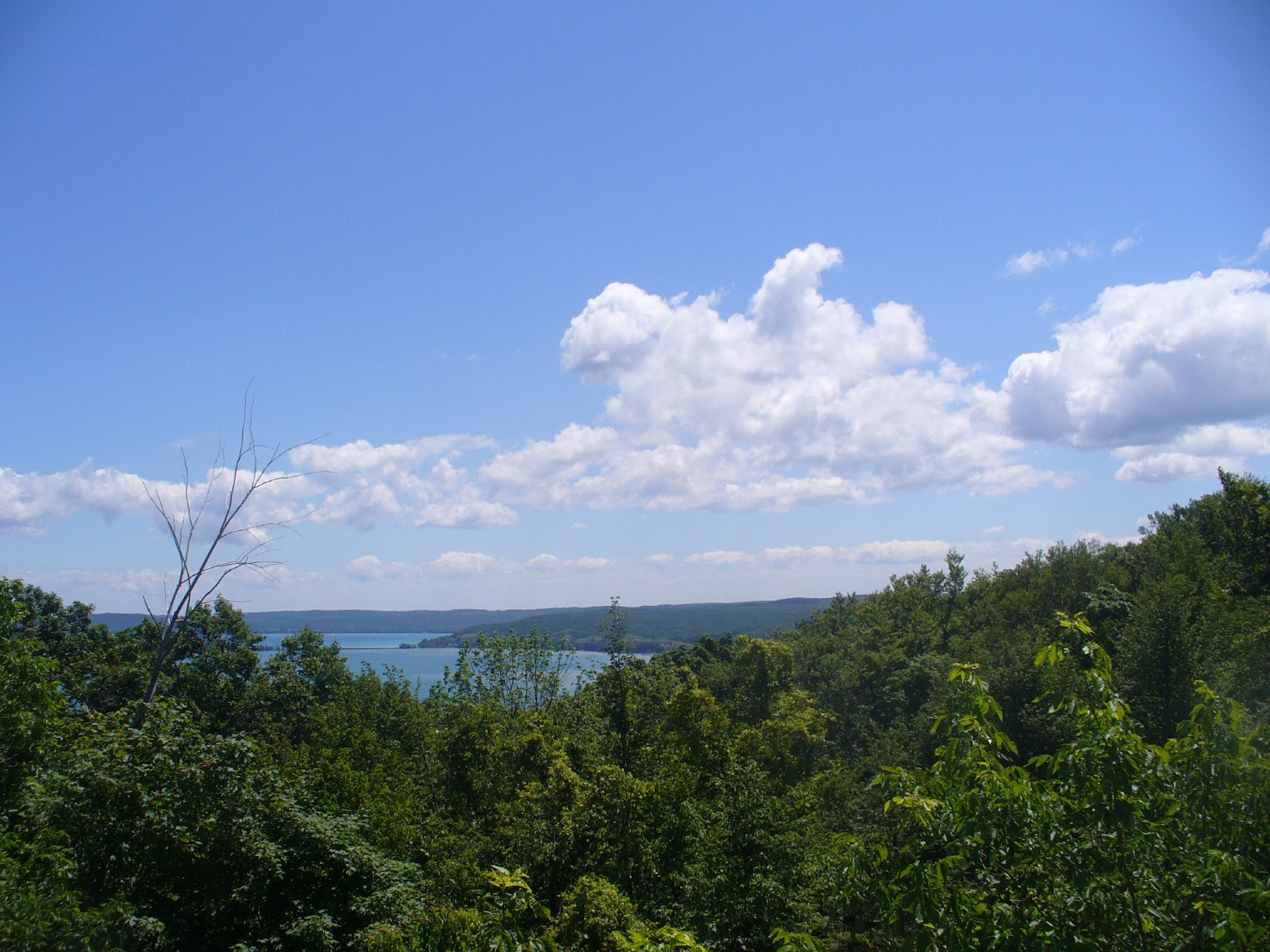
Sleeping Bear Dunes National Lakeshore, as framed by Earthbender Iris Jenks Henry,
immediately before the battery in the camera died
One of the things I've been doing is writing sixteen-sentence prose pieces. I call them essays, or something. My favorite thing about modern essay, other than the blog, is the way it combines various ideas into one, read Brian Doyle and Patrick Madden and the Festival of Faith and Writing (the best conference in the greater US of A), and the way it can jump from one idea to another, the way it does with this sentence, and this short story at Haystack, and the way I keep thinking that I can self-publish, like a self-titled EP, Melissa Jenks, the Short Stories, but I'm too chicken, and then I think about the article I read in fu**ing Oprah about vulnerability. Of all places.


It reminded me of a lot of the things that I've been reading about brain chemistry and human evolution (pop quiz: what happened 100 million, 1 million, 100,000 years ago?) and how scientists (of the hard and not the Christian variety) believe that homo sapiens evolved its complex brain architecture in response to compassion. And that dogs evolved their domestication with us at about 40,000 years ago; and that many of the things about the ways that our neurons map up against our evolutionary architecture has a connection to morphogenic fields; and Darwin wrote about red fields of algae bleeding from South America in Voyage of the Beagle (nota bene: he was a 25-year-old biologist aboard a clipper rounding Cape Horn by sail, in the noble day of sail, when Captain Josh Slocum was out there in his Spray, and all of us and our bilious climate change were just a gleam in their eye, praise Jesus); and now I carry my Shadow behind me and he pees on my floor when he is anxious and I am alone as my life partner sails across the Atlantic and I realize how Ahab's wife must have felt, not to mention all the wives and sweethearts that were never to meet. I'm here with my dog, my Shadow, and my shadow, my terror at the silence of the strawberry moon. And also the television, the only thing aside from meditation and dreaming that offers alpha waves for the evolved brain.

And the internet, I suppose. I propose this as a cautionary tale. I am home, like Emily Dickinson who wouldn't leave hers, but I have MBPN and factory-farmed pork and myth and the USPS and the future falling backwards behind me as I look up at the stars and thunder in the sky. Yeah, I'm home.

Whatever that means. With my Southeast Asia on a Shoestring and Joy of Cooking laid out in front of me. It's weird, being here, the end of June, one month of spring already gone, half the garden not planted, because of us, our pursuit of adventure or art or whatever it is. Rolling thunder rumbles.

(Answer, inverted, if I could figure out the html: dinosaurs explode because of asteroid, neanderthals evolve tools, and homo sapiens emigrate Africa.)