Showing posts with label food. Show all posts

Friday, September 09, 2022

Wareham, Massachusetts

There’s a deeper malaise going on, physically and spiritually, in the air, maybe long covid or long lyme, microplastics. Point five percent of what we now eat is plastic, they say. An alarm I’ve been sounding for about twenty years: from the Bahamas, its protected beaches strewn with plastic. In Chicago, in the aughts, I have a distinct and virtuous memory of using a carbon calculator. At a yoga studio in Mattapoisett, more recently, where a shiny-legged woman wrinkled her face at the hand and foot stains on my long-used and not-replaced mat, to which boat paint still adhered.

The physical pain I think sometimes is the pain of giving up writing, as sometimes I fear I am doing. I go days without penning a word, not even in my journal. Maybe that is what is accumulating in my gut. Or maybe instead I am an overwrought effete dilettante and the pain comes from giving up the idea that something will rescue us, that if I string the right combination of syllables together the world will unfold like origami, and all will be saved. The pain is my body’s realization that it is too late to be saved.

I am grieving the world we have lost, a world that is dead. Half of earth’s creatures have died in my lifetime, as I have watched, as I have tromped in Chicago boots and exhaled in Cape Cod yoga.  It is ongoing. We accelerate over the cliff, blindfolded. In Crudo, Olivia Laing writes:

We all see it coming, we are all sick, me and everyone else, the first casualties of the oil wars.

So the physical pain and the spiritual trauma are one: the flayed flesh of fish perches on my fridge rack.  Bought with someone else’s money. Bought with this green fiction that shapes our ends while life goes on around us, life goes on around me. I watch the weeds grow in the garden, unable to pull them up. The wind builds. I watch the neighbor’s house rot.

In her exegesis of Joan Didion, Elisa Gabbert says writing finds grammar for the pictures that haunt our minds. As Didion says, "The arrangement of the words matters, and the arrangement you want can be found in the picture in your mind. The picture dictates the arrangement." Then, Delillo—"sentence by sentence into the breach." I align that hunting for the grammar of the idea with George Orwell's third reason for writing, the historical impulse. It is not enough merely to have the idea, the shimmer of an image or a story, but the story must be recorded, to the best of one's ability. The cave painters of Lascaux imprinting the record of their consciousness on the walls of caves. 

Gabbert continues:

"Writing isn’t hard the way physical labor, or recovery from surgery, is hard; it’s hard the way math or physics is hard, the way chess is hard. What’s hard about art is getting any good—and then getting better. What’s hard is solving problems with infinite solutions and your finite brain."

Does sharing the ideas itself help? Help purge the ideas? And if so is that a good thing, or is it just palliative? Allowing me to buy a new yoga mat, a new pair of boots.

trigger warning

In this episode of the Moth, a survivor retells the story of her assault and says that in telling it, it is the telling of it that is saving her, allowing her to continue to live with the thing that could have killed her, was intended to kill her. Maybe we don’t listen to rape survivors because they have so much to teach us. But we can’t listen to them, or we would need to impeach Brett Kavanaugh and Clarence Thomas, the rapey men currently deciding, again, for the insides of women’s bodies and also the constitution's future. (One thing I think gets lost in this discussion is that medicinal termination of pregnancy was the legal province of midwives and women until the enlightenment, one more thing noble men took upon themselves to colonize.)

Friday, September 26, 2014

Break

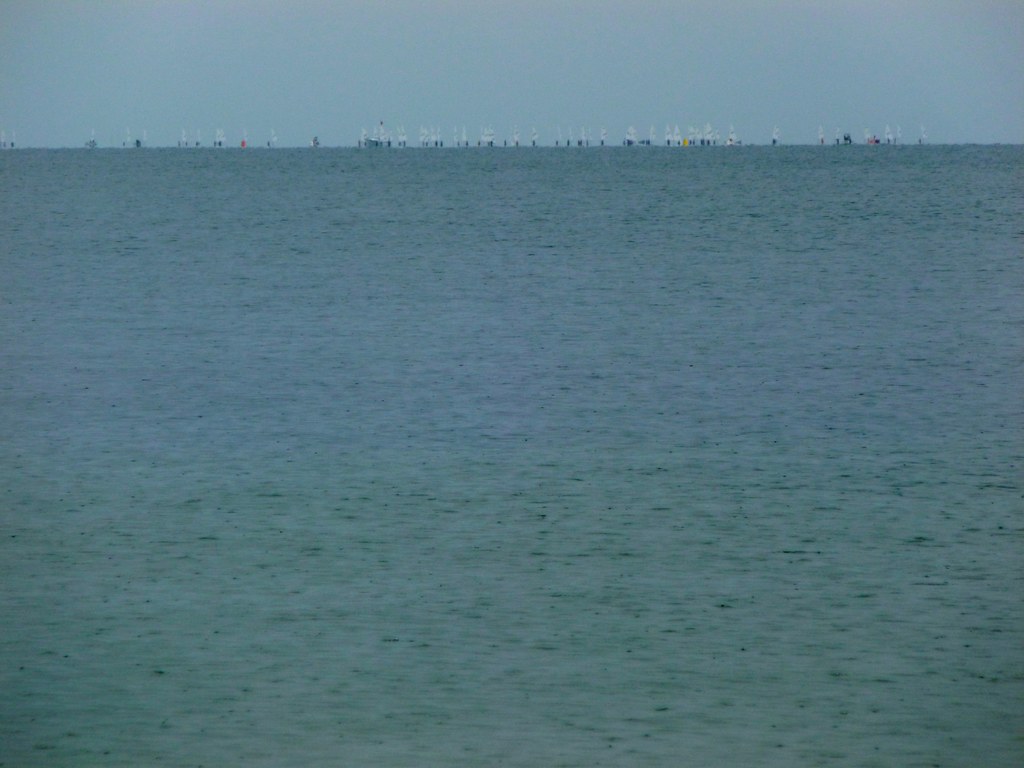
Weekday regatta at Mattapoisett Harbor
August is a good month to spend in Massachusetts.  There are regattas.  There is alleged sunshine, more than the rest of the year, at least.  There are clam bakes and fresh oysters and fluke sushi and better lobster than in Maine, if you can get your fingers into any.

Light at Mattapoisett
There are camping trips and sailing on ponds.  There are bonfires.  There is precious little swimming.  There is chilly yoga in sunlit patches.  There are car shows.  There are rainbows and sunsets and lighthouses.

Authentic New England clambake at the Marion VFW
The clam bake I refer to was especially spectacular.  It is impossible to sufficiently rave about the seafood around here, and how cavalier the locals are about its deliciousness.  New Bedford, less than ten miles away, whence both Ishmael and Herman Melville sailed, is still the largest working seaport in the United States in terms of volume of seafood caught.  The shellfish here, I would wager, are the best in the world.  As are the lobster, I believe.  Maine is famous for its lobster because they possess a larger quantity of them—Cape Cod lobster are rarer, sweeter, more expensive, and more succulent.  Scallop boats out of New Bedford bring in more money than the famous king crab boats in Alaska.

Clam closeup
Then there are the clams.  New England clambakes are legendary, even among those who have never been here.  The clambake is a traditional method for preparing seafood, using steamed seaweed and heated rocks buried under the ground.  In many places around the Cape, bars and restaurants advertise “authentic” clambakes.  But the one we attend, and that I blogged about way back when, in one of my earliest posts, actually *is* authentic.  It’s held at the VFW, and has been the same for decades.  The same, except now attendance is dwindling, with only 150 left of the 500 who used to attend annually.  Sadly, of the benches that were filled up when we attended eight years ago, only half were full this year.  They said they didn’t even break even this year, as membership in the VFW dwindles.

He ate four quarts--and flashes me a four to prove it
I understand, because it still feels like a steal to me.  $32 for all-you-can-eat steamed clams, haddock, sausage, corn, potatoes, butter, brown bread, and onions.  All of it steamed in beds of seaweed, dug into holes in the ground by veterans and volunteers.  There were so few people this year that we were able to fill up huge bags full of clams and corn to take back home with us.  Later, we transformed them into clam scampi.


A volunteer rakes the seaweed--still the same seaweed, the same rocks
It’s sad to me.  The VFW, and social organizations like it—clubs, churches, leagues—are the institutions that hold America together, that keep us strong.  When I was in college a book came out called “Bowling Alone.”  It told of the collapse in American community organizations from the fifties and sixties till today.  Back then, people joined bowling leagues, or the AmVets, or local social clubs.  Now we bowl alone.  We live, as we dream, said Conrad—alone.

Now people sit on their asses and watch television.  Play computer games.  Mess with the internet on their smart phones.  We shop at big-box stores.  We don’t go wade for quahogs or check lobster traps.  We don’t dig kelp and rocks to prepare food on a beach.  We buy bargain chicken grown in factory farms, chickens that can’t walk, that never see the light of day.  I’m one of them—don’t get me wrong.  Maybe we’ve gained something—freedom, Wikipedia—but we’ve lost a lot too.

Not that the seafood’s necessarily any better than farmed meat.  Grillabongquixotic doesn’t eat seafood for ethical reasons, after seeing firsthand the way the ocean’s been fished out.  These new fishing shows (Wicked Tuna, Dangerous Catch) glorify the fishermen out there, but ignore the quantities being taken and the dwindling fishery.  Scientists estimate that human beings have already reduced the population of big fish in the ocean to 10 percent of what it was in 1950.  We’ve eaten 90 percent of the fish that we had.  Already in Massachusetts, bay scallops, the sweetest of the shellfish, are gone.  This used to be the only place in the world where you could eat them.  Now there is not enough sea grass to support their reproductive cycle.  How many years till there aren’t any clams?

Some people eat meat and don’t eat fish—better to eat factory-farmed meat than fish out our remaining wild food.  But then some people don’t eat beef for ethical reasons.  Cattle emit methane (methane could provide electricity for us, I argue, but no one listens) and are grown on factory farms.  Chickens and eggs and hogs are problematic, too, with the vast pools of toxic waste their production manufactures.

In Thailand, I met a traveler from Peru.  He didn’t eat soybeans or any soy product.  He refused to.  He’d seen the forest in Peru being clearcut for soybean fields.  It was the first time I’d seen someone who ate meat, but not tofu, for ethical reasons.

So in August we ate our clams, bottom feeders, and we’ll keep eating them until they’re gone, I suppose—until the New England coast is remade by aquaculture.  Aquaculture and algae are among the few things that can save us from climate change, I believe.  Offshore wind and algae farms, with oysters and shellfish beneath the surf for protein.  Delicious, nutritious, and good for the planet.

Plus there’s all that butter.

August is a good month to spend in Massachusetts.  But now it’s September, and already it’s getting colder, the trees tinged with red.  Now it’s September, and as House Stark like to remind us, winter is coming.  Winter is coming, and with it the cold.

Wednesday, August 20, 2014

Marion, Massachusetts

Family
Coming back to the United States of America has meant a lot of change.  Some things I am happy about:  drinking water from the tap, paper towels in bathrooms, the fourth of July, cooking for myself, guacamole, cheese.  Being able to flush toilet paper down toilets without worrying about it.  Best of all:  pointing my feet at people without being rude.  Things I have not missed:  socks.  hoodies.  coats.  long underwear.  cold. 

I’ve been traveling a lot since I returned to America, and I am alleged to be writing about travel, and yet somehow travel within these United States feels less deserving of catalog.  But that is my own stingy prejudice, I know.  I spent two weeks in Chicagoland and a week in Ann Arbor—sampling local cuisine, attending local cultural events, and visiting local farms—all of which I would be proud to advertise if it were in Vietnam or Laos.  Why not here?

So.  On we go.

Sophia examines her trophy in private
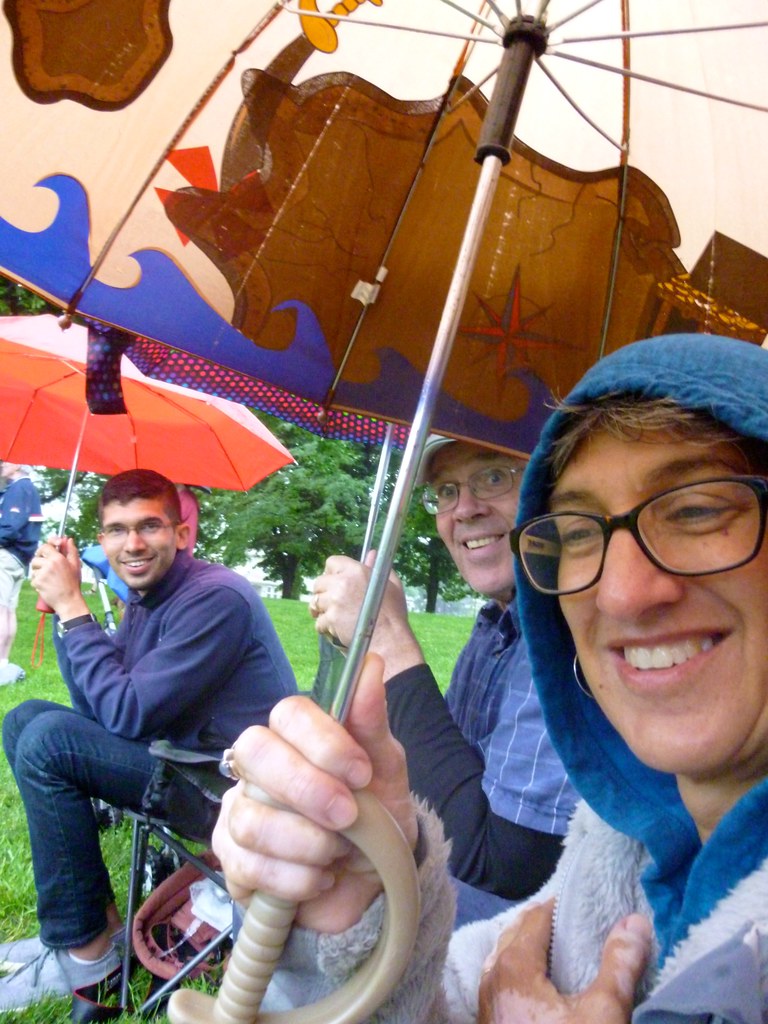
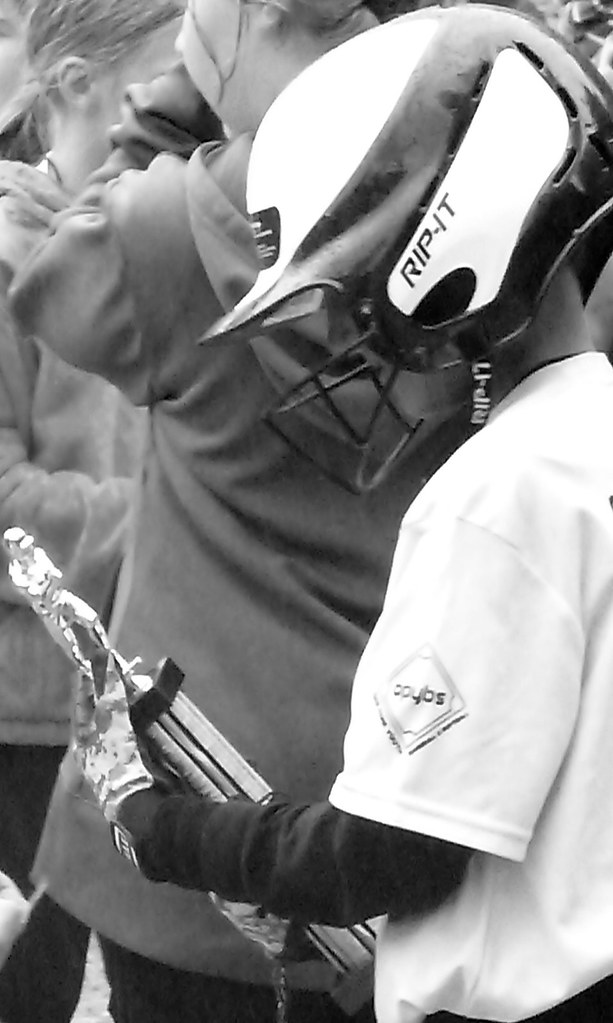
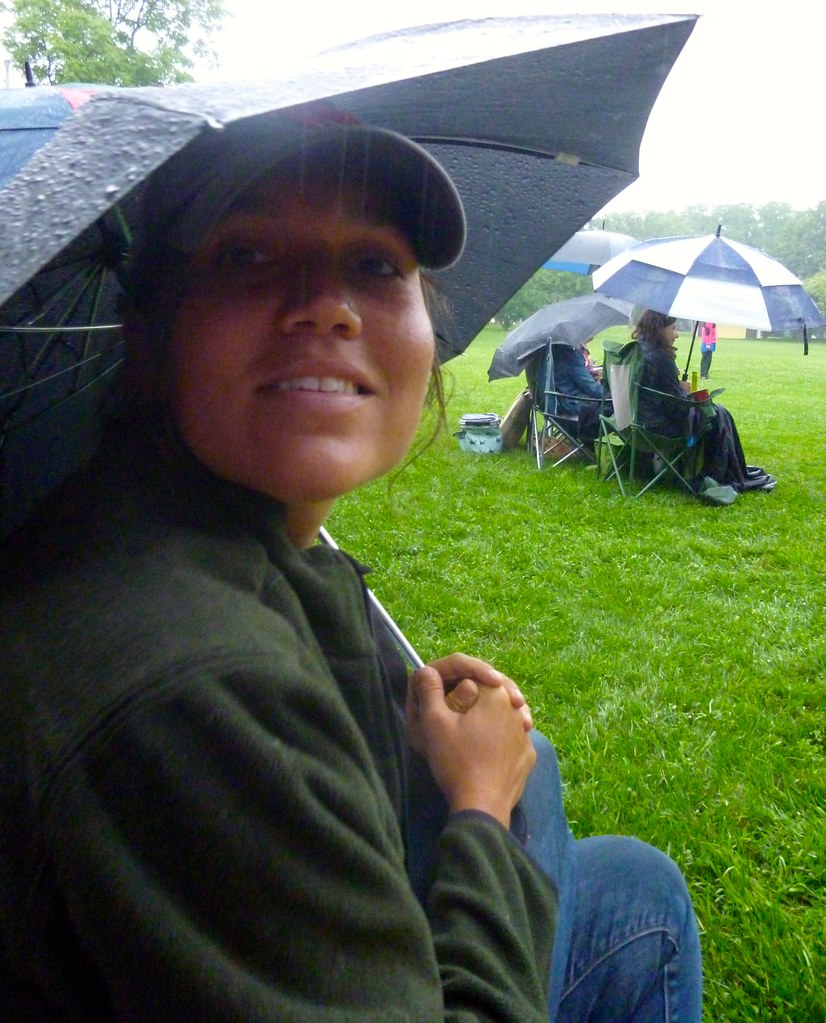
On my third day after arrival I attended my niece’s championship baseball game, during which she scored the winning run, in the bottom of the ninth inning, thus winning the entire season after losing to the opposing team the previous night.  Too good to make up.  We sat in the rain to watch her, all five of us—my entire immediate family.  Do we resemble each other?


Beautiful sister
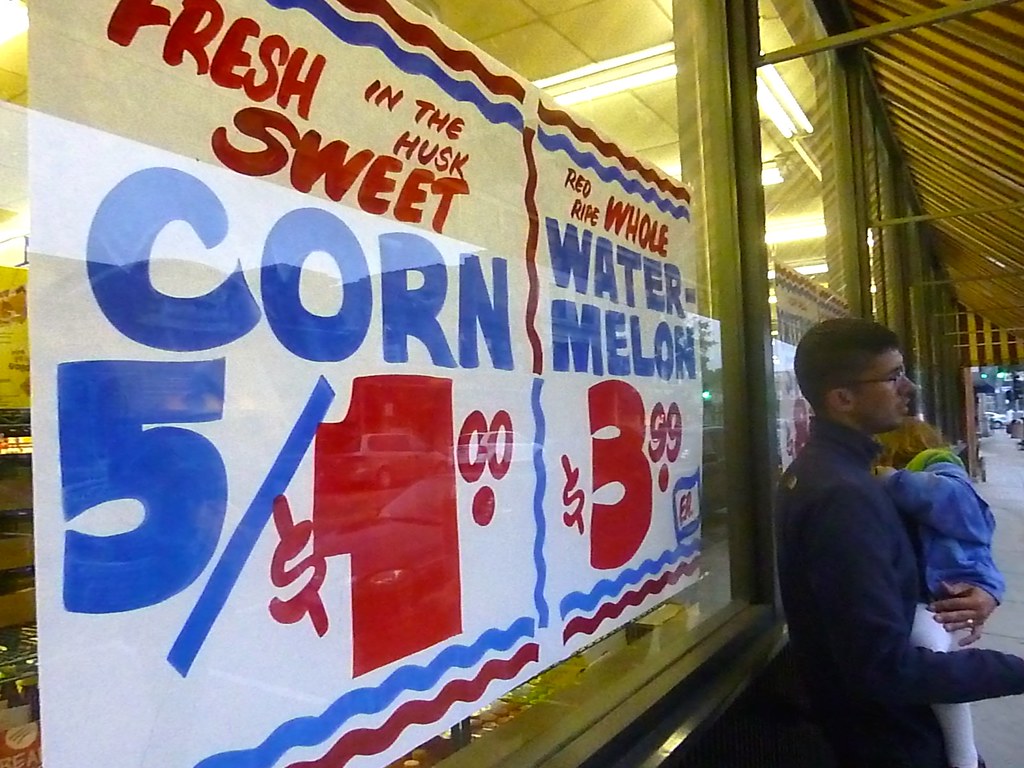
Then there are these interesting signs, still hand-painted, at Pan’s in Oak Park.  It’s a local grocer where my friend Amy used to shop when she lived down the street, when I lived several more blocks down, for three years.  We used to walk here and to the Avenue Ale House, our local, and the Mexican restaurant across the street.  It’s now something else, maybe high-end Mexican, next to the gastropub where this time I enjoyed Chicago gin and a burger made of local ingredients.  House-made ketchup.  Farm-to-table greens.


Fresh in the husk
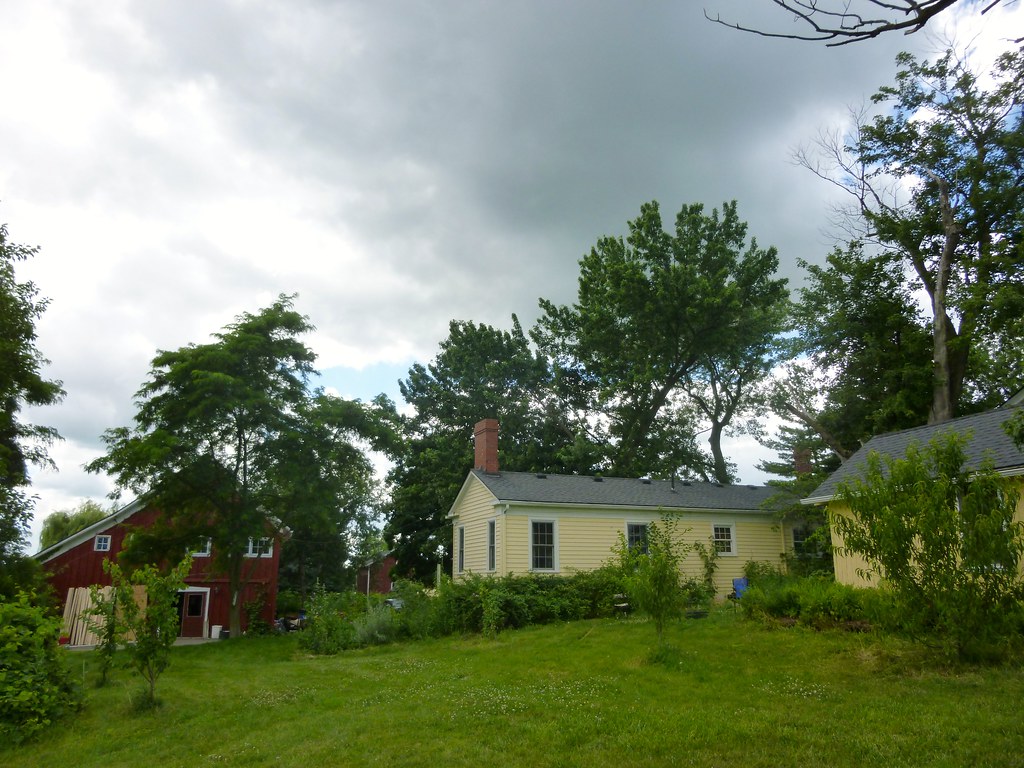
In Ann Arbor, I visited a farm where we fed pigs corn.  I felt less bad about eating them after I saw them, in a farm’s usual way of hardening one against life’s cold realities.  I saw where they brewed their beer, and met co-op workers, who travel and freely work for room and board, at farms around the country.  This farm, Mulberry Hill, which runs a CSA (community-supported agriculture), also just held its own Ann Arbor version of Burning Man.


Ann Arbor farm

Although I complain about eating meat, I feel better about eating pigs after spending some time with them.
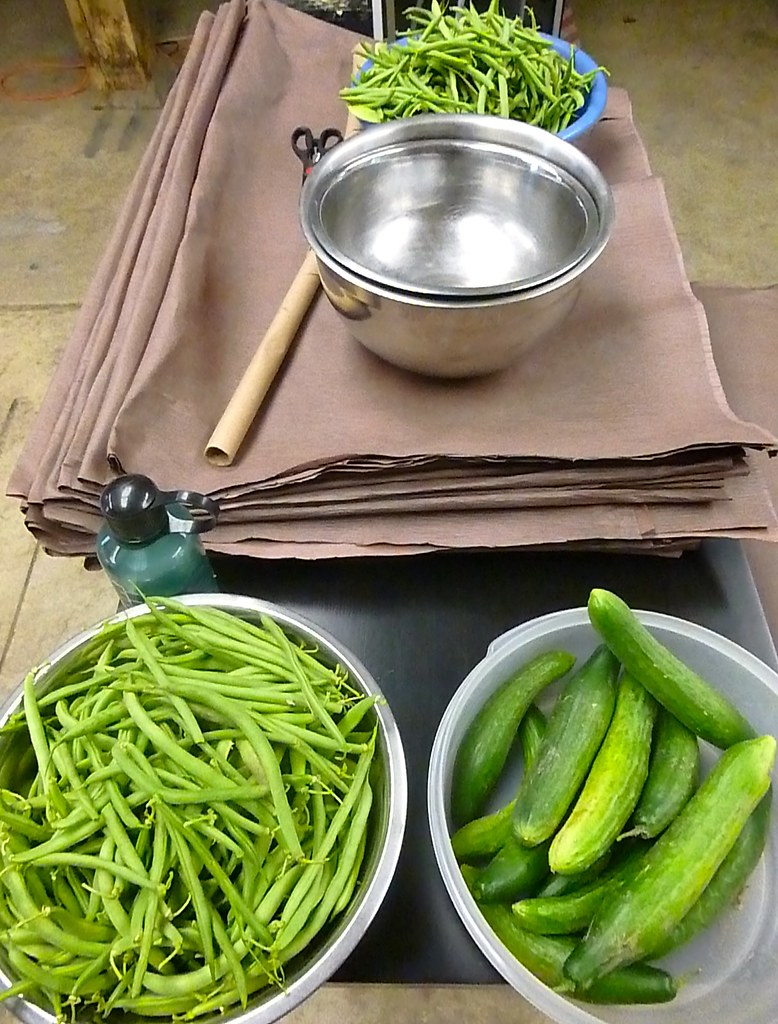
Cucumber and beans being prepared for CSA delivery
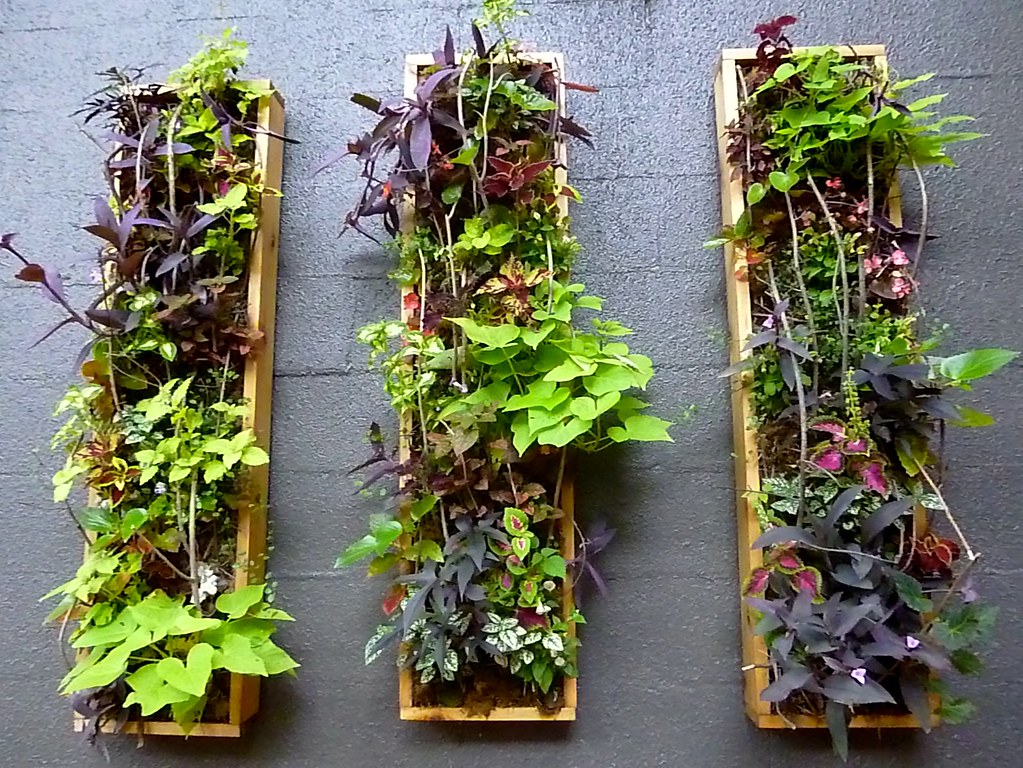
Sonia and I went for lunch at a vegan restaurant with vertical gardens.  We envisioned our own life of pro-gluten tee-shirts.  “Ask me about my gluten deficiency.”  I had vegetarian and organic mac and cheese, with local butternut squash in the sauce.  It was nutty and delicious.  We wanted to ask for extra gluten in our meals, but did not.
Vertical gardens, although it's hard to tell
My sister and I made paleo Thai food.  What, you say?  You didn’t know cavemen harvested rice kernels as they hunted and gathered?  That they pounded palm kernels together for sugar?  Well, now you do.

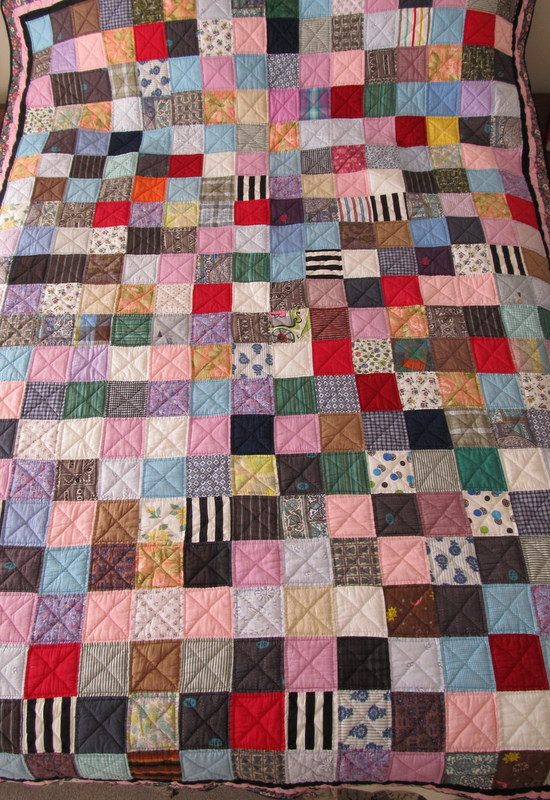
We also started quilting.  I am addicted, now, to patchwork, in all forms.  I bought a book on it, at an Ann Arbor book sale.  With pictures of the Baltimore album quilts, of which I'd never heard.

A quilt at the American Museum, not my photograph
And then I started searching online finding things like this:
Knitted patchwork, not my photograph
Or this:
Called a scrap-buster, but my favorites are the crazy quilts that use randomness as an organizing principle
(not my photograph)
Or this:
Something called domino knitting, where each block leads into the next--again, randomness, and I love it
(not my photograph)
Now I’m back in Marion, working on another boat project.  No travel, but future posts about teak and mahogany, the joys of hand sanding with 200-grit.  I slowly slip back on my socks.  The fan goes quiet.

Spirit, under construction
Here, too, I photograph beaches made of marble.  Regatta races in the fog.  I wrap my Thai fabric around my shoulders.  I want to be in two places at once.

Beach made of marble
Regatta in fog
Here, too, I am grieving, grieving and miserable.  My ability to speak and read and write Thai has been put in suspended animation, somewhere below consciousness, somewhere I can’t access.  I fall down body-image rabbit holes, something that didn’t happen as much in Thailand.  There is was normal for me to be bigger than an average person.  Here Americans look at me with cold scorn.  I photograph the surface of the water in Marion harbor, wearing my Bangkok tie-dyed clothes.  People stare.  Men.  I look at them and smile and they don’t smile back.  I wish I’d been brave enough to dye and dread-lock my hair, too.

I’m hungry all of the time because of no more Thai food.  Meal here consist of meat.  Bread.  Cheese.  I’ve eaten my last moo daeng, pad Thai, pad see eu, curry, som tahm, gai yahng.  I’m already forgetting how great it is to hear Thai, see Thai, speak Thai—food, language, people.

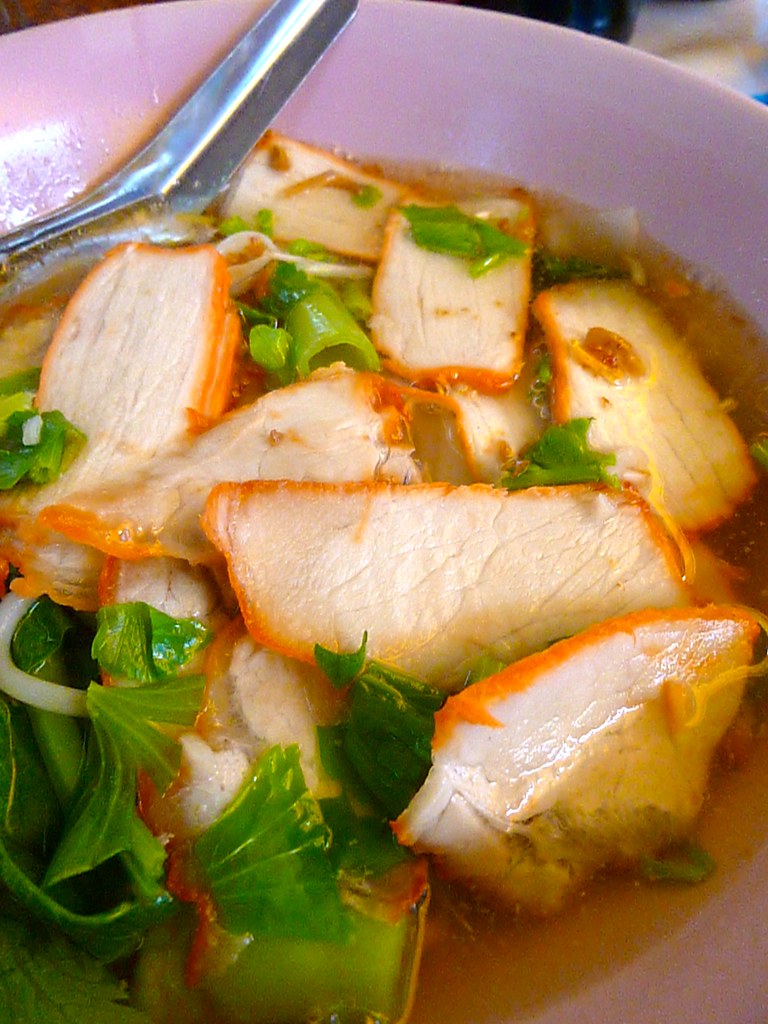
Moo daeng (red pork--okay, it doesn't look like I'm protein-starved based on this bowl)

Late lamented pad Thai
I even miss the smell the Argentine kid at Bluefin complained about, saying, on his first day in Asia, wrinkling his nose:  what I didn’t expect was the smell.

Every so often I catch a whiff of it here, in this air that smells like nothing, a whiff of the dank, fetid, rich smell of something rotten and it remains me of home.  What I wrote in my journal the first morning in Bangkok was:

It smells the same.  The humid air.  That eucalyptus and incense smell in the morning.  The mildewed bathrooms.

Is it the lack of light and vitamin D that brings me depression here?  Is it the meat-heavy diet?  My brother attributes the exponential rise of depression in modern America to the toxic hormones in our factory-farmed meat, animals that live and die in trauma, and the stress hormones in their bodies that go into ours.  In Thailand I lived on vegetables and rice and oil.  I ate fragments of egg and meat in almost every meal, but barely more than fragments.  When I bought a chicken skewer at the market I wolfed it, protein-starved.

Or am I deluding myself?  I had plenty of anxiety and depression in Thailand, too—fear of locals, fear of strangers, days when I just wanted to speak English and order pizza and stay in my room.

Or is it just aimlessness now that I’m back, not knowing what or where I want next?

Thursday, July 03, 2014

Oak Park, Illinois

Last Thai morning somtahm
I used to live here in Oak Park, down the street, on Cuyler.  Back then, I looked like this:

Me, in 2000
This was my apartment:

A shelfie, before they were called such
I lived there with my cat, Rumor, in a studio apartment for $545 a month.

Rumor, on my beat-up chair
I worked at a magazine office in the city, and I took the train in.  It was impossibly romantic.

Now it is fourteen years later. I moved here in April of 2000.  Two days ago I flew back into Atlanta and family picked me up and we drove through Chicago to its western edge, to Oak Park, where my sister lives with her husband and four impossibly beautiful daughters.  She keeps chicken and grows peas.  She longs for Thailand, as already do I.

So far today I have eaten leftover fast-food chicken and pizza and salad.  And fresh snap peas and a backyard chicken egg.  Since coming back to this land of cheese and wheat, I have eaten whole-grain bread and yogurt and cold hard cantaloupe.  What I have not eaten:  curry, pad pahk luahm, fresh raw Thai basil, somtahm, rice, chicken grilled over charcoal in its own fat, mango-yogurt smoothies, coconut bread.  My diet here is completely different, as is my sun intake.  It’s like my world’s upended.

I didn’t notice the absence of smell on my arrival that much this time, but when my brother and sister and I talk about the smell of Bangkok, it’s like we’re talking about home.  The smell of the khlongs, of the markets, of the city.  The humid darkness.

The sun stays up till eight o’clock here.  It mystifies me.  How can it be eight o’clock and it still be light?  As does the sun itself and its mysterious chill, its pallor.  It’s 75 degrees here this week.  At Bluefin, in the last week I was there, it rarely got below 80 degrees at night.  My feet are cold.  It’s the warmest month of the year and I need socks.

I continue traveling through my own home country.  Is this my home country?  Is the other?  Asked Pontius Pilate:  what is truth?

I just remember the first Thai I heard at Narita Airport, in Japan.  It was the final leg of the flight, on January 1.  A new moon.  Thai tourists were returning from Japan on vacation.  When they talked, it sounded like home.  This time, on flying out, in Narita I heard almost none—maybe a whispered word among Thai tourists disembarking—and I listened as the language went silent. 

Saturday, April 19, 2014

Bangkok, Thailand

Chatuchak Market from above
Back home again.  Bangkok still feels like home.  Today we took the Bus 3 to the Chatuchak Market, the Weekend Market, which is supposed to take you three days to explore.  In doing so we went past Phahayoltin Rd, the Rd my family used to live on.  I winked at the Victory Monument as I went by, I think.  It seemed smaller.

We’re staying at the Bluefin Guesthouse, where we’ve stayed for two other weeks throughout the course of this adventure, and has begun to feel like home.  We know the other residents, they have a storage unit where some left-behind gear was stored, and we have our favorite noodle vendors out front.  Last night a big group of us went to the barbecue restaurant where we’ve gone twice before, Thai-style with a charcoal grill set up in the center of the table.  You pick up meat and poach or grill it at the table, making a broth with seafood and vegetables and tofu or whatever else you find at the buffet.  I try not to think about what my travel doctor would say about all that room-temperature chicken.

Here internet is fast, fast enough for video, so we’re plunged back into the realm of YouTube videos.  But I love Bangkok.  Whenever we met travelers who had spent a significant amount of time in Thailand, they said their favorite place was Bangkok.  Cheapest?  Also Bangkok, Khrung Thep, the City of Angels.

We buy fruit from the trustworthy vendors and use the kitchen—ice in the freezer and in our glasses.  The table out front feels like the front step.  I keep thinking this time in Bangkok we’ll visit all the temples we’re supposed to, see all the sights, troll the neighborhoods.  Somehow we’ll be able to evade Bluefin’s gravitational pull.

Thursday, April 10, 2014

Luang Prabang, Laos

The cool park at the top of the hill
Baguette in the white-hot sun.  Traipsing down the main street past French cafes and tour agents and elephant posters, trying to get to the temple or the museum or the cool park up the hill.  Food is horrifically overpriced, but the baguette stalls way down the gauntlet of pavement reflecting 120 degrees up at our faces, the sun beating a burnt patch on our faces and the top of our heads, are cheap.  I buy a hat to dodge the heat.  It’s only farangs out in this madness, girls in bikini tops and shirtless boys on motorbikes.

We have to buy eight bottles of water a day in order to stay hydrated, and they cost $1 apiece, and there’s no way to refill them.  Our budget goes down, my plastic guilt goes up.  We fill up an entire corner of our room with plastic bottles.  It’s also impossible not to buy them, as we’re sweating out the equivalent amount and often more—sometimes, often, I am dehydrated anyway.

Nevertheless:  drinks above the Mekong.  Climbing to the top of the hill and surveying the town from above, all the French red-clay roofs.  Walking one night way down to the tip of the peninsula and realize that it’s for really, really rich people, like $1000 a night rich people.  They can afford the water.  We can’t.

Our guesthouse has a terrace and we can sit out there at five pm and watch the monks begin to play music, a drum gonging the welcome and then everyone thronging to take their turn on instruments.  Priests in Luang Prabang are somehow more photogenic than the rest of Southeast Asia, teenaged boys from the provinces with black umbrellas and mismatched robes, chattering as they walk down the street together.  I understand why people try to take so many pictures of them, and I cannot bring myself to.  I try, nerveless, from behind.

Sunday, March 30, 2014

Maecharim, Thailand

Home
Chiang Mai, Thailand:  19 March - 26 March
Nan, Thailand:  27 March
Maecharim, Thailand:  28 March - 30 March

On the move again, after a full week in Chiang Mai.  Despite its full-on tourist-town status, it did have gorgeous gilded temples and spectacular night markets.  As much as I despise these tourist-track stops (the banana pancake trail, after Alex Garland and Lonely Planet) they draw us in.  I think the elephant-pants trail would be a better name.  All the backpackers where elephant pants, and everyone sells them.  I looked for a pair for a while, and then stopped when I was unable to find a single design that did not incorporate elephants.  It’s difficult to feel cavalier about elephants as decor when I know about the pajaan.

Nevertheless, some things are easier if we’re not the only farangs in town.  We shopped, ate farang food as a break—my halfway marker.

But now we head back in the wild.  Almost everyone (that we have met and I have read about) heads north from here, through Chiang Rai and the Golden Triangle and onto Huay Xai—or by bus direct to Luang Prabang, the next backpacker stop.  But we head east instead, into Nan province, the northern district that remains one of the least frequently visited areas of Thailand.  My parents are running a weeklong English camp at the school there, the school their time in Thailand helped build.

Although my visa soon expires, so we’ll only be able to stay a couple of days, I still wanted to see them and help in any way I can.  If I’m honest, though, I also had a selfish reason for wanting to come.  It’s been my failed intention all along to visit the sites where I lived as a child, and this is the first real chance I’ve had.  The apartments and complexes where I lived in Bangkok are being razed.

This house, though, is where we spent two quiet summers.  Living in a concrete house on mission grounds, bathing from the collected water dip bucket in the concrete bathroom with the drain on the floor, no electric after dark—where I read all of Sherlock Holmes.  Twice.

I feel like those precious summers meant more to me in some way, than other chunks of my childhood—inspiring me to live sustainably and ultralight as much as possible.  To cast off:  money, desire, other people’s expectations.  There, at this house, I collected an egg from a chicken in our backyard, and fried it, still warm.  Thence comes my love of farming as an avocation, my love of seeing where food comes from.

Also, maybe, my continued love of fried eggs.

So in coming here, to the mountains of Nan district, I want to come home.  Sometimes I’m this desperate wandering child, clutching any scrap of home around myself for warmth.  Maybe this is the closest thing I have to a home, the only building where I lived as a child that still exists.  A home where I still don’t belong.

The house is bedraggled and cobwebbed and padlocked, but it looks exactly right.  Smaller, maybe, as people always say on going back.  The backyard doesn’t possibly look big enough for chickens.

One night there Dad drives us up the rutted dirt road to the refugee camp that used to be here.  Lao refugees from the communists across the border.  My whole childhood I thought the people we moved here for were Cambodians, refugees from Pol Pot, but I never asked.  Most of the people here were Hmong, fighting with Americans against Lao guerrillas.  Many of them emigrated to the States.

The forest is hazy and brown, from all of the burning.  In hot season, the farmers burn the undergrowth.  I used to call this slash-and-burn agriculture, but there’s not so much slashing.  It just seems like a carbon-intensive and old-fashioned way to make biochar.

We see a bamboo hut, and speculate on its rental costs.  This is really the middle of nowhere.  No elephants in sight.

A photograph by Ron Jude -- read his interview here:  Set the woods on fire

Tuesday, March 18, 2014

Nam Sohm, Thailand

12 March – 18 March

K. and new friends
We're in the heart of Eesan, or so I hope. A place where only farang fans come. The husbands of the ex-bar girls. Maybe that is too false-hearted of me. Too ugly.

Although also true. We told a tuk-tuk driver in Bangkok that we were headed to Eesan to get away from farangs, and he said: but they're still there. “Fans” are there. “Fan” is the Thai word for intimate partner or spouse, a borrowed word from English. It's a fun word to use. Whenever I say that K. is my “fan” I feel like a celebrity.

So the town is chock-full of ancient decrepit boyfriends with cute perky Thai girls in braces. But I'm the only female traveler in town, and people seem shocked to see us—what brought you here? They ask. We don't get many tourists here. It only makes sense when I explain that my brother has a friend from here, and she told us to come visit her family. The only people that come here have a connection.

Which is exactly what we're looking for. Despite the fans, there is cultural wellbeing here, a sense of true authenticity. In short, it's the best week we've spent in all of Thailand (and that includes the week at the beach villa).

For one thing, the food. As always, the food. Prices are more or less standardized across Thailand, so a bowl of noodles or a simple dish over rice is always basically B30-40 ($1-1.2o), with the notable exception of tourist resorts and restaurants. But what is not standardized is quantity and quality. What B35 buys you at a city bus station, a half-full bowl of broth-heavy soup (albeit still delicious, arguably better than the best Thai food in the States), a bowl that leaves you needing to find a chicken skewer to fill up, is probably half of what B35 buys you here. Here, we go out for noodles and receive giant tureen-sized bowls chock-full of noodles and meat and bean sprouts and greens, more stew than soup. We almost can't finish them. Almost.

I'm actually able to have Thai conversations here, able to hang out with Thai people and cook and eat with them and do: what? Live a normal life, but in Thailand. People here are happy to see two goofy Americans drive by on a miniature bike (miniature only in comparison to our size), happy to smile and laugh and not try to overcharge us, thrilled at my attempts to speak Thai. They are thrilled just that we are here visiting—like the old Thailand, the Thailand from fifteen years ago, the Thailand I remember.

It's also a vague relief to have a break from these places where there are a ton of sights to see and attractions to visit (not that there aren't plenty of temples and waterfalls to visit here, too, that we're not getting to), because all the sightseeing begins to feel oppressive. Like a duty necessarily carried out, not something pleasurable. Nam Sohm just feels like normal Thai life in a normal Thai town, about the size of Mars Hill, the town where we go grocery shopping in Aroostook, and in the same pastoral landscape. The town is surrounded on all sides by rice farmers, the same way we're surrounded on all sides by potato farmers in Aroostook.

Somtahm with sehn, noodles, added
People here make sense to me. They live the same kind of life I do at “home.” I compare prices with them, finally able to communicate in something approaching comfort. Meat, dairy, and potatoes are unsurprisingly cheaper in the States. Things like shallots and limes—exotic ingredients in the States but necessities for Thai cooking—are cheaper here. We eat food that we've never eaten before, like green papaya salad (somtahm) with noodles mixed in, an all-in-one Lao dish that they only make in this province. It's delicious and spicy, a refreshing change from noodle soup and sticky rice.

One of the lizards we ate for dinner.  A bearded dragon, I think, like the ones they sell in American pet stores.  The boys in the neighborhood go fish for them, with bamboo poles and noosed ropes.
We eat lizards: skinned and dried in the sun and fried and then pounded in the mortar and pestle with herbs and spices into a kind of meat salad, like lahp. They tell us they eat snakes and scorpions and rats (not city rats, they explain with a shudder—ground rats from the forest—which is better if only mildly so). They'd eat them more, I guess, but they say they're harder to come by now, harder to find, that it's hard work to get them. Unlike the tourist areas of Thailand, where I feel wrung dry by touts, here I feel dazed by my own wealth. We go the market and buy 100 baht ($3) worth of chicken and pork and innard skewers to share, and the lady shoves in a whole handful extra. People behind us comment that we've already spent 100 baht, as if it's an unearthly extravagance. I feel guilty for my mild indulgences, my B10 yogurt drinks that are still half of what a big bag of market soup costs, enough to feed a whole family.

Lizards, cooked, as lahp
Here, on a budget, we live like kings. We found a teak house, three-bedroom, for B1500 a month. It doesn't seem possible, and yet it is. I dread going back to the reality of the tourist track with its crepe and falafel stands, all-you-can-drink specials, reggae bars, and dance clubs. I'm just happy. I'm trying to just let myself be happy, not obsess about how little we're doing or how little time we have left or much there is we could see.

Saturday, March 01, 2014

Bangkok, Thailand


The Bangkok demonstration site.  Yes, we were told to stay away.  And no, we did not.
19 February – 1 March

You think of travelers as bold, but our guilty secret is that travel is one of the laziest ways on earth of passing the time. Travel is not merely the business of being bone-idle, but also an elaborate bumming evasion, allowing us to call attention to ourselves with our conspicuous absence while we intrude upon other people's privacy--being actively offensive as fugitive freeloaders. The traveler is the greediest kind of romantic voyeur, and in some well-hidden part of the traveler's personality is an unpickable knot of vanity, presumption, and mythomania bordering on the pathological.  
--Paul Theroux, Ghost Train to the Eastern Star
This is exactly how I'm feeling lately. Not that I don't still love the grit and chaos of travel, but more I feel its aimlessness, as if I don't know exactly what direction I'm supposed to be moving. We rested in Bangkok for more than a week because, well, Bangkok feels like home. Especially Siyan, our adopted neighborhood, home of Bluefin Guesthouse—which I'm sure doesn't need any more business, or I don't know if I want it to have any more business because it'll lose that magical quality it still possesses.

Three bowls of beef guaytaeou in Siyan

Siyan is an intersection of two roads, Nakhon Chai Si and Samsen, and the site of a vigorous and thriving day and night market, unpopulated by farangs. (Except for us.) When we arrived in Bangkok the first time, I asked in broken Thai: where's the market? I was expecting something grander, maybe, a tented pavilion with arches. Instead the market's laid out on the street, with almost anything one could want. Plastic utensils, smartphones, Thai flags, clothing, noodles in any incarnation. We spent most of the week hopping from one noodle cart to the next. One that just did beef—thin slices of rare meat just immersed in broth. Another with chicken—floating whole chicken legs and sliced breast.

Thailand is beginning to lose its strangeness. I begin to callous to its beauty, the way I do to a photograph hung on the wall. This afternoon I even went through my photographs of Maine, posted some I'd never bothered to before. It's a place that looks so alien and cold, so unfamiliar now. I'm not as stunned and grateful to be here anymore, and instead I just want to settle in, find a place where I can make friends, talk to the same people every day. Instead we push ourselves forward, out of the nest again, onto the next destination, at least for a little while more.

I loved Bangkok. I hated to leave. It'd take me a full year to eat myself up one side of that street and down the other, and in the meantime I'd get educations in Thai, food writing, cuisine, and how to take market photographs (a skill I have barely begun to attempt). It's terrifying asking people if you can take their picture. More and more I feel like true travel is to move, to stay in one place until I'm no longer a “farang,” just that weird American who lives down the block. But instead we move on.

Tuesday, February 18, 2014

Krabi, Thailand

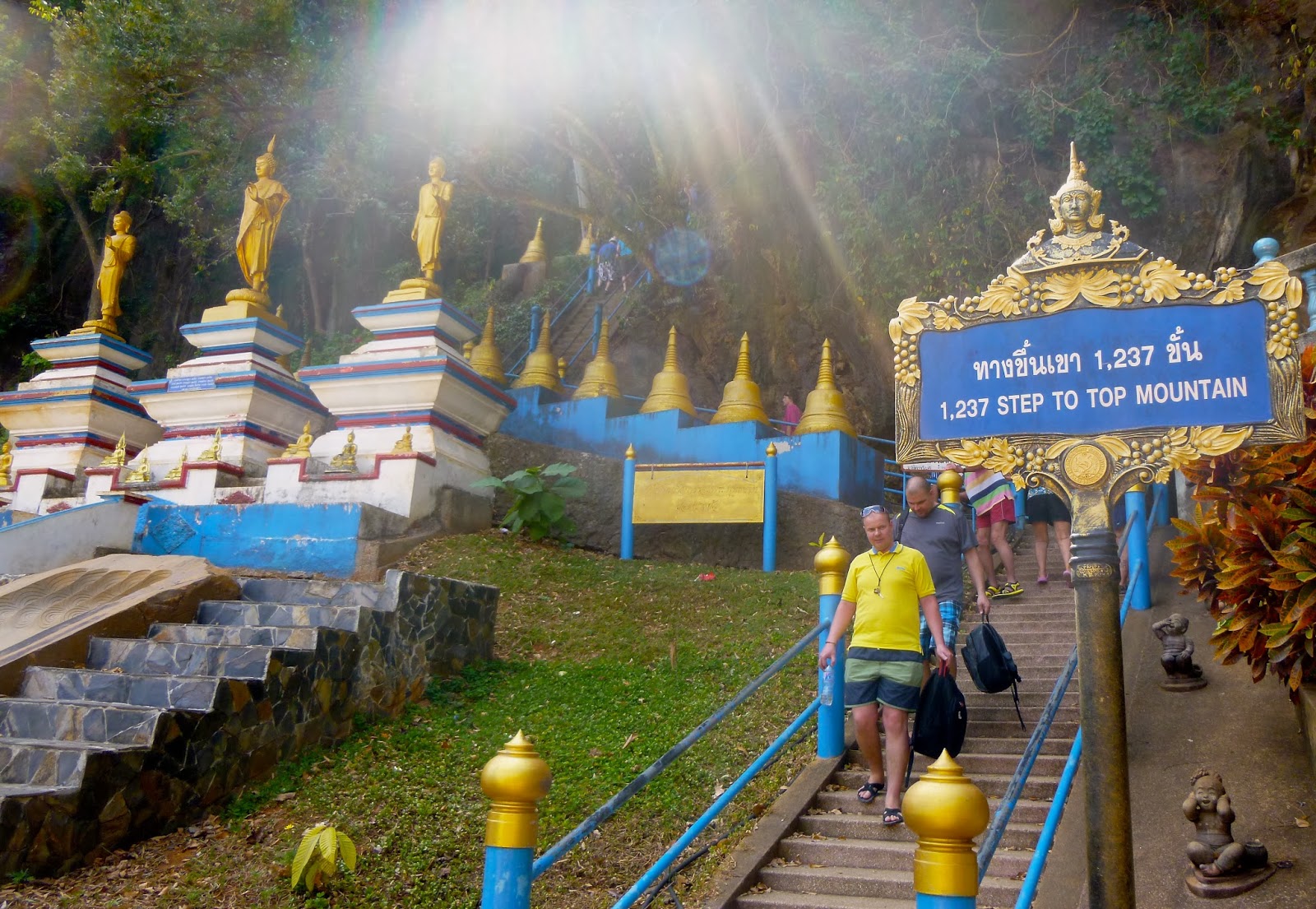
1237 steps to the top of the Tiger Cave Temple

13 February – 18 February
The Tiger Cave Temple is the one thing I was sure I wanted to visit in Krabi. I think it's good for a traveler to give herself a rest now and then, especially from doing things at a breakneck pace. It is an exhausting business, jumping from boat to open-backed truck to bus, day after day, as many travelers must do, to keep to a rigid itinerary, or for fear that if they remain where they are they'll miss something essential in the future. So I took my time in Krabi, taking a full day to discuss my intended route to the temple with various Thais, including an iced-latte barista.

Conversations like these, in which I am generally trying to plumb the depths of an arcane and unknown public-transit system, allow me to experiment with a lot of new vocabulary. The barista said that the Tiger Cave is not generally crowded with farangs, especially if I avoided the weekend, but it was already Friday when I asked, and far too much of the afternoon had passed. Giving me an excuse to stay put. The next day I quizzed an open-backed truck (sohngtaeou) driver about the price. And Monday, we finally went.

No seatbelts.  The way this lady is looking at me is the way most people do when I whip out the camera.
In the meantime, I ate. Krabi, as it turns out, has a spectacular day market. I have recently posted some photographs of pleasant things I sampled. But I find myself effusing about them as I look at the pictures. The more time I spend in Thailand, the more I remember what a food culture it is.  Or maybe it's just the part of culture I appreciate most.

Bringing of food to the table is something that's celebrated. The soup vendors we go to our artists. They've mastered some of these arts—making perfect stock, for instance—and they get to spend their lives in service to that art. I find myself agreeing with Ira Sukrungruang: “[Thais] say there is no better cuisine on the planet, that no other country has a dish that can be salty, sour, sweet all at once...”

I'm also beginning to realize how distant many other tourists feel from the street food, how they feel unable to make themselves understood, or even where to begin, and what a gift that has been to us, both in terms of our budget and our cultural immersion. More often now we have the courage to stop and point at something and sample it, even when we've never tried it before, even when we have no idea how to eat. I say: tam yangai? How do we do it? And we're shown.


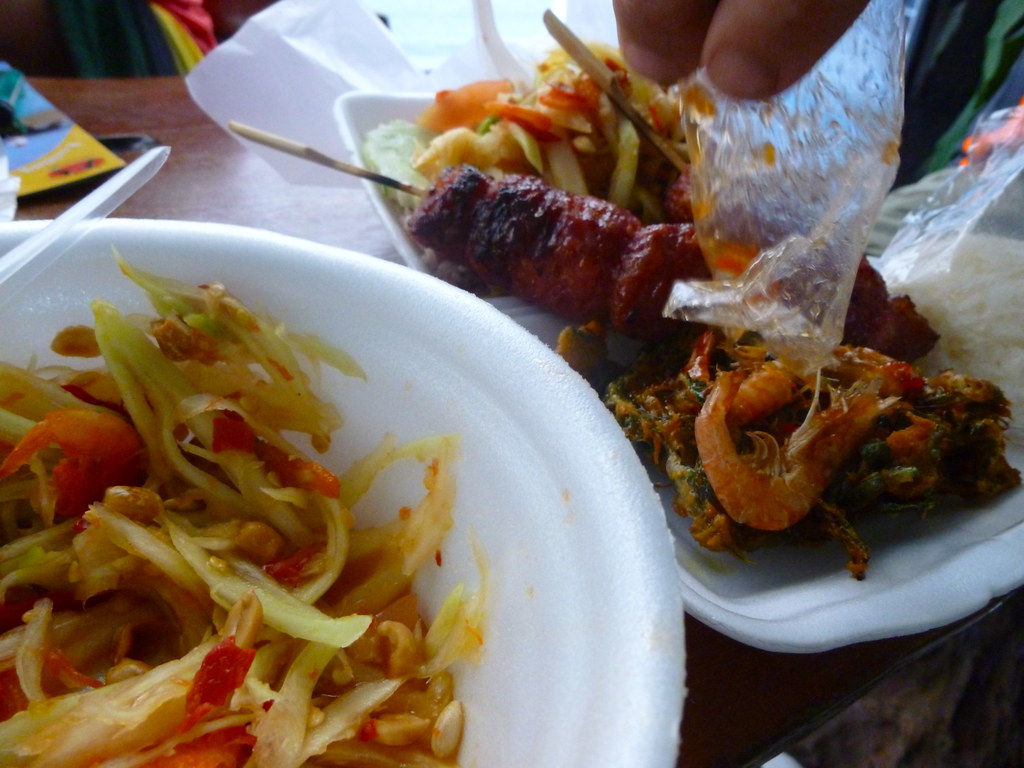
Eesan sausage, som tahm, and shrimp cakes
 
Eesan sausage: Sour and spicy and grainy with cartilagy chunks—Thailand is brilliant in fried pork fat. Things I'd normally consider gross dissolve in my mouth with toothsome deliciousness. I ate a whole bowl of guiteau with pork liver, and the gamey meatiness was almost delicious. I eat whole chunks of pork fat that melt like well-fried bacon. Chicken feet I still can't stomach.

Som tahm: green papaya salad, green papaya like green mango, eaten sour and as a vegetable not a fruit. A Thai national dish and I think the epitome of the flavor-combination rule. For somtahm you add lime, palm sugar, fish sauce, chili, and the fifth flavor too—bitter or umami—using crushed peanuts or garlic or baby shrimp pounded in a mortar. We are not brave or foolhardy enough to eat ours with pounded raw crab, shell included like shards of glass. Som tahm is one of the world's perfect foods.

Fried shrimp cakes
 
Fried shrimp cakes (tod mun goong): K's discovery. They are whole batter-fried clumps of shrimp, heads and all, fried so the whole thing is equally crunchy, head as delicious as tail. One thing I've had to learn to say in Thai: you can leave the heads on. It's a mystery  how we can eat things we'd never eat otherwise—fish is deep-fried this way, too, with edible bones. The only thing you can't eat with fish are chunks of spine.

Note the ubiquitous Seven bag
My perfect breakfast. Coconut bread and tropical fruit. I had intended to eat exactly this menu every morning, but coconut bread is harder to find than I expected, and tropical fruit more expensive. Nevertheless we are convincing ourselves to spend more money on fruit, and I am stunned as ever by how spectacular it is. Mangosteen's flavor is undescribable. Lamyai (longan) comes closest to pina colada. Dragonfruit taste like custard studded with grit. Rambutan taste of sunshine.

The point being that we made it to the Tiger Cave Temple. On Monday. It was worth the wait.

Monday, February 03, 2014

Georgetown, Penang, Malaysia


27 January – 3 February


Surat Thani train station, at one in the morning
Cleared into Malaysia on a ninety-day visa after taking the overnight train from Phun Phin. We paid for an extra night at the Queen Hotel so we could pack and relax until one in the morning, and then strolled to the train station and climbed into second-class berths immediately. The rest of the train was already sleeping so we had to creep in, find the right spots, cram our gear in somewhere, and clamber around other people's curtains as silently as possible. I went to sleep as soon as I convinced myself to dig my face mask and ear plugs from my backpack. They left the full overhead lights in the train car on all night long, which I found exasperating until I accepted that it was going to be on and tugged my face mask on snugly.

I slept well except for in the middle of the night when someone's cell phone, deep inside a suitcase, went off and I thought it was mine—exactly the same ring tone as my $5 Samsung tracfone that I carry around and use almost as an alarm clock—I was convinced it was mine and had no idea how I'd get it out of my backpack. I lay awake as it snoozed and tried to argue internally that those phones were as common as dirt in Asia, and chances were good it was someone else's. Sure enough, the next time it went off, I stuck my head out my curtain and confirmed it wasn't mine. Another farang was hissing down from her berth: wake him up! I don't know what happened; I fell back asleep till morning.

K. slept later than anyone else on the entire train, and I finally nudged him awake because I was worried about him sleeping through the border. I don't know if they would have ever woken up. They probably would have let him sleep through customs. I laid awake for a while, worrying, but everything was fine. We woke up in time to clear through and now we're in Malaysia.

It looks like Thailand but I always feel crossing borders changes the way things feel. There is more construction and factories on this side, also cliffs made of karst topped with temples that are beautiful. Containers moving through on long trains and big concrete stations half-completed and with no one using them. Already I miss the Thai stations with the giant photographs of King Bhumibol, and the careful little potted plants and hand-painted signs.

Already I feel how it's different here and if I'm honest I'm uncomfortable being in an Islamic country. The women covering their hair make me feel like a profligate slut for leaving mine uncovered. But then there are the farang girls on the platform in short-shorts or bikinis visible beneath their cut-out tank tops and I think: oh.

I don't think anyone is judging me. I am just a species apart, an alien.

I don't know how to explain how it makes me feel. Like somehow I need to change my behavior, that mine is immodest, even though I cloak my bosom in a modest scarf and wear skirts below my knees. I still wear makeup, earrings, pants, leave my shoulders bare. And more than that, I want the right to do those things. I don't want to live in a world where women feel obligated to change the way they dress. But already I live in that world. Women in our culture feel the need to cover their breasts in public, almost always. What if we thought bare breasts were modest but bare hair obscene? Who am I to decide?

Even though I love the Muslim girls, especially the ones with beaded veils bright as flowers, the ones that wear them over Beatles tee-shirts, leaving elbows bare! The ones that wear jeans and heels. The ones that flaunt their restrictions just subtly, keeping their hijab immaculately in place.

I've seen men in the pillbox hats and long black tunics, which gives me an odd twist, too. Boys wearing them, too, traveling with their fathers. What do they make of me? Do they notice the veiled girls in tee-shirts? Men with the long grizzly unshaven beards. I don't know how to handle it my own head, just my knowledge of their belief, a belief that I really don't understand at all.

My parents are missionaries, meaning that they evangelize people, try to convince them to change their beliefs. My own belief is much closer to Universalism, at least in that I believe the doctrines of heaven and hell are wildly unclear in scripture. I consider myself as tolerant as possible, and I believe there are Muslim feminists and Muslim mystics and Muslim reformers brilliant Muslim artists. Just because a person believes in Islam does not make that person a fanatic or a fundamentalist or an Islamist or a terrorist. Nevertheless, I worry that much of the world's existing Islamic infrastructure exists as an indoctrination system for oppression of women. As does much of Christianity, if I'm honest.

I spent a week traveling in Bangladesh almost fifteen years ago, during my last trip to Asia, and the thing I found most disturbing was the sheer lack of freedom women had, as evidenced by their absence. I saw 100 men to everyone one man as I saw. The women are kept in cages, the cages of their own homes. They just don't leave the house.

Clearly, things are better here. But I still feel more animosity, or just more curiosity, or maybe more lust, in the eyes of Malaysian men. In Thailand I can meet someone's eyes and smile, but here I have the sensation more of being stared at, of being observed. I find myself meeting men's eyes until they look away, one of the things I was taught never to do in Bangladesh. I don't like being stared at, just because I'm not wearing a hijab.

But it's the awareness of one belief system abutting another, and wondering about the contradictions between them. Malaysia in general, and Penang in particular, are famous for their blending of three distinct cultures: Muslim native Malays, Chinese, and Indians. So Malaysia has been doing this balancing act, of cultural blending, for a long time. The food is supposed to be where the big payoff is—Indian and Chinese and Malay all coming together in a magical mystery of flavors.

We took the ferry from the train station to Georgetown, the capital city of Pulau Penang, one of Malaysia's oldest cities and originally built by the British. It's a UNESCO world heritage site now, and this week is the week of Chinese New Year, although if I'm honest none of that is why we're here. We're here because of how easy it's supposed to be to get a sixty-day Thai visa using the services of a guesthouse. So we found ourselves an actual flophouse on Love Lane for 30 Malaysian ringgit a night—only 300 baht! The rooms are festooned with blackened spiderwebs and the common toilet is squat—but the showers are clean and the rooftop garden is luminous. The city is squalid and majestic simultaneously. Multi-million dollar restoration projects and boutique hotels above open sewage drains.

We spent most of the week looking for food. Looking for Penang's legendary hawker stalls, more specifically. There were so many things I was excited about eating: dim sum at a Chinese morning breakfast joint, char kway teaou, the genesis of pad Thai—Thailand's national dish actually stolen from the Chinese. Fried noodles of various kinds, combining the various culinary cultures of Malaysia into epic deliciousness.

I must admit that this trip and this blog is degenerating into the dark pit of foodieness. (See Simpsons foodie-blog song.) But I also must admit that Southeast Asia is inspiring the food blogger hidden deep in my heart. I want to photograph and post about every meal we eat, every stall I see. I guess I've never been that far from food writing anyway. The only travel shows we can agree on in the States are the ones that feature epic international eating: Andrew Zimmern and Anthony Bourdain, mainly. So I'm thrilled that we ended up eating one of the stalls featured by Anthony Bourdain, unwittingly even.

The one food we kept eating because it seemed easy and we kept running into is nasi goreng, which I can only translate as rice and stuff. You get a plate of rice, and then you choose among the various dishes laid out in front of you. It can be done Chinese style with fried vegetables and scallion fritters and tofu and egg foo young. Or it can be done with Indian curried mutton and fish heads and stewed okra. The problem is knowing when to stop, because everything added to your plate costs at least an extra ringgit. K ended up with a giant 22MR pile with mutton and squid and bean sprouts biryani. I discovered that curry gravy was free and ended up with a soupy pile of rice when the guy gave me a ladle from every dish on the shelf.

We also ate: mee goreng, char kway teaou, kway teou soup, Chinese hot pot, fried noodles, fish sambal, samosas, chicken tandoori, mutton korma, naan, and lime juice with salted plums. And through all of it we found ourselves missing Thai food. Or at least the khrooang boong, the spice machine—the four-part condiment holder ubiquitous in Thailand, with its nam plaa phrick and nam sohm and peanuts and chili powder. People who don't like Thai food don't like how it beats people over the head with the intensity of each dish: every meal is sweet and sour and spicy and salty. Maybe my tongue has lost any notion of subtlety. But I believe the best food is a balance among all of those flavors, and Thais give eaters the respect of offering them the spice machine, so that all of these flavors can be adjusted according to their own taste.

An Australian friend said: yes, but you can taste the complexity in each dish, the subtlety of the flavor. Maybe Thai food has ruined me. Give me nahm plaa prick any day.

And then back on the train, the other half of the night, climbing into berths at 7:59 pm and being called awake back in Surat Thani, back to the Queen Hotel.

Sunday, January 26, 2014

Phun Phin, Thailand

Queen Hotel
Things that are different about Thailand, after fifteen years away:
  1. More expensive, often three times as much.
  2. More Burmese immigrants. Often I speak to people, like the cleaning lady this morning, only to have them not understand me. At first I attributed this lack of understanding to my awful Thai, but as my Thai has improved, I realized it's because often these service people don't speak Thai themselves, at least not well. I confirmed this morning, after learning the Thai word for Burmese. Luckily I've begun practicing my Burmese, too—at least hello!
  3. More farangs. And more Thai antipathy towards farangs. This I understand, though. It feels almost like an invasion.
  4. Different motorcycles. Fewer of the little real bikes that could carry an entire family of five, and more 125cc mini-scooters, bikes we don't even have in the States. K. is entranced by all of them, especially the minibikes hooked up with race exhausts and chrome fittings and extended swing arms and shocks.
  5. More normal-sized people. Thailand used to be a land of extremely thin people, despite everyone eating five meals a day, in which my 5'10” curvy frame was exotic to the point of embarrassing. My height still is, but my size less so. I attribute this less to changed eating habits and more to increased income. Thailand is now exactly at the median income when compared to the world. It's a truly middle-class country. Hence the importation of laborers and the ability of Thais to vacation and eat well themselves. So I can come here and my income is stretched farther (as opposed to living in the wealthiest country in the world), but I'm still not at the level of the wealthy Thais with designer clothes and Mercedes who stay at the resorts beyond the reach of most backpacking travelers. With their increased size (which I don't attributed to bad health—see this research) has come an obsession with thinness—an insane amount of advertising space devoted to food and exercise products to help people lose weight (see this ad). It's rather sad.
  6. Smiles. K. said it to me early on: it certainly doesn't seem to be the Land of Smiles, which is what Thailand used to call itself. I protested angrily, but then I noticed he was right. People don't laugh and smile and hide their faces the way they used to. Although now I practice meeting people's eyes and smiling first, and they smile back. Much more frequently than the farangs, who refuse to make eye contact at all. It is hysterical to me: as if they refuse to acknowledge the presence of other westerners in their own personal Thai paradise.
  7. Waiing. The traditional Thai gesture of greeting where hands are brought together as if in prayer. I have this feeling that people used to do it a lot more. But now when they do it, it seems to carry more meaning. People do it formally, bringing their hands together carefully and with deliberation, and do it in a context when they want to express true respect. I've taken to using the wai to honor those Thais that don't overcharge me.

Things that are the same:
  1. Dogs. I had forgotten about the packs of mangy stray dogs roaming the streets at night. The dog fights you overhear, the way the dogs live and die naturally in a way that's disturbing to American sensibilities. We used to call them udder-belly dogs because of their distorted teats and that is exactly the same.
  2. Quantity of motorbikes. The bikes may be different, but there still the primary method of transportation.
  3. Plants and love for plants. Something I had completely forgotten. Every place we've stayed, no matter how decrepit, has had an extended and well-maintained garden of potted plants. It's amazing how familiar this feels now, and how completely I'd forgotten about it.
  4. Outdoor life. Thais spend almost all of their time outside. Houses have their entire fronts open to the street. Restaurants don't discriminate between tables set up inside and those on the sidewalk. Thai old men sit out on the sidewalks in front of their business and shoot the breeze. This habit is one I had not forgotten about—in fact it's one I have longed for and will continue to long for while in the States.
  5. Sanuk—the Thai word for enjoyment, fun, pleasure, happiness. It's more than that, though. It's an entire attitude towards life, that it exists to bring us joy. Eating food is something Thais do for fun, as is almost everything else they do. Maybe farangs are held apart from this joy a little bit more than they used to be, but it's just as present. It's what all of us are here for, hoping it rubs off a little bit.
  6. Food, and food prices. The food, thank God, is exactly the same, and just as delicious as ever. Everything I've ordered, that I've longed for these many years, has tasted perfectly as it should. And food prices, for noodles and rice from sidewalk restaurants or street vendors, are exactly the same, if not lower compared to everything else.
  7. Individualized businesses. Walmart has yet to invade Thailand. Everyone still has a business that is specifically designed for one thing, whatever that one thing may be: welding, pharmaceuticals, bicycle parts, plants, crazy clay pots, fish, priestly garments, flowers for spirit houses, etc. I'm still nervous about big box stores finding a foothold here, but K. thinks Thais couldn't accept it culturally, and I hope he's right. You go to the shoe store for shoes, the fish lady for fish, the curry vendor for curry. It also seems like a much healthier economic model: you figure out what you can sell and then you sell it and you and everyone in your family has a job and an income. We've relinquished this independence to Walmart.
  8. Landscape. My sister said, when she got back from Thailand last year: “Thailand's been here, waiting for us.” I held onto that promise as I prepared for this trip, and I believed her, but still doubted. The beautiful attention to tiny detail covered in grime and surrounded by a sea of plastic trash. Casuarinas and banana trees and mangoes covered in fruit. Temples in the distance. The streets look the same. Thailand has been here, waiting. It's changed, but not so much as to be unrecognizable. In fact, more's the same than is different.

Maybe not what you wanted today, a list. But I've been wanting to encapsulate my experience in this way. Tomorrow, at one AM, we head to Butterworth, Malaysia, by train to extend our visas. We can apply for sixty days from Georgetown, in Penang, so we're going to try. Then we can relax for K's last two months here, go to Eesan or find a good bungalow and settle in, instead of worrying about visas all the time. I'm nervous, though, too—finally I'm going to experience a culture and food and language that are as alien to me as they are to him.

We booked a second night at the Queen Hotel, in Phun Phin, on the outskirts of Surat Thani, even though we won't get to sleep here. This is the sleaziest joint that we've stayed at yet. Bloodstains on the wall, boogers on the mirror, smeared dust from the headboard on the sheets. And meticulous flowers outside. I don't understand. I'm sure, too, that the floors and sheets are bleached after every visitor, that certain parts of the room are habitually cleaned (because they're clean) but it never occurs to anyone to, say, clean the mirror, or scrub the blackened pipes in the bathroom.

The rose in front of our hotel (from behind the motorcycles in the previous photograph)
We take almost masochistic pride in the level of flea trap we're able to stay in (although we always check for actual fleas). The sleazier a place is, the more likely we are to book a second night. Maybe we should take more pride in finding a good place at a low price! But I think we also like the towns where the grotty hotels are located. Yesterday we walked up a hill and down a soi. We saw real people, hanging out together in front of their houses, chickens, dogs. One woman asked where we were going.

“Duan du,” I said—walking and looking.

“Ah!” she said. “Duan len.” Walking and playing.

Then we found a wat and walked in on priests wrapped in their orange evening garments, chests bare. Another woman said we couldn't go down another soi—I wasn't sure if it was because it didn't go anywhere or something more ominous. I had this feeling that even though we were a block from where the backpackers make their run from the bus to the train, farangs rarely made it up here. We walked back down the hill and didn't go back today. It's really not hard at all to get off the tourist track. It's just not where most tourists want to be. Including us, in many ways. I'd rather be at a beach. But if I had to sacrifice a beach to be in real Thailand, where I can learn new words from the girl at the Seven (Eleven), where we can try new street food every day (today: barbecued whole squid stuffed with its own eggs), and still get a room for $7.50—I guess I'd give up the beach.

The view towards the train station of Phun Phin, with the ubiquitous Seven