Friday, July 06, 2012

Everybody held their breath

It's daisy season 

Today I woke up early and came to my desk early, as I do most days. Late for other people, early for me. Sometimes I regret my vampiric ways, that even in the high noon of summer I'm unable to rise and set with the sun. I insist on late nights, staying up till 1:30, 2, 2:30 every day. “Early to bed and early to rise,” etc. Is it true? Should I fight my nature? It's the debate all of us have, perhaps, with our natural tendencies. Even the bodies, the faces we were born with.
A quote, from Richard Hillman:
The Greek idea of fate is moira, which means “portion.” Fate rules a portion of your life. But there is more to life than just fate. There is also genetics, environment, economics, and so on. So it’s not all written in the book before you get here, such that you don’t have to do anything. That’s fatalism.
I've been thinking a lot about failure, as it connects to fate, as my destiny seems to be to consistently fall short at the things I aim to accomplish. For instance, last year the farm/garden, the farden, had an exotic newness to it. By that I mean that the hard work it required had adventure attached to it. This year, it feels more just like hard work. Which means that less has been done, or more has been done in specific areas (perennials), but in other areas I am far behind where I was last year.
That makes me feel bad about myself. The guilt I refer to frequently, as a necessary connector to my faith, almost a phantom limb. This years garden feels like a failure, and the more so as time passes. I experienced this last year, also: the challenge with farming/gardening is always being on the brink of failure. Any malevolent weather could wipe everything out. Any ravenous bug. Any time, here in the arctic north, that you miss the magic week of planting, the magic week of harvest. The awareness of time passing is like a roller coaster plunging.

Thursday, July 05, 2012

Independence Day

Sprinkler

My faith is situated some place between early-church mystic and holy-roller Pentacostalism on the chart, an odd place to be for an ex-Baptist who attends an Anglican church. Sometimes I flirt with Dostoevsky-style eastern orthodoxy or Cardinal Newman Catholicism, too. So what does it mean to be an early-church mystic? It means that the Spirit infuses all things, present in each moment, more present, immanent, than we can conceive. That God is present all around us, numinous, in the world.

It's funny how the Baptist evangelicalism I was raised with was so uncomfortable with the acts of the Spirit. Hysterical. We believed, yes, that He/It was one of the three parts of the triumvurate Trinity, the triune God, but were were much more comfortable with God the Father, the God of vengeance and the law, or blue-eyed Christ Jesus. The Holy Ghost made us think of the wild-eyed New Agers I was warned against in filmstrips. Really, the Spirit is the one that Christ leaves with us, the God that lives inside.

As I begin to find a place as a farmer, it feels like the Spirit is closer than ever. “The force that through the green fuse drives the flower,” as Dylan Thomas puts it, is not that the Spirit of God? That force which aligns coincidence and our archetypal subconscious, which speaks to us in dream, which uses signs and wonders to keep our attention—is not that the Spirit of God? “God's invisible qualities—his eternal power and divine nature” those that “since the creation of the world... have been clearly seen, being understood from what has been made, so that men are without excuse...” Are those invisible qualities not the Spirit of God? All we can see of God in the world—is not that his Spirit?

Maybe it's just the wildflowers springing out after the rain reminding me of the lilies of the field. Buttercups, daisies, pale purple clover, little off-white bells that remind me of purses. “They do not labor or spin. Yet I tell you that not even Solomon in all his splendor was dressed like one of these. If that is how God clothes the grass of the field, which is here today and tomorrow is throw into the fire, will he not much more clothe you, O you of little faith?”

That's me. She of little faith. A friend of mine suggests trusting that the force that drives the green fuse through the flower will drive it through me, too. But he's braver than I am.

And the skunk, our brave miniature skunk, came back too. We're going to try to convince him to become our pet. I may be taking baths in milk and tomato juice any day now.

Sunday, July 01, 2012

I will sing to you of greater things

A baby skunk came to visit
He was about half the size of a kitten, and possibly the cutest thing I've ever seen. My sister's had an obsession with baby animals for a long time, and seeing a miniature skunk waddling around the front lawn, turning on us with the camera and spreading his front legs into an aggressive stance, although he had to have been too small for his stink glands to be active--it made me understand the obsession.

Friday, June 29, 2012

When you go out to play

Dill patch, so far unsuccessful.  Jerusalem artichoke, horseradish, rhubarb, echinacea--in clockwise from bottom right.
Then this paragraph from Raymond Carver:
He pulled a chair out and sat down at the kitchen table in front of the big ashtray. He closed his eyes and opened them. He moved the curtain aside and looked out at the backyard. He saw a bicycle without a front wheel standing upside down. He saw weeds growing along the redwood fence.
That paragraph is perfect.

Wednesday, June 27, 2012

Do the things we choose


Didn't work as well as I'd hoped. Maybe my ribbon is dying, in addition to crumpling and ripping through. Physically decaying as I type. As far as I know it hasn't been changed since my grandmother's time, so it's not a big surprise. That's the next step--find a ribbon, buy some anti-corrosion oil, figure out why I can't get a justified left margin or a single space when I hit the space bar. Still. This was fun. I'm absolutely addicted to my Hermes Rocket. Some photos:

My desk--basil, Burroway, siblings, coffee, typewriter
Crumpling ribbon driving me crazy.  One does understand Jack Kerouac better than previously.

Sunday, June 24, 2012

Check one, check two

All the seedlings should be in the garden already.  They're not.  The flowering plant, however, was brought back from beyond the grave. 
What I really want to be writing about, most of the time, is food. How since food is the only thing I need in life, other than art, it behooves me to learn how to grow it. Or maybe it's just Grandpa Jenks in my DNA, speaking down through the century. Those dairy and potato farms understood the value of pulling things up out of the earth.

Maybe it's why I've chosen farming as my avocation, although calling what we do here, on a plot barely bigger than a garden, is by no means farming. Maybe I just want to reclaim that word, and the idea that one can be a farmer simply by stating that intention, to create something of value for my own body by cultivating the soil and the things that grow from that soil. Recently I asked our cooperative extension representative at what point a garden stops being a garden and starts becoming a farm and even she didn't have an answer.

Why have all of us suddenly returned to a goal of being able to provide our own food for ourselves? It seems a good sign. Today was documentary Sunday on Maine public television, maybe my favorite television day of the week, and the best one was about Bhutan, whose benevolent philosopher-king has instituted a policy of “gross domestic happiness.” GDH is founded on environmental responsibility, economic development, good governance, and a strong connection to a unique culture.

Watching the interviews of families of sustenance farmers in the countryside, families collected together in hot springs, laughing together in the steam, or cultivating their rice fields in the mountains—it seemed the idyllic version of reality I so often envision. Government officials emphasizing the importance of leisure time for the families, and chances to pursue individual spiritual practice. Everyone seemed engaged in art as well as farming—people played native guitars, or sang, or danced, or designed elaborate costumes or masks, or practiced archery. Most of the country folk hadn't even heard of the national policy on happiness. But the happiness itself glowed from their faces and was present in their words. They spoke of the debilitating effects of advertising, now that electricity and television are reaching the farthest flung areas. Advertising creates desire, and desire creates suffering. No wonder so many Americans are so miserable.

“Money?” they ask, almost to a person. “What good is money? If I had money I'd just be afraid of losing it. Happiness comes from inside, and no one can take that away.”

They say it better. Perhaps because they know it better than I ever will.

Friday, June 22, 2012

Solstice

Mark and his wife in their Pittsburgh farm

One Father God
One Mother Earth
One life to live
For what that's worth
Everyone born
Is bound to die
Let us love now
And not ask why
For we are all God's children, oh
We are all God's children, yeah
We are all God's children
Here

--Mark Williams, “All God's Children”
 I'd like to officially stage an online barter, as a child of the internet.  My acquaintance Mark Williams, husband of my sister's best friend, is an artist, a singer-songwriter.  I stole his album long ago, and have benefited from it for many years.  I'd like to trade a review for the album, work for work.  As the essays I've been paid for most frequently are music reviews, I'd hope it's a fair trade.

The album is Borrowed and Blue, a suite of songs recorded for his wedding, and released only as a party favor, unfortunately unavailable on iTunes and Amazon.  Maybe if you send him ten bucks he'll burn you a copy.  The songs are incandescent, joyful.  Every time my iTunes shuffle gives them to me, on the wings of amor fatie, I accept them, love them more, weep silently at my desk.

As a songwriter, Mark finds a balance between the grand faith of hymns and the intimacy of a prayer.  It's so rare to find artists with this level of optimism in their lyrics, optimism but not an ounce of sentimentality.  His lyrics soar, admitting the reality of death and fear and brokenness but denying evil its power, proving, by the richness of his voice and the dense furry breadth of his guitar, the truth of his lyrics.

Williams is a deep thinker and a careful poet, a theologian and a mystic.  It's a constant surprise to me that he's never received fame, although whether he'd look at such a fate as a gift remains uncertain.

He'd probably take it as he takes most things:  with hope, and faith, and music.  His voice has a raspy immediacy that makes me these raw recordings feel like he's singing to his closest friends, as, in fact, he is.  Like Nick Drake's basement recordings or Bruce Springsteen's Nebraska, the music has a fearless honesty underlining his earnestness.  This is someone who believes that Jesus can save us.  Who believes that the only way to meet our greatest doubts is with art.

Each song on the album feels inspired.  “Walkin' Down the Road” colors his world with the reality of darkness.  “I've been mean, I've been cold / I've done things I've never told,” he sings, and all of us are there with him.  “I have lied and I have bled,” as have we all.  “I Shall Not Fear” brings an interpretation of a biblical song, the 23rd psalm, continuing the ongoing metaphor of life as a road we walk down, one heavy foot in front of another.  “Every traveler on this road / Is forced to bear a heavy load.”  But--
When the cold winds blows
And I'm all alone
When I'm tired and lost and all alone
I'll speak the truth with every breath
And walk this road, yea, unto death

And I shall not fear
I shall not fear
The one that gets me every time is "More (Give It All Away)." So much of American culture is about always needing more, wanting more--it's in every commercial, every heart.  We want more money, more cheap plastic crap, more of everything.  But Williams subverts that concept, makes “more” mean so much more, making it into something different.  More is our siren call, but God Himself gives us more.
I am less than I desire to be
And there's no question that the fire in me
Wants more, more

Then I offer on my own
Wander off too far from home
To return
Then he soars into the bridge:
For we must
Give it all away
Give it all away
Give it all away
Give it all away
To return
That's honest, unabashed Christianity. It's an anthem.  He admits to pain and brokenness, but is honest about the things that Christ actually said, the way Christ asked us to live, to follow his “Way,” the path he followed.

Or this line, again from “Walkin' Down the Road”:
Jesus Christ, I am afraid
That you've seen the mess I've made
All along I've been ashamed
Such exquisite honesty. It's the best kind of gospel music, in the sense that he's telling us good news.

For those who think “Christian music” is an oxymoron, for those doubtful of a spiritual realm, for “every boy and girl dying to be free,” Borrowed and Blue is a profound work of art.  Williams said in this recent interview that he considers his songs “modern field music.”  Although for many of us the fields where we work have changed, the need for a call and response that creates unity among our many voices remains.  That's what this album is, and each song here is a masterpiece.

Williams is a farmer and an artist.  His day job is running an urban farm in the city of Pittsburgh, a program that had its funding slashed by government austerity measures this year.  But Mark keeps walking down his road, blazing a path for the rest of us who want to plant gardens and make art.  I can only aspire to be like him to build community by growing food, by walking down my own road.

Erica Jenks Henry, my sister, called me out in her interview, for the half-thieving magpie way I have of assembling music, a guilty obsession I've tried to justify publicly on these pages.  But I hope by writing these words that not only can I justify my theft, but also  can prove that it's been for a greater purpose, because more people need to hear Mark's music.

He ends the album with one last song, “Hallelujah.”
This world got a hold on me
Breaking my bones
Tying me down
Lord knows I want to be free
On my own I don't know how
I don't know how

So I sing hallelujah
Hallelujah
The chorus echoes with of its own hallelujah chorus, a mournful harmonica underlining the truth of our own pain.  It's that way for all of us.  Call and response.  Hope and despair.  One imagines the hymn ringing out in the voices of those growing our fields, building the new life that all of us can imagine, if we build it together.  On our own, we don't know how.  But if we have artists like Mark Williams leading the way, maybe we'll find our way to the home he imagines.
Love the Lord
With all your heart
Love your neighbor
And there's a start
For we are all God's children
We are all God's children

In this life there's no guarantee
Tomorrow's a day we'll never see
I don't care about yesterday
All I want to know is who you're going to love today

We are all God's children, oh
We are all God's children
Here

Saturday, June 16, 2012

Loch raven

June sky
The sky today was low and lean, the shade of purple it only gets this time of June. I forget how lucky we are, in these long, long days. The sun only hits at this angle this far in the north. Only here do we get this quality of light. Praise be to God.

Tuesday, June 12, 2012

I will not give up on you

Clippings from the lettuce (and radish!!) as apertif


This weekend, at the tractor pull, I met a new Aroostookrat—a disc-golf enthusiast who lived for a year on Cape Cod. We talked about belonging, how I'll never belong in a place as thoroughly as he does in the County.

He said, “Yeah. But there's all kinds of belonging."

And it's so true, how he can belong here and not, not the way his brother or his cousin do, his brother who runs the grader at the pull and his cousin the heavy-equipment mechanic for John Deere.

So. To belong and not to belong. How everything I do is an action towards home, when home is nothing but belonging.

I'm reminded of Animal Dreams. Two sisters: both sojourners—but one carries home with her wherever she goes, and the other constantly hungers, yearns after it, and never finds it. I want home.

Or some other of the characters from “Boogie Nights,” Don Cheadle and Melora Walters, who fall in love: one's black, one's white. Maybe that doesn't matter, or shouldn't matter, but is it wrong to love the experiment Anderson performs with the concept of race, by pairing those two up, without ever mentioning race, or interracial romance, or miscegenation, or the horror of the fight for civil rights, or any of the other Faulkner-esque topics perhaps only fraught with significance for those who spent formative years in the American south?

It's beautiful, almost a party trick, the way their bodies crowd together in every shot, the contrast in their pigment merely a thing of aesthetic beauty.

A digression. But maybe not. Because they, too, find home with each other. They belong nestled together, on the screen and in our consciousness, finding happiness in a mirror image, like a photo's negative.

Tuesday, June 05, 2012

Tell the rose not to bloom

Full moon behind clouds

Today the first radishes, spread at their cut slices with butter and salt. And the greens, chopped in pasta sauce. Yet it doesn't feel like summer, yet. I guess it isn't—every year I forget how late the season comes.

I've been thinking a lot about the prodigal son. Here's the painting:


I love how Rembrandt echoes Jesus in his telling. Henri Nouwen wrote a whole book about it, The Return of the Prodigal Son , telling the story of the the painting as one of homecoming. How the parable teaches us that even though one son runs off to spend his inheritance on whiskey and women, and the other stays at home to farm, that both have merely the challenge of loving, and being loved. When the prodigal son returns, after being forced to eat pig slop, his father welcomes him. With an embrace, and a celebration. With no condemnation. With nothing but love. All of us are asked to be all three of those people. This, at least, is according to my brother, who's been encouraging me to read it.

I see it in the painting, though. The surrender of the prodigal. The constant love of the father. The qualms of the brother.

How much of my faith is tied into feelings of constant guilt? Perhaps it's being raised a Baptist, or an American evangelical, descended from the Puritans, or just my own familial culture. But I am tormented by guilt.

I feel guilty for not planting kale and carrots and radishes earlier. I feel guilty for not being able to thin my little precious baby seedlings, but then I feel guilty if I thin them. I feel guilty for eating too much, for not doing yoga enough, for failing as a farmer and a writer and a woman and a human being.

I'm not exaggerating. Is it ridiculous? Yes. Am I aware of that now? More. Maybe. Yes. But it doesn't change that I do this whole farming thing, and the business of living, with fear and trembling.

I'm fighting it now, a lot more than I ever did before. And you know what that parable says? That no matter what you do, no matter who you are, no matter how far you run, no matter the ways you fail, you'll always be welcomed by the father.

I watched the movie “Boogie Nights” the other week for the first time. At the end, the young porn star Dirk Diggler, after running away from the family he's created for himself, has lost himself in drugs and has spent all of his earning. He comes back, finally, to the only family he knows. He comes in and says:
DIRK: Can you please help me?

HOLD.

CUT TO:
INT. JACK'S OFFICE - DAY - MOMENTS LATER

Dirk has broken down in Jack's arms. Jack hugs him and pets his head. AMBER
enters, brings Dirk a glass of water and sits next to them on the couch.
CAMERA DOLLIES IN SLOW.

JACK: It's alright, boy. It's alright.
It's another of these sacramental moments, when I realize just how big love can be, just how big it has to be. Dirk Diggler is exactly the prodigal son, as, I suppose are all of us. Or me, certainly. Maybe only me. And everything is forgiven.

Saturday, June 02, 2012

I know that you would take my hand

Asparagus roots

When putting asparagus plants in the ground, one digs a trench twelve inches deep. As the asparagus grows, one fills in the trench around it. It spreads out a network of roots that eventually shoot up in the spring, at which point one cuts down the asparagus. Sort of like fiddleheads, the one wild-foraged vegetable around here that really seems worth it.

We gathered probably two pounds of fiddleheads, the immature fronts of nascent ferns, last weekend, for omelets and stir-fry, and they were delicious. So I've finally eaten fiddleheads from right here, and maybe, in a couple of years, I'll eat asparagus, too. Those are the actual roots in the photograph up there. Real roots.

I'm digging in real roots. It's actually the first time that I've invested money in something that I then put in the ground to be there, like, really, forever. Or not. Twenty years is average for an asparagus, but Crockett, of whom I am a garden disciple, says he saw a plant in Kew Gardens that had been producing spears for 118 years.

So, theoretically, those wispy roots could be pumping out asparagus when I am long dead. It's a sobering feeling. I write a lot about home, about what it really means, but maybe that's it. Digging things in the dirt that will last a long time. Making plans to stay in a place for a while. It's so alien to me, and yet, already, in my second year, I'm happy to be able to identify the wildflowers.

Wednesday, May 30, 2012

Please, please listen to me children

Memorial Day cat

Mason Jennings continues to speak to me, so much so that I urge you again—go give him some money. If I must use these bytes to make fund-raising pleas for the artists I believe in, then so be it. I'll repeat, as I did in March:

The sun comes up and we start again
Be here now
No other place to be
This whole world keeps changing
Come change with me


The whole world does keep changing. Winter metamorphoses into spring, which shifts, subtly, slowly, to summer. Time turns this place into home, despite all of my restlessness. I'm investing in photo frames, hanging pictures on the walls. Investing in blueberry and asparagus plants. Sinking roots into the soil.

Part of that means becoming genuinely part of the community around me, to grow where I'm planted. I resist jealousy when I hear fellow farmers are planting on days when I'm slacking. Farming is like yoga, right? No competition in farming. Just getting things to come up from the ground.

I went out on an all-terrain vehicle for the first time yesterday, along the road they call Deep Woods, a rutted, dusty farm access road. It was a blast—the sky studded with clouds and blue and the fields all around and the wind and dirt in my hair. I loved it. Carbon consequences be damned. Then we went back to R.'s and had a bonfire and barbecued steaks and hot dogs and ate them with mustard pickle from last year's garden.

God's in his heaven and all's right with the world. Be here now. There's no other place to be.

All the doubts that linger
Just set them free
And let good things happen
Let the future come


I'll plant more tomorrow, build more. One more day older. One fewer day to live. And still, only now is given.

Thursday, May 24, 2012

The cotton is high

Photographs from this evening:

Walking to the neighbor's for some cable television


Moths on the screen remind me of Annie Dillard.
K.'s photo.


After fourteen months, finally putting up pictures--a lithograph a friend made in college, plus others.

Sunday, May 20, 2012

Friday, May 18, 2012

Could you lie

Tonight a pallet bonfire, the first of the season, burning the old wood that clutters the lawn. We must have five lawnmower cages, and still the yard burns with dandelion blossom. It's the weekend, time to survey the work of the week: cucumber and pepper and squash planted in the glass room, beets at last in the garden. All by the sweat of our brow, as per Genesis.

The first butterflies and mosquitoes and black flies. And the hummingbirds are back, the little jerks. It's a good thing they're so cute, what with spending the winter in Costa Rica. I wish I could fly along with them.

I woke up this morning to find a little goldfinch, its chest as yellow as sunlight, battering itself against my bedroom window. I tried to rescue him, but I don't know if he could be rescued. He wanted to get behind the glass, or at the pretty little goldfinch in the glass itself. His name should have been Narcissus.

Monday, May 14, 2012

I cannot sit sadly by your side

First trillium

Walking uphill to the neighbor's bus last night, where he has a bonfire most Saturdays of the summer—and although we're still only hitting low fifties during the day, we only have a month until days start shortening again, so as far as I'm concerned, summer is in full swing—I walked between the two beaver ponds, one on each side of the dirt road. The peepers are so loud by now that standing in the midst of them like that almost hurts my ears. I guess summer is in full swing for them, too. I can almost drown in the sound, the sound of warmth, of heat, of long days.

I stand still in the middle for a minute, let the noise wash over me. Wash me clean. Although not so clean, because I'm standing there with a bloody mary in my hand. And that's what it means for me to be a flawed person in a physical world.

It's why I love Jesus, the bloody specificity of his being, of God interceding in human history at one moment in time, to badly paraphrase C.S. Lewis.

I feel like my post from Friday is a coming out of the closet in some ways, a public admittance of my desire to be a being of pure thought, to leave my flawed body behind. No wonder gnosticism was the most dangerous heresy for the early church. Jesus was fully human and fully God. He lived here in this messy, ugly, broken, breathtaking world with the rest of us.

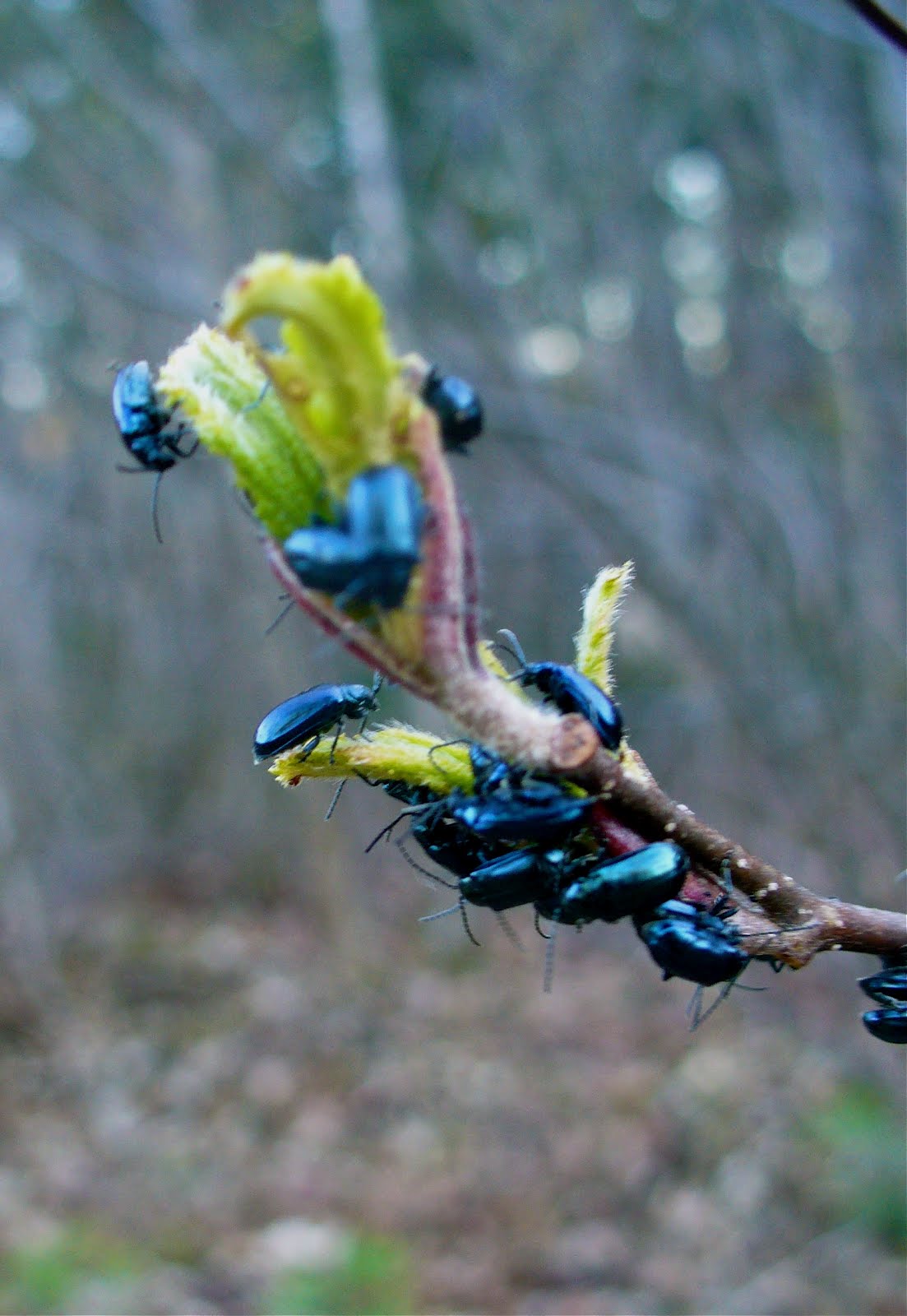
Sometimes I feel convinced I need to start a church of Annie Dillard. We need to exegete Pilgrim at Tinker Creek like it's Scripture. Next rant about American culture and supermodels, just tell me to take a hike. Then I can walk past the bare stumps that soon will succumb to moss, past the alder gnawed by blue beetles, and remember, as Annie Dillard taught me, that beauty and death are two sides of the same coin. The peepers remind me. The trillium reminds me. Even my own aging body reminds me.

Friday, May 11, 2012

Oh lord, big fat woman

Great-great-grandma. We share DNA.

I'm sitting at my desk, listening to Leadbelly croon the above-quoted song, from 1936. Here are some lyrics:
Big fat woman
With her meat hanging on her bone
She was born and raised in old Kentucky home
I love my woman and I tell you what I do
I love my woman and I tell the world I do
Oh Lord
She's so good to me just like I do you

I woke up this morning and I found my baby gone
I was so mistreated
But I wouldn't let on
Today we're told that food is bad, that it possesses a moral quantity. We're told to deprive ourselves of food. We're told that food should bring no joy. We're told that the highest good, the most possible value we can have, especially as women, is to look like this photograph:


You can never be too skinny or too rich, say the fashion magazines. She who wins, dies, read the pro-anorexic sites I used to frequent.

The fact is that farm wives look like the first photograph, my great-great grandmother, not like the second. Being a farm wife means spending all winter eating potatoes, and sauerkraut, and sausages made from the nasty bits of the pig you slaughter in the fall. It means spending all winter gathering layers of clothing and fat around yourself, to prepare yourself for the dearth of nutrients you'll suffer through during the cold season. That's what it used to mean. Now it just means self-hatred.

These beliefs are completely dysfunctional, and they drive all of us, those of us on the wrong side of the line, the vast cultural divide that no one who's ever been skinny understands, straight into the arms of the donut. It doesn't help for you to call me disgusting, to roll your eyes, to say: “I don't eat that. I eat healthy food. Do you really need to eat that?”

Another song, from 2008:
I cannot emphasize enough that my body
Is a badly designed, poorly put together vessel
Harboring these diminishing so called vital organs
Hope my heart goes first, I hope my heart goes first

We are beautiful, we are doomed
--Los Campesinos! [Buy an album.]
People have been telling me that I'm fat, or “beefy,” as my mom likes to put it, since I was eight years old. At a certain point, say when I was eight-and-a-half, I started believing it. Even the day I finished the Appalachian Trail, when I was burning 7000 calories a day, I was a full fifteen pounds heavier than the medically approved median weight for my height. What hope does that leave for me with a career as a writer, spent with an ass spreading in a chair made of wood, and a winter spent eating potatoes and shoring my body up against the cold?

And still, even now, people on television tell me how disgusting and repulsive I am. Last night on The Colbert Report, the director of the National Institutes of Health brought in a five-pound chunk of fat and slapped it on the table to show all of us overweight Americans how horrible we are, how much better we need to be doing. As if I don't punish myself enough already. As if I don't know how to punish myself further. It makes me, it makes all of us, want to obliterate ourselves with a pound of ice cream and a shotgun blast to the head.

You don't know how it feels, I want to scream to all of you skinny bastards. You don't know how it feels to know: I'm never going to be a normal person. I'm never going to be able to eat like a normal person. I'm never going to be able to eat when I'm hungry. I can never eat what I'm hungry for. I can never listen to my body and answer it. Not without guilt, without shame, without punishment from the culture at large, condemnation from the people I love, and judgment from numbers on a scale. No. What you want from me, what you've always wanted from me, is for me to starve myself. You want me to be miserable. You want me to suffer.

Childhood obesity is a problem. But I know, from personal experience, what it does to a child to tell her that she's somehow less, by being bigger, than everyone else. We have a giant cultural problem with food, clearly. It's a more dangerous addiction for us than alcohol, drugs, or sex, far more dangerous than any addiction except, perhaps, gasoline or television, but still our culture sandwiches ads for Weight Watchers in between ads for Burger King and ads for heartburn drugs.

It's not a problem of farming, or advertising, or big food companies. It's a problem of psychology. Until you can teach me not to hate myself, not to spend my life trying to be something other than I am, it's a problem for which I have no solution. If I did, I'd be a Victoria's Secret model.

Wednesday, May 09, 2012

I want to reach out

Today is drear, gray, and overcast, the poplars just beginning to be touched by green along Snow Road. The rain is making the loggers take the day off, which means blessed silence, except for the U2 I blare at my desk. Make hay while the sun shines, they say, another adage that has real meaning now that I live on a farm. I should have planted my beets and broccoli this weekend, when I had sun, even if it was Sunday, my Sabbath.

We have a single lettuce that over-wintered in the cold frame, from which I have already eaten several delicate leaves. It's a lettuce I thought was speckled romaine, last year, but which now looks closer to a spotted trout-back, according to Johnny Seed, and which becomes far too bitter to eat by June. So we did get vegetables in May, despite our spring vacation. It's the time of year when there's too much to do, in every area—dirt to be tilled and enriched and sown, new beds to put in, new crops to try—and I don't always feel like doing any of it.

It's days like this one that I'm happy farming is merely my avocation. I'm trying to be more focused, more driven, even more disciplined, dare I use that loathsome word. I loath that word, but it's one people keep chirping at me, as if it's the solution to life, the universe, and everything. Often I believe that's the opposite of being true, that discipline is dust in the mouth, and the true answer is joy, joy in all things.

Life is a daily practice of mindfulness, of coming to my desk, coming to the blank page, coming to the earth, coming to the mat. I know it, and as Bob Dylan says, still I'm learning it these days. How do I become strong? By a daily delight of being in a single place, of being present in time as time moves forward.

Sunday, May 06, 2012

Talking to your picture

Stumps

My neighbor is cutting trees: beech and birch and cedar, spruce and tamarack and ash. It's decimated back there. At first I believed in the sustainability of Maine's forestry initiatives, that the state didn't allow clear-cutting on the scale I've seen in Alabama. But as it wears on, day by day, the endless drone of the chainsaw, a crunch like bone as another tree collapses, the whine of the skitter sullying my Aroostook County quiet, I feel like I'm about to collapse, too.

I'm aware of my hypocrisy. I burn cedar all winter in the wood stove, for heat, and I feel especially hypocritical about it now when it's a bare forty degrees outside and there's a full moon—and still I burn the wood. I don't want to burn diesel in the furnace, I don't want to smell petroleum roasting in my house. I also don't want to start a big fire for little ole me.

But I'm cold. I'm still a hothouse flower, a cutting of jasmine from tropical shores. So I burn the wood that my neighbor next door cuts, if only in a figurative sense—I burn the cast-off wood from the lumber mill the next road over. I don't know where he's taking the trees he's cut that border my road, what he's doing with their carcasses, but there's a good chance I'll end up burning their cast-off ends, too.

I believe in well-managed forests, in biomass energy as one of the few solutions to the carbon crisis, but when it's happening right next to me, when the trees that are feet away from my walking path, are turning into nothing but barren, shuddering corpses... I find it difficult to stomach. Not to be melodramatic or anything. My desk is made from wood. My house, table, chairs. It's just the view of it up close that's so painful, that makes me want to swear off the stuff altogether.

Wednesday, May 02, 2012

Tears are in your eyes

I'm working right now in connection with AMG International, the organization my parents were missionaries with when I was a child, on a project driven partly from my desire to better the world, a desire born of my time spent in Bangkok and Manila. I remember driving past “Smokey Mountain,” the towering pile of garbage that housed thousands of families, on my way to the airport in Manila. That was when I was on my way home to Bangkok, home for Christmas or fall break, to spend two or three weeks with my family before coming back to boarding school. My earliest awareness was of being surrounded by constant poverty, fully aware of the presence of suffering in human life.

Clean water is clearly one of world's foremost development problems, and Vestergaard-Frandsen, the organization AMG is partnered with, operates under the principle of profit with a purpose. It's an interesting financial model, one I've worked on before, at Opportunity International, which when I was there was working on a project to open the first for-profit bank aimed at the poor, the Opportunity Microfinance Bank. These are beautiful financial models for those in favor of pure capitalism, that a profit motive doesn't have to be soulless.

It reminds me of this quote I heard (and quoted—it bears repeating) last month from Ana Martino, a New Zealand activist: “We have to reassess the fundamental structure of the modern market, rather than trying to fit all unpaid and informal labor into the existing market parameters. Now the process of reassessing those structures should seek to move the conversation away from classical economic examinations of selfishness, scarcity, competition, and efficiency, and towards examinations of necessity, surplus, consumption, and community.”

I heard a similar idea from Gar Alperovitz, a political economist who wants a new economic paradigm. “There is an emerging 'new economy,'” he says, “which empowers communities and workers, not corporations.” Keep in mind that these communities and workers will still be making money, be for-profit enterprises, but they'll be making that money for themselves. In such models, management would make about five times the average worker's salary, instead of 343 times as much, as at the nation's largest companies, according to CNNMoney.

He speaks of new for-profit community models, where workers take over a specific industry, say, towel-washing for a large hospital, and themselves share the profits for an environmentally sound and locally sourced business model. I can see such things blooming, see rows of attached greenhouses connected to schools, see carpenter's shops and musician's guilds, see the whole medieval village of my dreams, but functional, with each part fitting into the next.

And Lifestraw could be part of that, if only in the largest possible sense, which is of bringing basic services to those whose biggest health concern is diarrhea. My favorite product is LifeStraw Family, which offers water cooler style water for easy access. And if we can fund clean water, using the best practices of capitalism, then why wouldn't we?