Wednesday, April 11, 2012

There she goes

P1070731
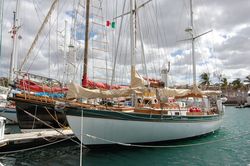
The new boat, at Meadow Island


When Easter rolled around on Sunday, I wanted to write a post about Ishtar, and Isis, and how the Christian year mimics that of the pagans, but how that doesn't make the celebration of Easter, and the blood of the Lamb, the dying God become the risen Lord, any less legitimate. Now it's Wednesday, and my Lenten discipline is over, meaning that I can watch English premiere league soccer (Queens Park versus Swansea) and eat popcorn to my heart's content, without having to worry about posting links to global warming articles or quotes from Moby Dick before midnight. (Actually, it's Moby-Dick. There's a hyphen.)

I didn't do so badly this Lent, other than my failure, most days, to post before midnight. Do these Lenten disciplines make any difference? Make anything better? That's the larger question. If I had to answer it, I'd say Lent is about that cycle of death and rebirth, the eternal circle that all of us celebrate every year, whether we acknowledge it or not.

Because that's what the season of darkness is about, the season of darkness and now the season of light that begins. It's about death and rebirth, and how the green fuse drives the flower back up from the ground, and how we remind ourselves of that by taking things away from ourselves and then giving them back. My sister posted her Thailand pictures today, though, and I'm reminded how I hate the seasons, how I want it to be 95 degrees year-round. Everyone, at least in Maine, uses that as a selling point: we have all four seasons!

But what if I just want one? Endless, never-ending, unchanging summer?

So God dies and is reborn, and crops die and our reborn, and the sun goes away and comes back, and we celebrate that now, during spring, celebrate our own return from the darkness and depression. The passage of the seasons, the cycle of the church calendar, they remind me of the passage of time, how every day that changes is different, and new. Maybe that's why we want to drift from those reminders, into a world separated from the earth, and plants, and the cycle of growing things, how we want to dissolve into a digital world of pixels, of fictional equatorial sun, a place that only exists in the imagination, and, perhaps, at the actual equator. No matter how we separate ourselves from them, the seasons still pass.

Now Lent is over, and spring begins in truth. Nothing for it but to roll on, into the cruelest month.

Friday, April 06, 2012

There is one knows not what sweet mystery about this sea, whose gently awful stirrings seem to speak of some hidden soul beneath; like those fabled undulations of the Ephesian sod over the buried evangelist, St. John. And meet it is, that over these sea-pastures, wide-rolling, watery prairies and Potters' Fields of all four continents, the waves should rise and fall, and ebb and flow unceasingly; for here, millions of mixed shades and shadows, drowned dreams, somnambulisms, reveries; all that we call lives and souls, lie dreaming, dreaming, still; tossing like slubmerers in their beds; the ever-rolling waves but made so by their restlessness.
--Herman Melville, Moby Dick
Sorry to keep quoting our American master, but he strings words together with such aching beauty, such melodious sorrow, enough to sing me to sleep--it seems a tragedy that he spent the last nineteen years of his working life as a customs inspector. I'm glad I didn't read him on the boat, for to read such words of the sea--the ineffable put into words--would have made me despair forever. Heck, it almost makes me despair now. Some writers are just too good. It makes one think the well has dried up.

Read this book: Why Read Moby Dick.

And this one:

Thursday, April 05, 2012

Gotta start feeding our souls

Pavement shadow (not my photograph)

Why are we always cruelest to those we love the most? I know at this point it's almost a cliche, or at least a truism, but it remains true. Maybe we take those closest to us for granted, or maybe we're trying to drive them away. Maybe it's a way to avoid looking at ourselves too closely, to avoid being present in each moment as we love. It's a Christian cliche that love is not a feeling, but an action, but whichever it is we--or at least I--fail to love actively, consistently, kindly.

I made it to a yoga class this evening, for the first time since I've been in Massachusetts, and I was reminded of the first limb of yoga, ahimsa, the principle of non-violence. It's a fundamental tenet that no practice should involve violence to yourself or another, hence no pain, and no competition. Because all competition is a form of violence, the desire to defeat the other, a desire to be better.

It's that ahimsa that perhaps is lacking in our closest relationships as we compete with each other for attention, for regard, over who's working harder or doing things better. We even compete about who's right and who's wrong, who folds tee-shirts or steams vegetables correctly.

Coming back from yoga I glow with the attention I've given myself for the past 75 minutes, the mindfulness I've gained of my own core strength, the power of my own breath, my ability to overcome challenge and discomfort. But only by not competing with myself, by not harming myself, by not causing myself pain. And as long as I beat myself up, I beat up others around me. I've been reviewing by Julia Cameron, and I found this reminder last night:
"If I had more time, I'd have more fun," we like to tell ourselves, but this is seldom the truth. To test the validity of the assertion, ask yourself how much time you allot each week to fun: pure, unadulterated, nonproductive fun?

For most blocked creatives, fun is something they avoid almost as assiduously as their creativity. Why? Fun leads to creativity. It leads to rebellion. It leads to feeling our own power, and that is scary.
It may seen a non sequitur, but it's not. Fun is the opposite of cruelty. Fun is the food of love and creativity both. Yoga felt like nonproductive play tonight, with no violence, no competition. It's a good reminder to carry that joy around with me, as a weapon against the toxic sludge I can allow to steal my mindfulness.

Tuesday, April 03, 2012

"Only when he no longer knows what he is doing does the painter do good things." --Edgar Degas

Saturday, March 31, 2012

The new adventure

Sanding the interior

Adventure is another of the things that the designers of capitalism didn't particularly value, along with the arts. Maybe I'm beating a dead horse here, by speaking of the things, endlessly, that capitalism doesn't value. Which are, mainly, all of the things that I value. Nature. Beautiful, nourishing food grown by real people that tastes of the earth. Connections among communities. Communities themselves. Art.

Consider the cave painting of Lascaux. No one knows, or remembers, or cares, who were the richest and most powerful individuals in central France during the Stone Age. But everyone knows those cave paintings. Everyone knows the shape of those fertility goddesses. Were those cave painters like me? Like us?

Maybe their parents, too, told them they should be better hunters, better gatherers, better providers for their families. They shouldn't waste all of that precious red ochre dabbing it inside cave walls. What were they doing in there all day anyway? How did such foolishness help them or their village?

Or maybe those cave painters and sculptors were celebrated in their villages. Maybe they were the heroes, the shamans, the high priestesses, the mystical magicians. Maybe it's only cultures that support the artists among them that achieve anything truly lasting. There's no way to know, at least not for millennia. But I have a good guess.

My sister's introduced a new phrase into my vocabulary, the "poverty mentality." I still have a hard time with it. We grew up in a family that lived by the motto: use it up, wear it out, make it do, or do without, even though I just heard it put in those words recently. My grandparents didn't have garbage pickup for fifty years, not out of a moral stance, but because they didn't want to pay for it. They burned everything in their furnace (including old tires) that didn't go into the compost (including leftover meat scraps). My grandfather spread old carpet in his garden and used old electrical wire for twine. My other grandmother drilled a hole in an old margarine container to put inside of her coffeemaker so that less of the ground coffee would be sullied by water and would be able to be reused. My mother still hoards plastic water bottles and bags. My father won't get rid of anything, not even broken electronics, which clutter his basement and my mom has to sneak out of the house when he hasn't touched them in years.

I have my quirks, too, things I compulsively hoard. I shore things up against the cold. Against future want. As my ancestors did before. Waste not, want not, I think.

So this whole idea of a poverty mentality? That it could just be me believing that I'm poor? When really my God owns the cattle on a thousand hills, and all of the wealth in the universe is accessible to me if only I believe? It sounds dangerously close to a prosperity gospel.

Have you heard of that one, too? Sometimes I make offhand references to things that are evangelical shorthand. A prosperity gospel is what some Pentecostals believe, that all you have to do is go into your local Mercedes dealer and "name it and claim it." I can't buy that. Not the Mercedes, either. I just can't convince myself that if I were to believe hard enough that that $540 million Powerball jackpot could be mine.

What I can accept is a more internal truth about what it means to be rich and what it means to be poor. The truly rich are those who are not parsimonious with themselves or with those whom they love. They believe that God will provide their needs--not their wants, but their needs--and they can rest in that surety. Then they can believe that God also delights in giving them the desires of their hearts. The true desires of their true hearts.

How many rich people do you know who are desperately poor? The Mr. Potters of the world who hoard their wealth and won't throw away a packet of lemon juice? The truly rich are those who don't let their love for money or their fear of its loss be the thing that limits them, their prospects, their future, their hope, their love. God has not given us a spirit of fear. And at the core of my stinginess I find a bitter seed of fear. I'm afraid of ending up poor, starving, in a gutter. Of being at the mercy of friends and strangers. Worst of all, of hearing all of those who believed it couldn't be done say: I told you so.
Through the lacings of the leaves, the great sun seemed a flying shuttle weaving the unwearied verdure. Oh, busy weaver! unseen weaver! --pause!--one word!--whither flows the fabric? what palace may it deck wherefore all these ceaseless toilings? Speak, weaver! Stay thy hand! --but one word with thee! Nay--the shuttle flies--the figures float from forth the loom; the freshet-running carpet for ever slides away. The weaver-god, he weaves; and by that weaving is he deafened, that he hears no mortal voice; and by that humming, we too, who look on the loom are deafened, and only when we escape it shall we hear the thousand voices that speak through it.
--Moby Dick

Thursday, March 29, 2012

Wigwam

In keeping with my ongoing theme of synchronicity, this piece popped on my car radio in the five minutes I was driving to the store yesterday, a precise examination of exactly the dilemma most people like me—artists, homemakers, homesteaders, activists—have to deal with. Yesterday, in the car, burning my fossil fuels, it felt like an answer from God. There are people out there, even if they're in New Zealand, who are struggling to redefine the paradigms of contemporary culture. Listen to the whole thing, if you can.

It's all brilliant. I may have to transcribe more, later, but here's a snippet:
If success means embodying and exemplifying the traits that the economic system values--selfishness, cold rationality, efficiency--then I'm not sure how valuable it is to succeed within it. I don't want to try to fit into the parameters of the market. The market is a human construction. Its parameters should include humanity, all, all of us, everybody. I don't want women's success in a man's world, you know.

I want a new world, which is for everybody. I'll just make explicit what I mean by the system being partial to the construct of white male. And it doesn't mean that because you happen to be a white man you're a sexist racist. It does mean that you benefit from a system which favors the constructs with which you identify.

It makes complete sense that it would be partial to white men, as it is a system designed exclusively by white men, particular men who thought of the population as being comprised primarily of white men as a social class. That's just a historical fact. The way the thought patterns of those designers of capitalism manifest is things like the use of GDP as an overall measure of a country's health.... as much of the economically productive work the market does register is performed by men, while most of the productive work the market does not measure is performed by women. And it extends further to the general social privileging of paid labor over unpaid labor.

Even now, in this current new strong-mandate national government, they would rather have anybody on the DPB or benefits of any kind—they would rather have them off the benefit and working a minimum-wage job, no matter what kind of job it is. Any paid labor is preferable to any volunteer labor. It doesn't matter what you're doing. Like, for example, it's a constant source of struggle for people like me who primarily are focused on things like the arts and activism and social criticism and stuff like that.

Those things are not considered valuable. I always have to have some kind of crappy, minimum-wage service job, which is wasteful and exploitative, and somehow that is considered more valuable than me doing things that I'm actually good at and passionate about. And, of course, millions of people have this same story, and it's not always about being an artist. Sometimes it's about raising your children.

That, to me, is the biggest one, that it is less valuable in this current economic climate to raise your children than it is to have a minimum-wage job—I don't know, pumping gas--and spend most of your paycheck on daycare. It's so backwards, but it is a manifestation of the idea that any paid labor is preferable to unpaid labor of any kind. And in terms of work and income, the neglect is sizable. Over fifty percent of the labor done in the world is unpaid labor.

Dr. Prue Hyman, who I spoke to in August, argues that the distinction between work that is paid and work that is not paid is largely arbitrary, that many jobs which are paid have a counterpart in the unpaid sector, things like agriculture, child care, education, health care, elderly care, management. More than that, quite often, the paid and unpaid performances happen simultaneously, next to each other, in the same place. Parents volunteering in schools, for example. So, how absurd, then, that the paid work has become the basis for our estimations of prestige and status, when half of all the work that's done in the world is unpaid.

Furthermore, an emphasis on paid employment puts a great deal of pressure on single parents to be seeking only paid work. The unpaid work of raising children carries with it fewer and fewer social benefits, and those few that are available are always couched in the rhetoric of a handout, a free ride, rather than as a communal investment in a future of well-raised adults contributing productively to society. I mean, this is simple economics to me. You don't have to take any kind of ideological stance on it. It doesn't have to be from a feminist perspective. It can be pure utilitarian economics.

So I've been talking about reclaiming work done in the home for feminism and feminist discussion. And this ties in closely to what feminist economists are trying to do, which ties into the fact that GDP and the market in general don't take all productive activity into account, and GDP is used to extrapolate the health of nation, and policies are made based on partial information. And the people who are excluded from that information are primarily women, particularly poor women, and women of color. Now, I'm very much against the simple sort of assignations of market value to the tasks performed in the home. I wouldn't want to just see women being paid for their housework. Because most of those jobs, in the paid sector, earn minimum wage or less, depending on where you live....

We have to reassess the fundamental structure of the modern market, rather than trying to fit all unpaid and informal labor into the existing market parameters. Now the process of reassessing those structures should seek to move the conversation away from classical economic examinations of selfishness, scarcity, competition, and efficiency, and towards examinations of necessity, surplus, consumption, and community. --Ana Martino

Tuesday, March 27, 2012

At the border

Talking on the phone today with my bank, I realized, as usual, that the situation is much less dire than it appeared at 2:30 in the morning. They're already disputing the charges, I should get the money back, globalized economy and massive banking leverage and adjudicated insurance claims and credit-card fraud etc. etc. So then I begin thinking about what it means to have my banking information stolen three times in three years, begin to pay attention to synchronicity, begin to believe that perhaps someone in the universe is trying to tell me something. About money.

Do what you love and you'll never work a day in your life, goes the saying. But what if you can't earn a living doing what you love? What if pursuing a dream means living consistently below the poverty level, as I have for the past eight years? More questions without answers. Sorry.

I've tried to claim the title of poor. After all, the people I most aspire to be like are poor. I wrote an entire essay about how if we take the call to live like Christ seriously, then we should actively renounce wealth, become poor ourselves, in order to be like Him. “The fox has his hole, and the bird his next, but the son of man has no place to lay his head.” All of the Christians I most respect actively took on poverty—Saint Francis, Mother Teresa, the monks and nuns who vows to be poor forever, pulling the name over their heads like a mantle. Saint Francis even gave all of his family's wealth to the poor and went to live in a cave with birds.

But there's a culture of shame that surrounds the word poor in our culture, as if the poor aren't working as hard as everyone else, or aren't as worthy. We're all equal in America, after all. Just some are more equal than others. If nothing else, these ordeals are teaching me how it feels to live on the edge of security, where one little hiccup in my financial life can send me into a place of doubt and fear, not knowing how I'll pay my bills or how many penalties or how much judgment I'll incur.

Of course, I have an education and a middle-class family and sufficient talent to pursue a six-figure job with benefits and a retirement account and perquisites if I wanted one. Does it make me somehow less of a person that I don't? I argue that it brings me closer to my calling, closer to the noumenal realm of the Spirit. Yet Jesus, when he needed funding, could call up a fish from the ocean with gold in its mouth. But can't I, too? That's the promise—you can tell the mountain to uproot itself with only the faith of a mustard seed. All that's lacking is my own faith.

She's weeping

I'm up at 2:30 in the morning, tapping on my computer keys in a darkened room while my dog snores beside me. I found out today (or yesterday, if you're counting) that the credit cards I had stolen from my wallet in DC, and which I immediately cancelled, were used to clear out my checking account. If you're reading this, you bastard, I hope you know how much your actions have the power to hurt other people. I traveled to this conference to learn how to help people, how to bring money and education and health care to the vulnerable ones who need it most, and I'm repaid with scorn.

It's not a lot of money to most people, maybe. But two months' salary for me, and now I'm again left scrabbling, bootless, on a graveled cliff leading down to a ravine. Yes, I know generally these things get worked out. I hope and believe it will be--but in the meantime, how much time? How many hours spent on hold? How many calls to faceless bureaucrats? How much anxiety and stress and dependence on the kindness of strangers?

Another season, another disaster. I've canceled my last two bank accounts for fraud of exactly this sort--an online database hacked, a credit-card number stolen. It feels like life is this endless wrestle for simple boredom, for peace--for the storms to calm and for clear sailing across a pleasant patch of sea. There's always a sense of blaming the victim. Could I have done more? Of course. I could have backed up my hard drive in triplicate. I could have kept my purse closer. I could have set up a third bank account exclusively for this trip and only carried that card with me, in a money pocket hugging my skin.

But in truth, my only crime was eating lunch at a crowded tourist destination, for flashing my fancy computer in public and making someone believe I had more money than I do. I'm supposed to be blogging with answers to questions, rather than with questions themselves. But sometimes I don't have answers. Maybe never.

This, too, is a part of travel, if this is meant to be a travel blog. All travel involves risk. And not just literal travel but figurative--we're all journeying through life. It'd be easier, sure, to barricade ourselves inside of our houses and never step outdoors. Is the reward worth the risk? Often I believe yes. Some days I believe no.

Tonight, Mr. Rochester lost his eyesight. But he gets his Jane Eyre back. There's a time for weeping and a time for laughing. It'll cycle back around, I know, the meek shall inherit the earth, and it's just money, after all. But it feels like an endless battle, when the yoke is supposedly easy, and the burden allegedly light.

Saturday, March 24, 2012

Quote of the day

"Where there is energy to command well enough, obedience never fails." --Jane Eyre

Friday, March 23, 2012

The rainbow is the answer

I've been distant the last couple of days, going through the exhausting whirlwind of meetings and travel to finally end up here, where I get a blessed week of peace and rest with family, time to regroup and recuperate. This event was definitely the bravest thing I've done alone in a while, and while it was vastly rewarding, I'm realizing that the reason I want a career locked alone in a castle turret at a desk is because I'm so self-conscious in the presence of strangers. It can almost become crippling, the insecurity I feel about my appearance, my body, my clothing. No more so than in a strange city, as I was this last week.

I remember days in Chicago when I'd wear a pair of ambitious shoes, how I'd become convinced that everyone on the el was staring at me, as conscious of my wardrobe as I was. But I wanted to wear the ambitious shoes. I wanted to be the cute girl in leopard-print stilettos that all the guys were making eyes at. It's a simultaneous desire to be brave in appearance, to dress in such a way that everyone notices, and then a desperate fear of that same desire, a desperate fear of standing out.

Does everyone feel that insecurity, or is it just me? I notice how much easier men have it, in their comfortable generic loafers, matching their identical suits. They don't have to worry about those decisions. Or maybe they do--maybe I'm selling them short. Then again, maybe it is something completely different for women. Who knows. Teiresias, the only one with experience, said he'd choose to be a woman. So maybe it doesn't matter.

Does it come from being made fun of as a child? Being a dork in middle school and high school? Does it come from switching climates in college, having no clue as to how one dresses for winter, either over-dressing in massive ski jackets bought at Bangkok import sales, or under-dressing, in thin Chinese-print thrift-store shirts, on dreary early rainy gray days in fall, when everyone else had figured out it was time to wear a coat? Or does it just come from being one of these people who's always been more comfortable in the world of ideas, the world of words, and still has absolutely no idea how to move a body through space?

Another DC photograph


Because I'm too exhausted for anything else. I was planning to give a detailed blow-by-blow of the eighteen-hour day of travel, but some cherry blossoms will have to suffice to assuage my guilt and meet my obligation.

Tuesday, March 20, 2012

I don't know why

Today at the ASHA conference I was more inspired than I expected to be again around people who spend their lives working in developing, by stories from all around the world, people representing the truest American ideals. That's what the USAID is all about, and until this conference, I don't think I'd really thought about what American ideals are, precisely. We bandy about terms like democracy and freedom, but what do those words really mean? True equality, equal access to all parts of our democracy and our state, access to economic opportunity, and education, and health care, and voting booths.

Then, during lunch, I watched the news. Is it something about being in DC, where the shots from the capital are broadcast to the nation, that makes one spend more attention focused on politics? I also browsed around the New York Times as I ate my sandwich, reading the resignation letter from the vice president of Goldman Sachs. It linked to this article from the Rolling Stone. The abstract? These ideals of democracy are being perverted by financiers who believe that greed is the sole American value.

In the article, Simon Johnson, an economics professor at MIT, “compares the bailout to the crony capitalism he has seen in Third World countries,” exactly the kind of corruption we aspiring ASHA grantees are fighting against.

More irony? The mutual fund shares I continue to own, purchased at a discount rate when I worked at a financial institution directly out of college, were taken over by--you guessed it--Goldman Sachs. So, full disclosure--I'm one of the people getting doubly ripped off, both as a taxpayer and as a "muppet."

One of the jokes that my brother suggested, when I was looking for ways to shave money off my travel budget, was that I could bring a tent and pitch it among the Occupy protesters, with whom I stand figuratively if not literally. I'd get free lodging, not to mention bragging rights. I walked right by the Occupy encampment on my way from the Metro this morning. Not only would my budget have been smaller, so would have been my commute.

And on the news at lunch, today is the same day that Republicans announced their plan to lower the corporate tax rate from 35 to 25 percent. When Mitt Romney pays 13 percent, the same exact rate I am taxed on my four-figure annual income, because I'm self-employed rather than being employed by someone other than myself. When Goldman Sachs pays one percent. And the entire ASHA budget (if it doesn't get cut, by those same Republicans), funding American ideals around the world, is 1 percent per year of what Goldman Sachs earns in profits in a single quarter.

Ironic much? It's almost enough to make me wish I'd pitched a tent and waved some placards.

En route from Marion, Massachuestts, to Crystal City, Virginia

450 miles
Wind: SW 10 knots
66°F

Another adventure today, another flight across at least some ocean, and south, always farther south, to someplace warmer where cherries and bradford pear are blossoming. I'm here for a conference for American Schools and Hospitals Abroad, a USAID organization.

In middle school and high school, in boarding school, I flew back and forth between Bangkok and Manila four times a year by myself, so getting on a plane, walking through the airport, resting at gates--it feels like coming home in so many ways. There's no rush better than a plane gathering force beneath my body. It's better when I'm going someplace completely new solely for the joy of it, but even with the stress of having to impress DC insiders, being here gives me a feeling of freedom, of release. Travel gives me a little frisson of existential angst, making everything sharper, everything have more color.

Maybe travel is my drug of choice. The hotel I chose was based completely on online research, and when I arrived I discovered it nestled beneath an overpass in a posh district blocks from the Pentagon, so I wandered the streets with hipster urbanites and yuppie joggers, retiree tourists and traveling businessman, and found, immediately, a Thai restaurant where I ate overpriced and inauthentic, but fantastically delicious, duck rolls and salmon curry. I'm going to see how many continents' worth of ethnic cuisine I can stuff into three days. The Cherry Blossom Festival is also starting this week, and I'm wishing I had budgeted extra time for the free Smithsonian museums, or at least a tour of the Capital building. I have to pack in as much culture as possible while I'm away from the Maine woods.

And always I carry with me the guilt. I have friends who have given up travel altogether as a concession to their fossil-fuel consumption, and since those long ago flights from Bangkok to Manila, I still find the view from the skies toxic, somehow--all of the scars we've made on the surface of the perfect earth. It's beautiful from the ground--bike paths and waterfalls and landscaped gardens and soaring skyscrapers--but from heaven it looks like a crawling cancer. More accurately, it's like those possibly benign growths I find on the undersides of leaves. Arcane heiroglyphics carved out by unknowing parasites. The view from the sky, the intricate tracings we've left on the earth, are the same, I suppose. We don't know the damage we're doing. Or if we're doing damage.

It's the yin and yang of all of life's choices, I suppose. I'm here so I can do something to help people across the world, but in traveling here, in taking up my single spot in this hotel room, using this electricity, I'm carving out my own path on the surface of the earth, scarring it.

So again I'm traveling, and I'm going to enjoy being in the moment, being in a place where there isn't a foot of ice on the ground, someplace where I can walk on the actual earth.

Sunday, March 18, 2012

Good day tonight

I found another Lenten blog today, which made me feel better about this foolishness that I'm pursuing. He agreed with me, that the primary purpose of the practice is simply following through, that unforeseeable things take place. I'd have to agree, although I'm still not sure what it is this year. But, like my favorite yoga teacher says--repetition is magic. Consistency equals results.

It's about simply coming to the page every day, or to the mat, or to the easel, or the kindergarten classroom, whatever your vocation happens to be. Whatever practice is yours. Of course, as with everything, this is easier said than done. It's so much easier to pull back the sheets and close my eyes and say--maybe tomorrow. Especially at 1:36 am, which is when I tend to be writing. Or when I tend to procrastinate the important parts of my life until.

I've been thinking about the specific practice of relationships. The practice of love, I guess it is. It's such a delicate balance. And the most difficult practice we encounter. I feel the need to quote Thomas Merton wholesale at this moment:

"The best way to love ourselves is to love others, yet we cannot love others unless we love ourselves since it is written, 'Thou shalt love thy neighbor as thyself.' But if we love ourselves in the wrong way, we become incapable of loving anybody else."

Friday, March 16, 2012

En route from Aroostook County, Maine, to Marion, Massachusetts

436 statute miles
38° F
Winds light and variable

Drove down this afternoon to Massachusetts, where it's supposed to be in the sixties all week. Already I can make do in the house without my down vest on, although Shadow is sporting his stress bump already. Sometimes I try to see the drive through his eyes--all the confusing lights as we zoom by Boston, the tunnels where everything goes bright, and then the lights in the distance, and then the strange curves as we exit on-ramps and off-ramps. I may not belong in Aroostook County, but he's a Mainer born and bred. He doesn't even know what the lights of Presque Isle look like, let alone a city like Boston.

On the drive we listened to The Hunger Games, an audiobook that I'm halfway through for a second time, and which is plotted so brilliantly as to make me quail. It's such a brilliant conception, a sort-of The Lottery meets American Idol, and the force of the concept alone keeps the story moving forward inexorably. If you haven't read it already, you should now, if only to keep the ubiquitous movie trailer from stealing your own Katniss Everdeen from you. But maybe I'm just dazed from the road. If it's this year's frigging Twilight, as everyone seems to be saying, then it won't take long before the snipers start taking potshots, pointing out all the flaws.

Sometimes I just love the thrill of an exhilarating plot, carrying me forward, creating an unheretoforeseen universe and its attendant characters, and all the more if those characters are heroic and three-dimensional, but of course more good than bad. Maybe I have some lessons to learn. It's these dark literary novels that haunt me, but the ones that keep me up reading into the night are young-adult fantasy thrillers. What does that say?

I don't know. I'm musing. Hoping Shadow doesn't die of heatstroke in a house where the heat is set above 57 degrees. Or worse yet, in a coastal zone where it's supposed to hit 66 degrees this week. About time to be getting spinach into the ground. Maybe, by the time I get back, all of the ice on our cold frames will have melted.

Your body may be gone

St. John's River

Wednesday, March 14, 2012

Be here now

Today's snow

Since it's been brought up in the comments, I've been thinking about original sin--total depravity, in Calvin's words. It's such a difficult thing to wrap one's brain around, Adam and Eve taking a bite from that apple. When I dive down into the intricacies of that moment, it seems like their failure was one of love, of failing to love God, of not trusting him.

I've been diving down into the meanings of these words, or trying to, meditating on them. What it actually means to love another person, to love God—to trust him. To trust that he really has good things in store for you, not bad. How a parent can claim to love a child and then go on and hurt that child. And it happens every day, in subtle ways, even with parents who don't put their cigarettes out on their children's faces. How it feels like it happens, even with God.

So we all bite the apple every day. We all fail to love. And God has not given us a spirit of fear, but of love. Love is what he gives us as fear's opposite. When I wrap my brain around these words, I get lost inside of them, but it's like Thomas Merton said—it all twines back to love, like a flame circling its own center.

Like Merton, like the heretic Bell, I say—love wins. Love is what we lost in the garden, what we regain with Christ. Love is what I lose hold of every minute, every minute that I try to hold onto. Here's my hymn for today, by the poet Mason Jennings:

Be here now
No other place to be
Or just sit there dreaming
Of how life could be
If we were somewhere better
Somewhere far
Away from all our worries
Well, here we are

You are the love of my life
Be here now
No other place to be
All the doubts that linger
Just set them free
And let good things happen
Let the future come
Into each moment
Like a rising sun

Sun comes up and we start again

Be here now
No other place to be
This whole world keeps changing
Come change with me
Everything that's happened
All that's yet to come
Is here inside this moment
It's the only one

--Mason Jennings, Boneclouds

Tuesday, March 13, 2012

We'll ride

Solitary nature

Today's Moby Dick quote of the day:
"Almost universally, a lone whale--as a solitary Leviathan is called--proves an ancient one. Like venerable moss-bearded Daniel Boone, he will have no one near him but Nature herself; and her he takes to wife in the wilderness of waters, and the best of wives she is, though she keeps so many moody secrets."

Monday, March 12, 2012

The good times are killing me

Where are the coyotes?

"Animals are changing, and I cannot tell you why."—Inusiq Nasalik, 88-year-old inuit elder, September 6, 2004

And then this article: The Violence of the Lambs.

Never mind that I was linked to it from an article talking about how facts are stupid—even just a cursory search reveals that he's not lying about the facts: dolphins are coming after us.

Here's the essential quote:
“A question that lately has been getting knocked around a lot in the better biology departments is this: As we intrude on, clear-cut, burn, pollute, occupy, cause to become too hot or too dry, or otherwise render unsuitable to wildlife a larger and larger percentage of the planet, what will be involved in terms of the inevitable increased human exposure to remnant populations of truly wild fauna? Not for us but for them. What sort of changes, adaptations, and responses might we look for in the animals themselves as the pressures of this global-biological endgame begin to make themselves felt at the level of the individual organism? We have in mind here not microevolutionary changes to existing species but stress-related behavior modification, so-called "phenotypic plasticity," the sort of thing we know numerous animal groups to be capable of, though it is rarely witnessed.”
And here's a quote from the Tampa Bay Times, after a stingray stabbed a second human through the heart:
“'It was a freak accident,' said Lighthouse Point acting fire Chief David Donzella. 'We still can't believe it.'
Serious stingray attacks like this one and the one that killed "Crocodile Hunter" Steve Irwin last month are rare, marine experts say.”
Really. You don't say. And they're not the only animals acting weird. Dolphins are downing swimmers in Cancun, and sea lions are attacking Shakira. My favorite story from the article is the monkeys versus humans battle that was staged outside of four water tankers in central Africa. They're after us. They, and the whales have finally figured out that not only are we killing them, but we're killing everything else, too, and something must be done. Animals are shifting as we shift.

Another reference, my documentary of the day: The Cove.

No wonder they're after us. Everything is echoing itself—dolphins popping up in documentaries, dolphins and whales, both of the order cetacea, both marine mammals. Dolphins are just mini-whales, and all I've been reading about are the whales. Whales, whose tails Melville describes thus:
“The more I consider this mighty tail, the more I do deplore my inability to express it. At times, there are gestures in it, which, though they would well grace the hand of man, remain wholly inexplicable. In an extensive herd, so remarkable, occasionally, are these mystic gestures, that I have heard hunters who have declared that the whale, indeed, by these methods intelligently conversed with the world. Nor are there wanting other motions of the whale in his general body, full of strangeness, and unaccountable to his most experienced assailant. Dissect him how I may, then, I go but skin deep; I know him not, and never will.”
So we're slaughtering them, the animals that possess a mystic language. There are more things in heaven and earth, Horatio, than are dreamt of in your philosophy. Can't we all just feel it? At a fundamental level? There's something wrong. We've lost our connection to the earth, to the sea, to each other. We can't stop puffing toxins into the air, and everything else breathing them in. There are too many of us. Unless we stop, and soon, there will be hell to pay, from someone, whether it's more wars for oil or, more karmically elegant, a planet of the apes.

Saturday, March 10, 2012

Now that your rose is in bloom

“Capitalism is an inherently unstable system.... Capitalism is notorious for its ups and downs. We have a whole vocabulary to refer to them: booms and busts; recessions and depressions; upturns and downturns....”

“You would expect that we would know this about capitalism's history and therefore not believe that we could somehow manage to escape instability. But over the last thirty to forty years we, as a society, have been unwilling to think critically about capitalism. And it shows. We thought we weren't going to have another crisis like the one we had in the 1930s, or like the one the Japanese have had since 1990. We imagined that these problems were no longer relevant to modern life. So we were unprepared for the mess we're in.”

“So another reason this crisis is so different is that it's coming at the end of a long period of denial. Let me give you an example: When I began my work as a PhD student in economics, the typical curriculum had a course about the business cycle, to introduce students to the history of economic ups and downs in their own country and others. In 2007 the vast majority of graduate programs in economics had no course on the business cycle at all. We thought we had overcome it, outgrown it. We had come to believe that we were in a new economic system, a mature capitalism, and that we had all the mechanisms to control it.”

--Richard Wolff, “Capitalism and Its Discontents,” The Sun, February 2012.

Friday, March 09, 2012

I've been locking myself up in my house

Bud

Maybe there is life out there, the force that through the green fuse drives the flower, waking up again. Yesterday broke records, at sixty degrees, the temperatures normally reserved for May. There's carbon in our atmosphere for you. I'm thinking about taking up bicycling again. Maybe I could bike to the grocery store fifteen miles away on dirt roads and come back, at least in the summer.

Today I caught the tail end of a documentary about the dolphins being killed by tuna fishermen, and then I had tuna for dinner. It wasn't intentional--the tuna was leftover--I've been resolving not to buy it anymore--but still, the fact remains. The thing I want to do I do not do. Who shall rescue me from this body of death?

And maybe that's what winter is for. Reminding us that, like the dying god, we too will die. Die and be reborn.

I'm sick of writing about winter. I'm sick of thinking about winter. I'm sick of taking photographs of winter. But still, winter persists. I understand, now, the linguistic urban legend about Eskimos and their 385 words for snow. I could come up with a dozen off the top of my head, most of them involving incarnations of profanity.

But yesterday, I paused on my bridge of ice. I stopped, and I took one picture, of one bud. There it is. The green fuse is driving that force. The dolphins swim through the sea, and maybe they'll figure out what we've been doing to them all of these years and come after us. As everyone knows, Douglas Adams not least among them, they're smarter than us and they've been that way for a long time.

Thursday, March 08, 2012

There's a boat for sale, a 38-foot Ingrid Ketch, down in Baja. It can be yours for the paltry sum of $42,000. These are the things one googles when it's breaking records at fifty degrees in March.

Here's a link:


But no. I'm not complaining about the weather. Today the snow turned brown from the muck underneath it. But I'm happy. I can see sprigs of grass, in places where the van leans up against the front lawn spruce, the tree the internet dish is now nailed to.

I keep reading Moby Dick. I've been reading it for months now. I wonder how many people manage to read it inside of a year. And yet the language is so grand, so precise. And gruesome. The parts where the whales get murdered are almost impossible to read. I read them like I'm watching a horror movie, with my hands over my eyes.

Don't believe me? Here you go:

“The red tide now poured from all sides of the monster like brooks down a hill. His tormented body rolled not in brine but in blood, which bubbled and seethed for furlongs behind in their wake. The slanting sun playing upon this crimson pond in the sea, sent back its reflection into every face, so that they all glowed to each other like red men....”

“...Stubb slowly churned his long sharp lance into the fish, and kept it there, carefully churning and churning, as if cautiously seeking to feel after some gold watch that the whale might have swallowed, and which he was fearful of breaking ere he the fish. And now it is struck; for, starting from his trance into that unspeakable thing called his 'flurry,' the monster horribly wallowed in his blood, overwrapped himself in impenetrable, mad, boiling spray, so that the imperilled craft, instantly dropping astern, had much ado blindly to struggle out from that frenzied twilight into the clear air of the day....”

“At last, gush after gush of clotted red gore, as if it had been the purple lees of red wine, shot into the frighted air; and falling back again, ran dripping down his motionless flanks into the sea.”

I guess we've always had to mutilate living beings for the sake of technology.

Wednesday, March 07, 2012

I was lifted up again

I find myself haunted by parables every once in a while. Lately, it's been the one about the elderly widow who loses one of her coins, the coins she hangs on her forehead that say that she was wed. She hunts her entire house for them, for days, for weeks, sweeps out the corners, until she finds the one that was lost.

So I found my data. Every last jot and tittle of it, as I've been promising myself since last October. I don't know if that indicates perseverance or insanity, but I have it back.

Tuesday, March 06, 2012

The city smells fishy

Ice castles and pink sky

I'm up against a deadline tonight, researching chloroquine and foreign ministries of health.

Did you know you can build your own solar panels? And it's really cheap? Reference this documentary: Burning in the Sun

Also this one, on a completely different topic, corrupt American politics. Still amazing: Street Fight

Snuck in a walk before dark. Today the snow was crunchy and crisp, a fresh layer of ice over a increasingly crumbly interior.

It's supposed to get into the forties this week. At last.

Monday, March 05, 2012

Are throwing knives into the tree

Bringing up global warming the other day got me thinking about capitalism, of which I'm a bigger fan than I let on. In fact, I believe that capitalism, innovation driven by profit, is the only thing that can solve climate change. Case in point is Denmark, where they came to the decision, after the first Iranian crisis of the seventies, that they couldn't be dependent on foreign oil anymore. So they made a legislative change, designating a strict reduction in the amount of carbon emissions.

Thirty years later, cottage industries have turned into engineering conglomerates, and now half of all of the world's wind turbines are Danish. Not only did they create energy independence for themselves, they also created a vast new industry that they now leaders, that they can sell because they have three decades of experience on us. During the global financial crisis, the Danish unemployment rate has hovered around 4 percent. (Reference this Wikipedia page, but a general Google search will tell you all you need to know.)

I believe that's because of capitalism creating favorable conditions for solving a problem. That's the power of a free market. I was a waitress. I know how well it works.

The problem is that our energy market isn't free, at all, because oil and gasoline products are overwhelmingly subsidized. Not just in the support our government gives in cash payments (which they do), but also in the institutionalized support for things like car companies and roads, as opposed to magnetic trains and bike paths. Things that sound like science fiction, but if we actually put any effort behind could become viable solutions. It does require a massive shift, but the expense of not gradually turning the vast ship of state will be much, much greater. If the energy companies had to foot the bill for the true cost of their product, if we had to pay the true cost of our product, traditional energy would be much more expensive and renewable energy would have a much fairer shot, and true innovators and entrepreneurs would be able to develop alternative solutions. Think of the expenses of disaster relief alone, not just in this country but around the world, and if we had to pay a tax for them, every time we hit the pump.

I said: I'm too afraid, too poor, too lazy. And I am all of those things. It took me months to work up the courage to write about this—fear. I can't afford an electric car or carbon offsets or a geothermal heating system or a retrofit of my internal-combustion engine into an electric one—poverty. I barely even write letters to my senators, although if I really believed what I claim to believe I should be running for office and staging protests—laziness.

And yet. I'm writing about it, at last. If all of us could call out the fire-breathing dragon in the room, if all of us reduce consumption and write our senators and raise awareness, then maybe the market will begin to turn.

If I'm honest, my concern about the non-sustainability of American life was, to a large degree, what sent me off on my hiking adventure eight years ago today, what made me move aboard a boat where I could catch my own fish, my own sunlight, my own water. It's what drove me here, to northern Maine, where I can farm and can and slowly build an off-the-grid homestead. It just doesn't feel like enough, doesn't feel fast enough. I still cringe even throwing a log on the fire, thinking of all that carbon dioxide coming from my chimney, though I know it's the best heating choice I can make right now.

Jesus said: sell all you have and give it to the poor. I always have taken him literally, and still do. If only I were brave enough to lay myself bare on the altar of absolute faith. I'm not yet. I'm still afraid, still lazy. It's too easy to sit up late at night in front of my screens. The difficult choices are difficult. To say that I'm doing enough would be lying.

But I'm doing the best I can.

Saturday, March 03, 2012

I'm warm again

Today's snow

I'm still thinking about the art performance last night, enough so to request roasted red potatoes for dinner this evening. I keep ruminating about being at the center of that human conveyer belt. We were supposed to become a human machine, only rejoining community by turning to each other at the end. Meeting each other's eyes and returning to our humanity again. But the unexpected thing that happened was that we were all humans inside of the machine.

The whole night, I couldn't help but be connected to the people around me, every time my fingers brushed theirs. Every time my eyes sought the glove to my right, every time my movements slowed to allow for hers, or I noticed, in my peripheral vision, her motion shift and take off in an exquisite new direction, an elegant hand-flip as she arced her potato. We were human inside of the machine.

Climate change has been haunting me over the last several months, punctuated by the tornadoes last night, this time over Chattanooga where my parents live. I know climate scientists reject such neophyte associations, but no one's talking about the extreme weather patterns, and how they just keep getting more extreme. It was clear in the Bahamas, it's clear here in Maine, it's clear in Tennessee. It's clear everywhere, but we're all blindfolded, handing our dollars to the gas tank, as slow as the sunrise.

The problem is that no one believes in science. Nor does anyone understand how it works anymore, how even Newtonian physics, the bedrock of the Industrial Revolution, is nothing more than a theory, a theory that Einstein disproved. Gravity is just a theory, and this is because proof isn't something science does. Nevertheless, science works, perfectly, as a method of distinguishing between good theories and bad theories, as proven by the brushed-steel machine I'm typing on right now, by the cell phone in your pocket, by the television in your living room, all of which are based on quantum mechanics. Just a theory, but one that works really well.

What science does is establish correlation, collect evidence. And the correlation between carbon dioxide in the atmosphere and global warming is as clear as any. The evidence is irrefutable. By the time they have proof, we'll all be dead.

So what am I saying? It's the same as inside of that human conveyer belt. I'm a human inside of the machine of carbon emissions. I want to break free of the circle, to look at the people on either side of me and yell, scream—let's change things. Let's do something, anything. So why don't I? I'm too afraid, too poor, too lazy. As are the rest of you whose gloved fingers graze mine.

Friday, March 02, 2012

Things are crashing down

Aroostook potatoes

This evening I participated in another collaborative art performance on behalf of a friend Carol, a conceptual artist finishing up her MFA this year. I was reluctant, at first—whatever is going on with me is affecting my desire to be around people and making me troglodytic. Nevertheless, I drove to town as I'd agreed Carol's project focuses on the intersection between art and a farming community, and asks questions about how art and farming intersect. Tonight, we mourned the death of the potato, the central crop of Aroostook.

All 25 of us wore black, standing in a wide circle outside of the Maine Potato Growers' Association, with our hands spread out open. We lifted potatoes from a small coffin and handed them one to another, as slow as the sun rising, until all of the potatoes had been moved around the circle. I'd participated in one of these collaborative performances before (remember when we were roasting potatoes over a fire in the middle of February?) and I knew exactly how cold I'd get, so this time I wore every last piece of warm clothing I had—two coats on top of each other.

At first, I'll admit I was skeptical. What could we possibly learn by handing potatoes around? But we were supposed to move slowly, as a human machine, a living conveyer belt, and over time, over the 45 minutes that we stood together, staring straight into a portion of our city street, I began to sense the intuitive center of the project. At first, my eyes had to find the person to my left or my right, hunting for their hands so that I could trust them with my potato. Over time, I began to have faith that their hands would find mine. The person to my left would deliver the potato to me, and I would release the potato into the hand to my right. I didn't have to look. All I had to do was feel, to trust, to release, to let the potatoes move through me.

It became a spiritual connection, the group of us mimicking the rhythmic movements that used to characterize the farms up here, the industry that is dying moment by moment. The circle connected to the larger circle of farmers. It felt eternal, as if the potatoes could last forever, as if we could stand there forever. And when, at the end, we turned to face each other, it was as if all was whole again.

Thursday, March 01, 2012

The seasons, when they call you

My posts are dense and wordy sometimes. When I am lonely, I comfort myself with words. Today, I feel like the girl in this picture, given everything but trying to hide empty eyes.


Courtney Love, you know me so well.

I'm finding this lenten practice more difficult than in previous years. I believe I have nothing to say. My life is simple now, no more backpacking or sailing, just the things that are necessary to get through the day: dishes, work, food, snowshoeing and yoga for survival. When I have nothing to say, I generally find myself yearning for adventure, which leads to Google searches for Wharram catamarans in Thailand.

I try to remember what Thich Naht Hanh said about the simple life, about saying to myself as I wash the dishes: I am washing the dishes. I am dipping my hands in warm water. I am here in this moment.

I am here in this moment, reaching out across the binary universe, late-night television on mute to my left, K. snoring on the couch, Shadow lapping water, two dirty bowls emptied of fish and rice on the kitchen table. It's such a simple thing, accepting a simple life, accepting the life of this moment and no other. But so complex. If I could really accept now, really be in the cold, in the snow, in the waiting, I'd achieve enlightenment. And I would be tempted by sailboat searches in tropical climates.

But enlightenment's a long way off. The most I can do is move through each day and do the work I'm called to do. It's all any of us can do, and it doesn't feel enough. If I think of my faith, the reason I make the pilgrimage to worship on Sundays, on the days I can convince myself not to hit snooze, it's to remind myself of that. To pray for faith, to accept the life I've been given. None of us get another shot.

Wednesday, February 29, 2012

Leap Day

We only get this day once every four years. A gift, the anniversary of nothingness from the year before. The day when we're all—or most of us, at least—perpetually less than twenty. Heck, I'm only eight in Leap Days.

Today I pulled down my McSweeney's 8 from the shelf. There's a chary balance, as a writer, between reading and writing. It's so easy to sidle over to the bookshelf, and think—I should just do some serious reading today.

But I digress. McSweeney's 8 happens to be full of stories about truth and fiction and the difference between the two. The one I happened to flip to, the one I had dog-eared, was a story/essay by Jonathan Ames, about how two chapters of his novel were stolen by a woman named Julia, the daughter of a famous writer, who deluded him for months into believing that he was being invited to Sweden for a symposium held by a literary magazine. Halfway through reading the essay, which I assumed was autobiographical, I began to question whether it was in fact fiction.

In it, Julia publishes her novel with the same publisher, with an epigram from Balzac: “How fondly swindlers coddle their dupes.”

So who's swindling whom? The best part is not knowing.

Then this review, of a book based on a Believer article, also published by McSweeney's, about an essayist's war with his fact-checker over facts. And the reviewer folds his facts around, too.

“Story-truth is truer sometimes than happening-truth,” said Tim O'Brien, as quoted by Dan Kois. But he may have been lying.

Tuesday, February 28, 2012

If you see a shadow

I'm doing my work. This is my work—sitting at a desk in front of an over-priced laptop, looking out the window at the iced ridges that mark the tire tracks of the driveway, at the heaped snow over the compost barrel, heaped snow over the untrimmed raspberry bushes, massive plowed icebergs that line the doorstep's narrow entrance. It's one of those days when my life seems spectacularly useful and useless at the exact time, like putting words onto digital paper is the most important thing anyone could do and also an utter waste of effort.

I've been putting aside farm and fiction for a grant-writing project, an application for a nursing college in Uganda. I believe with my whole heart in the project—my blessed grandmother left money for it, to educate nurses to have the career she always dreamed of—and still it feels an exercise in futility. Lining up the numbers in a spreadsheet, telling the story of a school that may never be to faceless officials.

As a distraction, I pull out back issues of The Sun, and read essays by writers who choose each word with such exquisite care, such riveting diligence, such careful composition, that I feel my heart breaking in my chest. How can my words ever measure up? How can it at all be important for me to spend another one of my precious hours here, at this desk, crocheted flowers blanketing my knees, dim light bluing outside, and press my fingers into keys to make words? What value can they have to roll back the tide of despair?

I read this quote by Gandhi, another of those quotes intended as inspirational but which generally make me feel as if nothing I do will ever be good enough: "think of the poorest person you have ever seen and ask if your next act will be of any use to him." If I think of her, is it enough for me to sit at my desk and make up stories? Is it enough to steal an hour or two from Uganda to write words that may never be read?

A quote from the essay I'm reading, “Bruised,” by Joe Wilkins: “Here's what often happens: some workman, after banging away all day, comes in the house to say he's finished and catches me on the couch in my sweat pants, staring at my laptop, and he gives me one of those eye-rolling looks, one of those this-guy-is-just-pathetic shakes of the head.”

I know that look. I've internalized it to the point where I give it to myself.

Still, I'm managing to read both Jane Eyre and Moby Dick right now. Both are taking me months to get through, and are books that would never be published today, would be deemed “unmarketable,” “too slow,” ”too difficult.” They don't follow all the rules of fiction I have overlapping on my bulletin board—prohibitions against adverbs, Cinematic Structure in Three Acts, The Hero's Journey, beautiful jagged Freitag arcs I doodle when I'm blocked, McKee's universal laws of inciting incident, positive turn, and character desire.

What am I saying? Both books follow all of those rules. Both books are perfect, in their own flawed way. Melville is astonishing. He takes entire chapters to describe the substructure of a sperm whale's tail. Bronte likewise. She wastes pages on difficult dialog, and through those alien words I see in intricate detail a a plain, elfish girl, with a backbone of iron. They both make me want to live a better life. They both make me live a better life.

Is it enough? Are any words enough?

Saturday, February 25, 2012

Look up at the mountain

“Snow is like therapy,” said the Aroostookrat, the one who came over to my house with her husband to play Wii. We were watching the snow fall around the glass room, silently, the wood stove burning, the white flakes drifting down and caught in the flood lights. Last night twelve inches was carried slowly over the Great Plains and blew down in the night. Today the spruces are towering wedding cakes.

The people who I know belong here are the ones who say that they love winter. It requires a certain kind of audacity. I did a long snowshoe today, about an hour, with the heavy snow collecting in my crampons. Shadow tugged me along, dug in the snow after the little voles that nest beneath the drifts. Halfway back I could barely catch my breath, and I unzipped my down vest and unwrapped my scarf, only to trip myself on a snowshoe and tumble into a pile at the side of my little trail.

That's not unusual. On the days when there's fresh snow, I fall about twice an hour. On the Appalachian Trail, I fell about once a day. The legend about my parents, who backpacked Maine while I was in utero, was that they became known as the “Flying Jenkses” thanks to their tumbling propensity.

My favorite yoga DVD ends with this directive: thank yourself for showing up today. That's how I feel on the days when I get out into the muck. Like I'm finding the joy. Not letting the dark days get me down.

Friday, February 24, 2012

The dreaming moon

Maybe poems aren't so dangerous after all. Maybe the dangerous thing is not writing them. Is not listening to the voice.

**

The Journey
by Mary Oliver

One day you finally knew
what you had to do,
and began,
though the voices around you
kept shouting their bad advice
though the whole house
began to tremble
and you felt the old tug
at your ankles.
"Mend my life!"
each voice cried.
But you didn't stop.
You knew what you had to do,
though the wind pried
with its stiff fingers
at the very foundations,
though their melancholy was terrible.
It was already late enough,
and a wild night,
and the road full
of fallen branches and stones.
But little by little,
as you left their voices behind,
the stars began to burn
through the sheets of clouds,
and there was a new voice
which you slowly recognized
as your own,
that kept you company
as you strode deeper and deeper
into the world,
determined to do
the only thing you could do,
determined to save
the only life you could save.

Thursday, February 23, 2012

If you want it you got it

Woodpile
Today's quote, from a Chicago Tribune profile of a McSweeney's writer:
As for Levin, after initially worrying about the book's length, he decided at page 700 that the book would be as long as it needed to be. "If I have arrived at a stance on literature, I guess, it's this: I want books to be huge. Not page counts — I want giant stories that end big," he says. "Because as I get older, I'm getting bored, with domestic fiction, especially. And I want to read writers who are bold, who go for it all. I want all the significance, everything."
McSweeney's editor Eli Horowitz agreed: "The reason most books are not as big as 'The Instructions' is not necessarily because books are not supposed to be as big as 'The Instructions.' It's because publishers are afraid of them and authors get worried people won't read them. To get past that and write to the length you truly believe you should write to requires a mixture of courage and obliviousness that Adam has. He's brave, and when it works well, it's thrilling."
Reading quotes like that are the good part of the internet. Reading quotes like this one (from a Poets and Writers interview) are the bad:
Stein: Novels are beginning to feel that way too. I mean, really—it's like the novel is the new short story.
RUTMAN: The short story is the new poem...
STEIN: Yeah, the short story is the new poem, novels are the new short story.... It's hard out there.
RUTMAN: If you're talking to a certain audience, say an MFA audience, you hear the sentiment of, "Ugh, if only I could get past the short story collection and get on to the novel, easy street can't be far behind."
STEIN: There is no easy street.
RUTMAN: Exactly. It doesn't exist. But there is this unhelpful assumption that you just need to get to a novel, at which point your publishing fortunes will brighten.
STEINBERG: There are probably only a hundred people in the United States who make a living off novel writing.
STEIN: Did you make that number up?
STEINBERG: Yeah, I just made it up.
STEIN: I think that's a really great point and that number sounds about right to me.
100 out of 300 million people. Might just as well start buying lottery tickets.

Wednesday, February 22, 2012

Ash Wednesday

Summer portrait of Snow Road. Not gone forever.

And a miracle--I found what I thought was lost forever, the ludicrously over-mourned data, on fat Tuesday, the day when we feast before we take the ashes. The day when life seems unbearably lush, rich, full beyond imagination. And today, the next day, the long-awaited satellite dish arrives, giving me at last a connection to the great inter-web that links us all. No. I jest. But I do have a feeling of strange Jim Morrison-like doors of consciousness are opening.

I resisted buying internet for a long time, though. Hardcore. Being without it was perhaps the thing that made me feel most isolated about being here, and maybe the thing that I was the proudest of. So I had to let go. It was all pure egoism, and finally I chose to make things easier on myself rather than more difficult.

The internet is also very expensive. My resistance was born from frugality, and now I have through economic caution to the wind.

But now I have both internet and data back. Images that I thought were gone forever I have again, and I have all of Lent to play with pictures and videos and internet, instead of living in ascetic austerity, the way I'm meant to during this season of suffering. It feels like spring, like I'm coming awake from a long hibernation. I didn't get everything in my hunt through the savage hard drive, but just that I had the persistence to keep fighting for the 10GB or so I managed to salvage seems psychotic. Or maybe brave.

Or it was faith alone that gave me back these few gifts. My cup is full. It runneth over.

I remember having this feeling before, wanting to memorialize the end of one season, as the next begins. The church calendar cycles every year, and I climb the seven-story mountain, arriving at the new season, same as the old. But new. The air is new. The mountain is new. Behold, all things are made new.

Thursday, February 16, 2012

The things you have the hardest time parting with

Snow fields to the horizon

Lent's coming on, and as in previous years, I'm considering a meditative praying and writing practice, to be posted here, and to refocus me spiritually. Again, in previous years, I debated whether adding something to my life--a public writing practice--was actually in the spirit of Lent. Adding something is not giving something up. So I'm debating also giving something up. Something difficult.

One year my sister gave up complaining. I've given up computer games, caffeine, on occasion, and several times all animal products, including eggs and milk, and used a vegan fast as a way to refocus my eating habits. This year the thing I really should give up is television, but I'm not sure I'm brave enough for that one. I'm thinking about sugar, or meat, both of which are traditional sacrifices, but don't seem that difficult.

Dylan said, in the conclusion to the above quote:
Funny, how the things you have the hardest time parting with
Are the things you need the least

Almost certainly true. I saw an interview of Woody Harrelson on George Stroumboulopoulos, a great Canadian talk-show host, and a very perceptive question, especially for a celebrated drug-user, was: What drug did you have the hardest time quitting? Harrelson's answer, after a long, well-considered pause, was: Sugar.

Sometimes I think about how it would feel to be one of those people who gives up sugar, or white flour, or meat, or high-fructose corn syrup--not just for Lent, but forever. Those people irk me when I encounter them in real life, as much as I respect their decision. I hate absolutists--I much prefer balance in all things. But isn't that just another attachment? What need do I have for white flour? For any of it? Wouldn't it be better for me, mentally, spiritually, to let things like that go?

Maybe that's what Lent is for. Seeing how little I need, what things I have the capacity to let go of.

Saturday, February 11, 2012

Well I had to go down and see a guy named Mr. Goldsmith

Winter snowshoe scene

Sorry for the depression, guys. This afternoon I'm again thinking about grand plans for the spring--digging up the pond and using the moss in my flower garden, where I will plant bulbs and flowering shrubs, and turning the gravel pit at the back of the land into a swimming hole. That's a spring fed beaver pond out my office window, y'all.

Or maybe I'll build a sauna, out of all the cedar, and then I'll heat it up to 200 degrees--as hot as I can take without cooking my innards--and heat myself so I can go out and roll around naked in the ice, even in the heart of January Jones.

It's February, but I still think of it like that, thanks to an unforgettable Conan sketch on late-night television. Go YouTube it, oh ye in the land of internet. [We get Conan for free on Canadian television--Canada, where you get basic cable analog!] Now I have anthropomorphized the entity of winter into a hard-partying, chain-wearing African-American gentleman who does guest spots on Mad Men. When I feel glum, I ascribe it to him.

I spent the morning punching away at the keys of my grandmother's typewriter, a Hermes Rocket. K. repaired the ribbon, the ribbon that lived on Secret with us for two years, and now I have an operational typewriter that allows my brain to function in a different way than with computer keys. Slower somehow. More careful, but also more muscular. If anyone knows where I can get one of those big rolls of paper like Jack Kerouac used, send me the link.

I'm longing for that sweet fatback that sticks to your ribs

I’m not sure I’m doing all that well with winter. It’s like a daily checklist: am I getting outside? Am I doing something other than sitting on the couch with my crochet? How many baked goods?

The snow covers the horizon, endless. The thing I miss most is color. There’s no color. It’s a black and white world, and to go out into it, I need three layers, top and bottom. The last few days the moon has been so bright—effervescent—like a spotlight reflecting off the snow, so bright I check to see if the lights are still on outside the house. I wanted to take photographs for all of you, but I couldn’t bring myself to put on the layers. It was just too much.

I feel exhausted, all the time. And I’m doing all the right things. Taking Vitamin D. Eating oranges and lettuce, whatever produce was grown in places where human beings are actually designed to live and shipped in on the bones of dinosaurs.

Well, I’m not doing all of the right things. As I write, it’s 1:55 in the morning, which means if I were to use my sun lamp when I am meant to, as according to the almighty internet and cet.org, at 7:45 in the morning, that would give me less than six hours of sleep. Less than I got in college, most nights.

So I’m staying up too late, and I can’t drag myself out of bed, and I’m sleeping through those precious morning hours of daylight, the only real daylight I get here. I feel like I’m coping, but just barely. Treading water. It feels like a genuine hibernation—all of my essential processes are functioning, at their minimum possible levels—and I’ll only really come alive in the spring, which is so, so far away. I keep remembering the snow we got on April Fool’s Day last year, and I think really? That long? Our frost date is May 20. Only three months to go, guys!

Meanwhile, my magazines are sending me photographs of tulips and forsythia. I’ll be lucky if I get tulips and forsythia in August. Is it worth it? I feel like I’m complaining all the time. I don’t want to complain. I want to be bigger than the weather, to not let it affect me. But what if I’m not?

Wednesday, February 08, 2012

Philosophy of time travel

I am trying to buy a bag of potatoes and I don't know how. There is a potato farmer down the road, that has a sign at the road advertising potatoes, $10 for fifty pounds, and I would love to buy some—we've been out since before Christmas, which maybe shows where I fall down on the rice/potato conundrum—but his driveway, leading up to a siloed factory-looking metal warehouse structure, is a sheet of flat ice.

I'm just not eager to wander up to some door, wearing my going-to-town clothes, because that's the only way I'll justify the gas to drive there, and wrestle a fifty-pound bag of potatoes across a sheet of ice.

Face it, I'm scared. Of potatoes. Of an aspect of a cultural experience up here that I don't understand. How does one buy potatoes from a potato farmer?

There's a butcher right down from the potato farmer that I'm too scared to visit also. He has a nice little sign: custom meat-slaughtering, cattle, sheep, hogs. I'd love some nice mutton bones for borscht or a beef heart for the dog. They're supposed to give these things away for free, and still I can't convince myself to park in the driveway.

It's risking shame that's the hardest part of being an outsider. Even though I'm sure everyone already knows I don't belong.

Sunday, February 05, 2012

Like we were unwise

Potatoes on the bonfire in the snow, at the Potatogether

Tonight dinner is green curry, with spicy paste and coconut milk both imported from Thailand, with royal basil--horapaa--and bird peppers—prik kee nu--I bought at the Asian market in Quincy four months ago and froze. I'm hungry for real food, rice and curry--kap chao. It's one of these cliches of Thai culture that instead of asking “How are you?” when people meet, they ask “Have you eaten?” But the real truth is that “Have you eaten?” in Thai translates directly to—kin chao reung? Which means, “Have you eaten rice?”

Rice is real food. Everything else is just pretending, as far as this little Asian-faker girl is concerned. And I'm saying that while living in the land of the potato—a tragedy. Not really. I love potatoes, too, because my family comes from potato country. My family farm was a potato farm, before we lost it.

But my formative years, my childhood, was spent eating rice, six days a week. One day a week was for “American” food. Potatoes, spaghetti, tacos. And I have to believe that how someone spends the years between 3 and 17 matters, because I'm coming on that anniversary now. I spent 14 years in Southeast Asia, and now it's 14 years that I've been away. My sister flew from Chicago to Bangkok, with her husband and three children in tow, this morning.

We're both terrified. She's just found happiness, in her own house, just outside Chicago, for the first time. I'm finding happiness here, in Aroostook County. Both of us, for the first time in years, may live in a place that we call home. And now she's going to the place that's our real home, our heart's home. We're afraid it will disrupt us, either by being perfect, or by being less than.

I say we're terrified, but I lie. My whole life has been caught between two places, knowing I'll never find true home, not in the way that other people have it. People whose roots are dug deep. Mine will always be shallow. But that doesn't mean they have to be weak. I'm changing as I age, I'm realizing that it's not that I don't belong. I can belong in two places. She can, too, and at a deeper level, we know we love the lives we've built for ourselves.

I know the air of Bangkok is toxic, polluted, gave my brother bronchial asthma. I know that most people don't consider 90-percent humidity pleasant. I know that the city smells of exhaust and dried fish and raw sewage and dirty canals—khlongs. But more than that, I know that whenever I stepped off the plane, from Manila, or the States, and hit that wall of Thai air, dense, heavy with moisture and scents, bad and good, fecund and rich--that's when I knew I was home.

I said to her last night: “You get to breathe real air.”

It's the thing I envy most.

Thursday, February 02, 2012

She looked into my eyes

Daily bread


You can't repeat the past, she said.
What do you mean you can't?
Of course you can.

That's the line from "Summer Days," a song from Bob Dylan's "'Love & Theft.'" It's stolen straight from The Great Gatsby.

Can't repeat the past? I don't know.

But today I made honey-soy bread, with Amish honey, from a Mennonite recipe. It's delicious--dense, and dark, and wheat-y. There's lots of whole wheat in there. Good winter bread.

I'm eating it with canned meat and pickled peppers. I'm hanging around with too many Swedes, or Poles, or something. Dark bread, sauerkraut, cured meats.

Summer days, summer nights aren't here. But I know a place where there's still something going on. My oven, if nowhere else. I bake my bread, I sing my song.

I just did a quick Bob Dylan and plagiarism search, and discovered that as of last year he's in trouble for painting other people's photographs and having them displayed at a gallery. That's Dylan all over. But I made a painting of it! It's new art--it's all new art. Even my bread.